

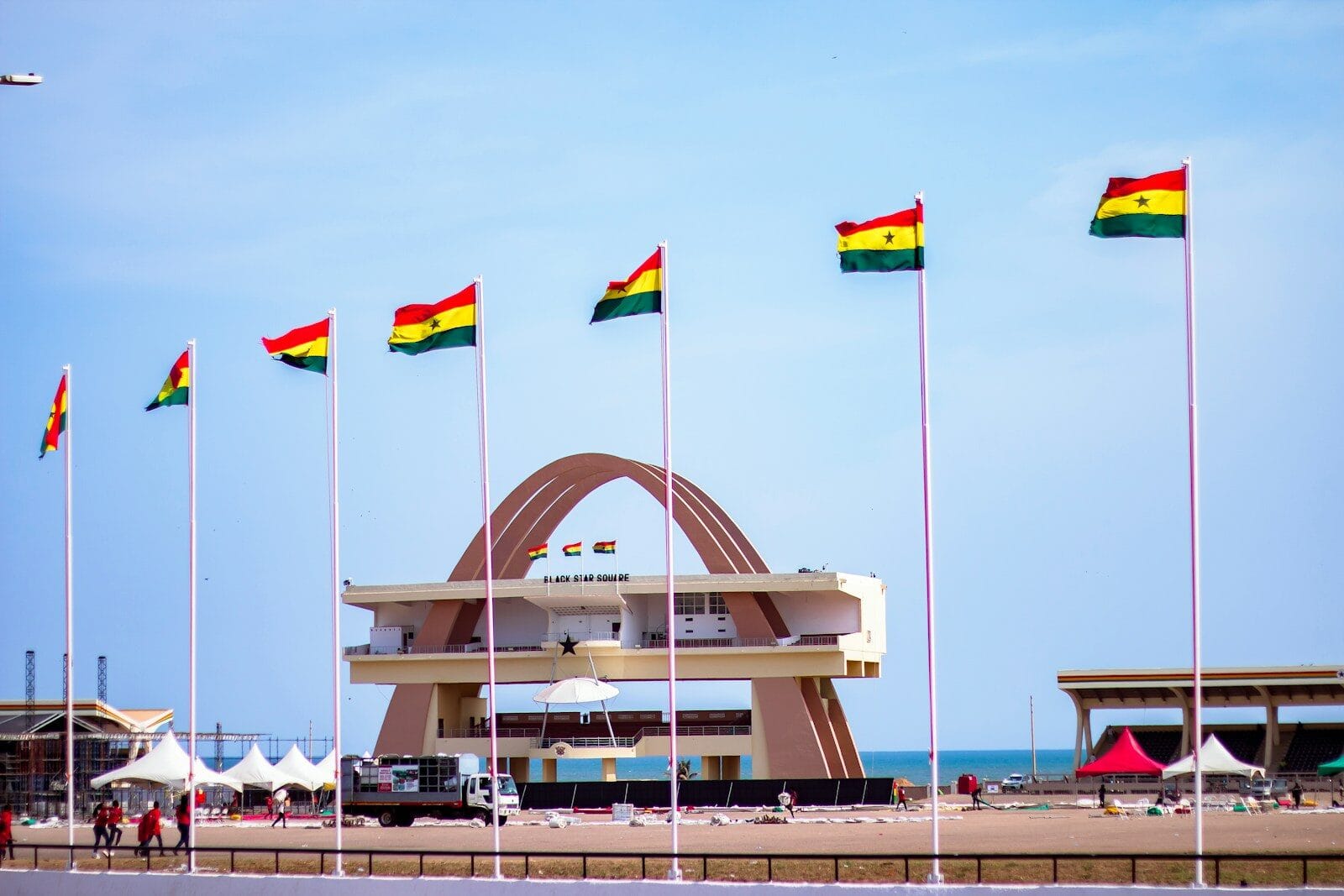
On 25 May 2026, Africa Day, Ghana will begin issuing free electronic visas to citizens of every African country. President John Dramani Mahama’s announcement landed with the satisfying thud of symbolism meeting policy. Ghana is making a powerful statement that the ideal of a borderless, integrated continent must eventually be translated from the language of summits into the mechanics of actual travel.
Ghana will become only the fifth African country to offer this degree of openness to fellow Africans, joining Benin, The Gambia, Rwanda, and Seychelles. In January 2024, former President Nana Akufo-Addo said Ghana had begun the process toward visa-free access for Africans. The latest announcement suggests the current administration is trying to turn that long-discussed ambition into a practical travel regime.
What Ghana has described, based on the wording reported so far, is a free e-visa regime — an advance electronic clearance issued at no cost. That is meaningfully different from a pure visa waiver, which requires no pre-travel application at all, where an African citizen simply arrives and enters. This distinction is worth making, without trying to diminish the announcement. A visa-free system removes the pre-travel permission barrier entirely. While a free e-visa still reduces cost and friction, it keeps a layer of advance approval in place.
Unless Ghana updates its formal travel regulations to eliminate the requirement for pre-travel authorisation, the more accurate description of this policy is free electronic pre-clearance. That is still a genuine improvement over the status quo. None of this should be read as dismissiveness. If the e-visa is swift, frictionless, and automatically approved, the practical effect approaches visa-free travel even if the legal architecture falls short of it. The implementation will tell the fuller story.
For years, African leaders have spoken about the need to make it easier for Africans to travel across their own continent for trade, tourism, education, employment, investment, and cultural exchange. Yet the reality remains stubborn! Africa is still far from seamless movement. According to the 2025 Africa Visa Openness Index, only 28.2% of intra-African travel scenarios are visa-free, 20.4% allow visas on arrival, and 51.1% still require a visa or equivalent authorisation before departure.
The majority of journeys between African countries still begin with bureaucracy. Forms, fees, queues, and uncertainty. This is the lived experience of African mobility. For a continent that speaks constantly about integration, free trade, and cross-border opportunity, that is a structural contradiction.
Africa is opening up, but not fast enough
Ghana’s move, if implemented clearly and consistently, will place Ghana among the continent’s more open travel regimes and strengthen West Africa’s reputation as one of the more mobility-friendly regions on the continent.
Still, the broader continental trend is more complicated than the headlines suggest. While visa-free scenarios are rising slightly, many countries have also shifted from visa on arrival to e-visas or other pre-travel authorisations. In other words, some governments are digitising the barrier rather than removing it. That may be more efficient than embassy paperwork, but it is not the same thing as free movement.
Africa’s border problem is a political will issue.
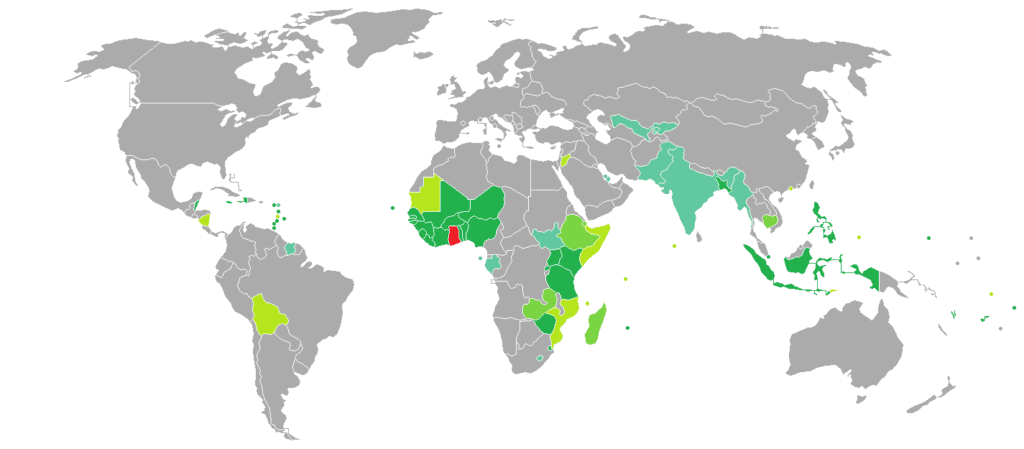
The African Union Free Movement of Persons Protocol was adopted on 29 January 2018 as part of the continent’s broader integration agenda. Seven years later, only four member states, Mali, Niger, Rwanda, and São Tomé and Príncipe, had ratified the protocol. Although 32 AU Member States have signed the protocol, it has not yet reached the 15 ratifications needed for it to enter into force.
Rwanda and The Gambia genuinely offer visa-free access to all other Africans. Kenya made a significant move by exempting citizens of 52 African countries from its electronic travel authorisation requirements. A handful of others have liberalised selectively. Many have digitised their visa processes, which is efficiency, not openness.
Africa speaks the language of integration, but lacks enough states willing to domesticate, operationalise, and absorb the political risk that comes with freer movement. Security concerns, reciprocity politics, border management fears, and uneven administrative capacity keep slowing the project down.
Every extra travel form, embassy visit, approval queue, and uncertain border rule raises the cost of doing business in Africa. It makes spontaneous trade harder, slows down founder mobility and discourages conferences, exhibitions, partnerships, university exchanges, and tourism circuits. Moreso, it weakens the logic of the AfCFTA because trade agreements are easier to sign than to live under when people still struggle to move.
Governments resist free movement for reasons that are locally comprehensible and continentally self-defeating. Security concerns, however legitimate, are often overstated as arguments against liberalisation when neighbouring countries with open borders have not experienced the predicted waves of criminality.
Reciprocity politics, the reluctance to extend access without equivalent guarantees, create standoffs that serve no one. Uneven administrative capacity makes some governments nervous about managing larger flows of visitors. And in many capitals, the domestic political constituency for African free movement is simply too thin to compete with the louder voices urging caution.
Every unnecessary border friction is a tax on African commerce.
