

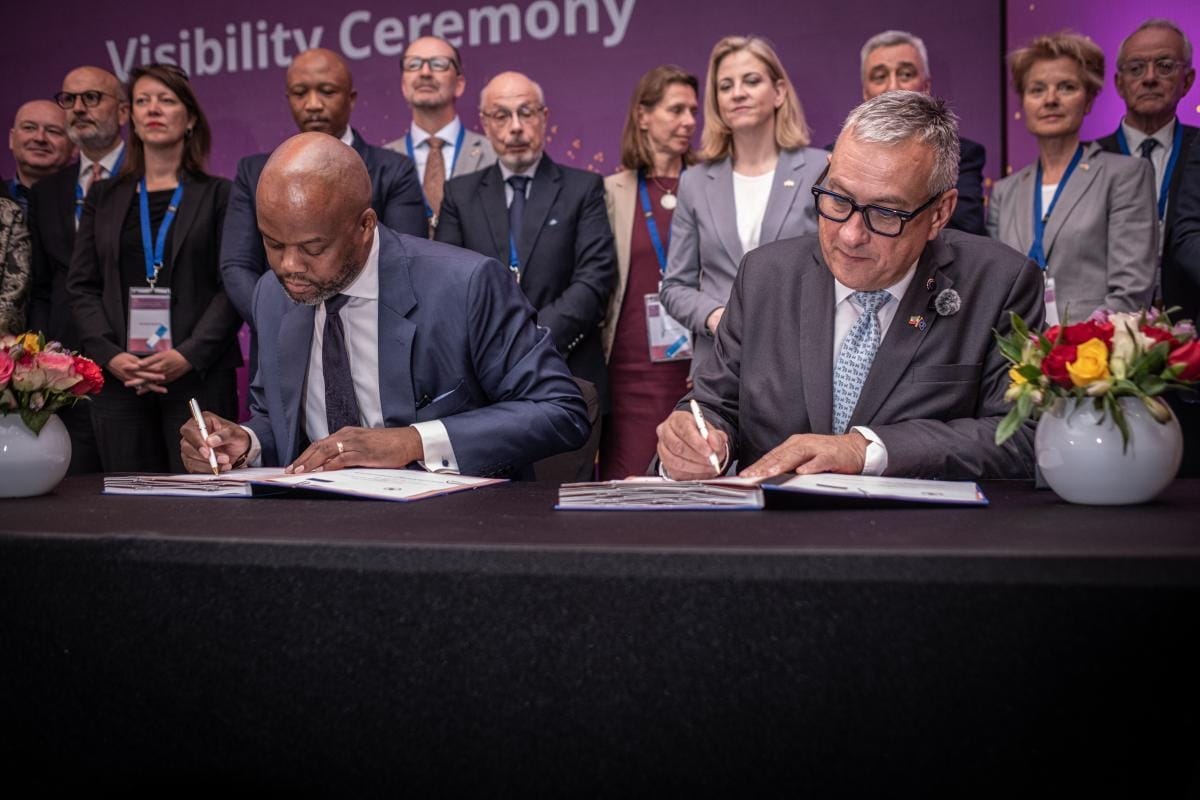
Addis Ababa turned into a stage for a broader political and economic message this week as the European Union, Ethiopia and African Union institutions used the EU–Ethiopia Business Forum to announce fresh financing, restart budget support and broaden cooperation in public health, digital systems and agribusiness.
Held in Addis Ababa from 20 to 22 April, the EU–Ethiopia Business Forum was designed to present Ethiopia as an attractive destination for European investment under the EU’s Global Gateway strategy. The forum brought together more than 500 participants from government, business, civil society and development finance institutions, with a focus on digital transformation, clean energy, health and sustainable agri-food value chains. The EU also said trade ties with Ethiopia are at their strongest since 2021 and that around 300 European companies are already active in the country.
At the centre of the Addis visit was European Commissioner for International Partnerships Jozef Síkela, whose schedule included a press conference, a speech at the business forum, a signing ceremony, a meeting with African Union Commission Chairperson Mahmoud Ali Youssouf, and follow-up visits linked to coffee value chains, labour-market digitalisation and Africa CDC.
The biggest immediate announcement was the resumption of EU budget support to Ethiopia, worth more than €140 million. According to the European Commission, the funding will back priorities including energy, connectivity, healthcare and reforms to the business climate. Brussels said the move reflects Ethiopia’s progress on economic and governance reforms and signals renewed confidence in the relationship.
A second major pillar was digital infrastructure. The EU and Ethiopia signed a Digital Economy Package with an initial commitment of €150 million, with the stated ambition to double that amount over time. The package is meant to support fibre-optic expansion, youth skills development, and governance reforms aimed at creating a stronger enabling environment for technology and innovation.
The EU has been a longstanding partner to Ethiopia for over 50 years, supporting development in healthcare, agriculture, infrastructure, and education.
“Ethiopia is Africa’s oldest independent nation and one of its fastest-growing economies,” the Commissioner Síkela said. “With these investments, we are not just supporting Ethiopia’s growth – we are shaping a future of shared prosperity between Europe and Ethiopia.”
The Addis announcements were not limited to headline diplomacy or large state-level financing. They were also designed to move capital into productive sectors lower down the economy. The investment package also reached into agriculture and rural finance. The European Investment Bank announced two new lending operations worth €130 million in total: €20 million through Zemen Bank to expand affordable credit for agri-food businesses and smallholder farmers, and €110 million for rural finance targeting households, women and small enterprises.
Ethiopia is already Europe’s largest trading partner in the Horn of Africa, with record exports of coffee, flowers, and agricultural products in 2023. The EU aims to increase the value retained in Ethiopia by supporting higher wages, better working conditions, and stronger local industries.
European officials also used the forum to showcase the EU-backed RISED (Resilience and Inclusive Sustainable Economic Development Programme) programme as evidence that this partnership is already producing visible results on the ground. The Commission says the €269 million programme has delivered electricity access for 4 million people, laid 2,500 kilometres of fibre optic cable and helped rehabilitate the Ashegoda Wind Farm in Tigray, reducing outages by 50 per cent and saving 16 GWh of energy annually.
“RISED is a perfect example of how Europe’s partnership delivers real change – connecting communities, powering businesses, and driving sustainable growth,” the Commissioner stated.
Sikela at the African Union and AfricaCDC
Since the Africa-Europe Summit on 3-4 April 2000 in Cairo, the AU and EU have maintained a 25-year strategic partnership focused on regional integration, peace, security, and economic development.
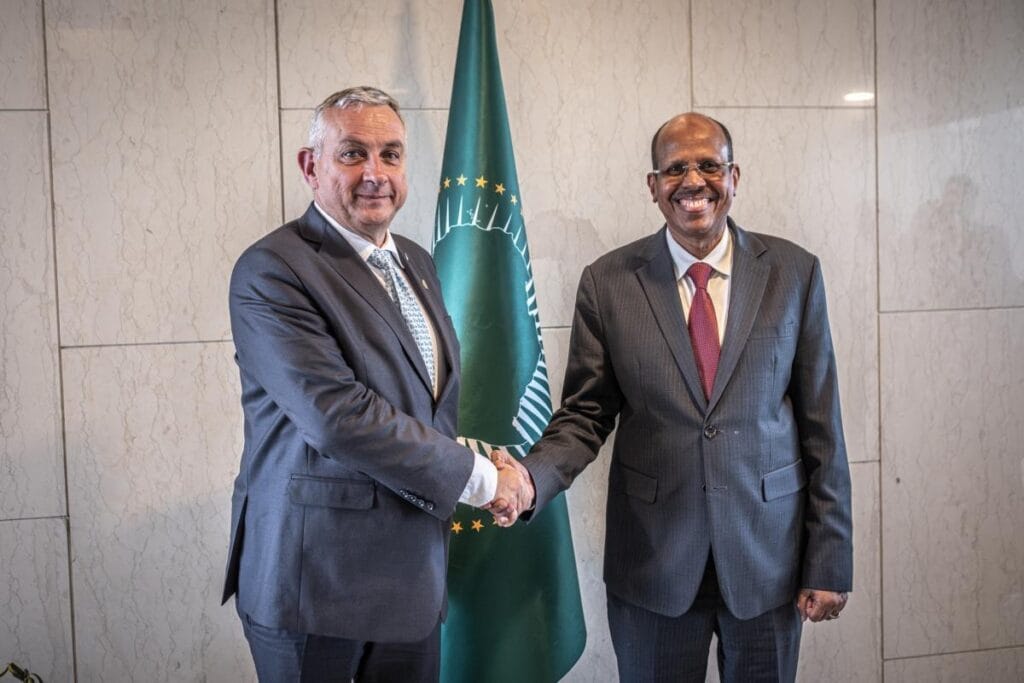
Source: EC – Audiovisual Service, Photographer: Marco Simoncelli
On 20 April, Síkela met AU Commission Chairperson Mahmoud Ali Youssouf at AU headquarters in Addis Ababa. The AU said Youssouf underscored the endurance of the AU–EU strategic partnership and described the EU as a key and reliable partner across trade, investment, infrastructure and peace and security.
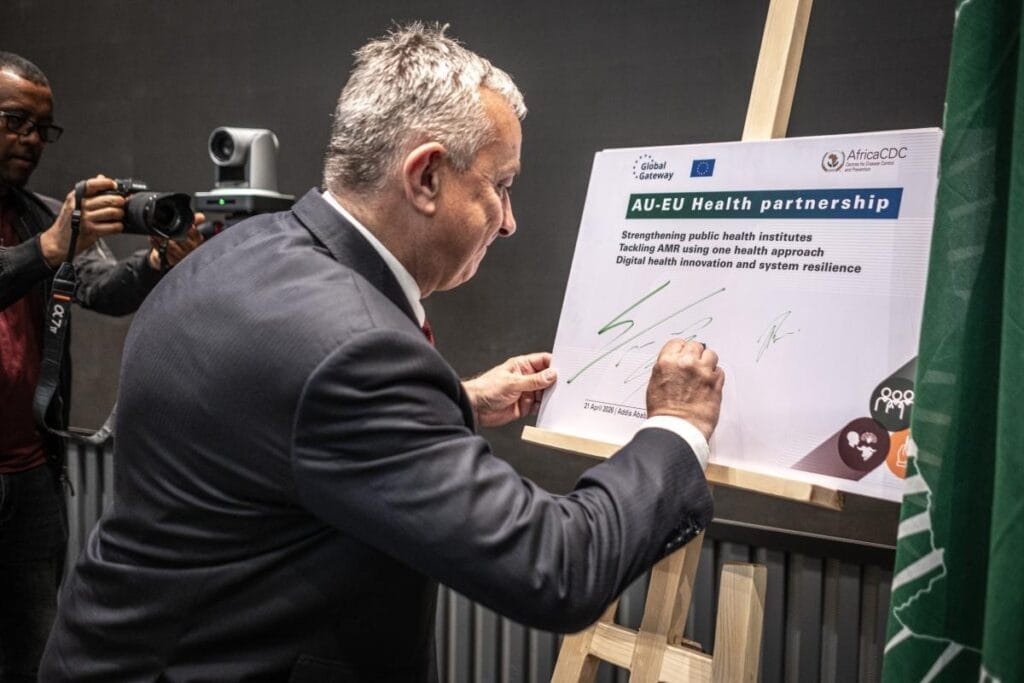
On 21 April, the AU and European Commission, working through the Africa Centres for Disease Control and Prevention (Africa CDC), launched three new initiatives worth more than €100 million under Global Gateway. The programmes will support national public health institutes in 10 AU member states, strengthen health security through a One Health approach, including antimicrobial resistance work and workforce development, and expand digital health systems for pandemic preparedness and stronger primary healthcare in 6 AU member states.
The health package embeds the EU more deeply in Africa’s health security architecture through AU institutions. Síkela described strong health systems as “a pillar of security” as important as energy or supply chains, while Africa CDC Director-General Dr Jean Kaseya framed the partnership as part of a broader push to reduce dependency by enabling Africa to produce, finance and manage more of its own health priorities.
For Ethiopia, the forum was an opportunity to market itself as a reforming, high-potential economy with a large consumer base, strategic location and growing relevance to European investors. The EU, on its part, used this as a chance to show that its Africa policy can produce concrete transactions. For the AU and Africa CDC, it was a platform to pull continental priorities such as health sovereignty, institutional capacity and strategic partnership into the centre of the conversation.
The most important takeaway from Addis is that Europe is trying to reposition its partnership with Africa around investment and systems-building rather than aid language alone. Whether that promise holds will depend less on speeches than on disbursement, execution and whether the announced packages actually deepen African productive capacity, strengthen public institutions and leave more value on the continent. But in Addis this week, the signal from all sides was unmistakable: the relationship is being recalibrated around infrastructure, markets and strategic capacity.
