

- The Africa Media Convention is a continental media gathering focused on press freedom, media sustainability, digital transformation, information integrity, journalist safety and the future of African journalism.
- The 2026 Africa Media Convention is taking place in Lusaka, Zambia, alongside the World Press Freedom Day 2026 conference at the Mulungushi International Conference Centre.
- The convention brings together African journalists, editors, media owners, policymakers, regulators, civil society groups, digital rights advocates, development partners, UNESCO, the African Union Commission, the African Editors’ Forum, the Network of Independent Media Councils in Africa and other media stakeholders.
- The Lusaka meetings are being held in partnership with the Government of Zambia, UNESCO, the African Union Commission and African media partners, as part of the wider World Press Freedom Day 2026 programme.
- If implemented effectively, the discussions in Lusaka could strengthen press freedom, improve media viability, protect digital rights and position credible journalism as a central pillar of democracy, peace and development in Africa.
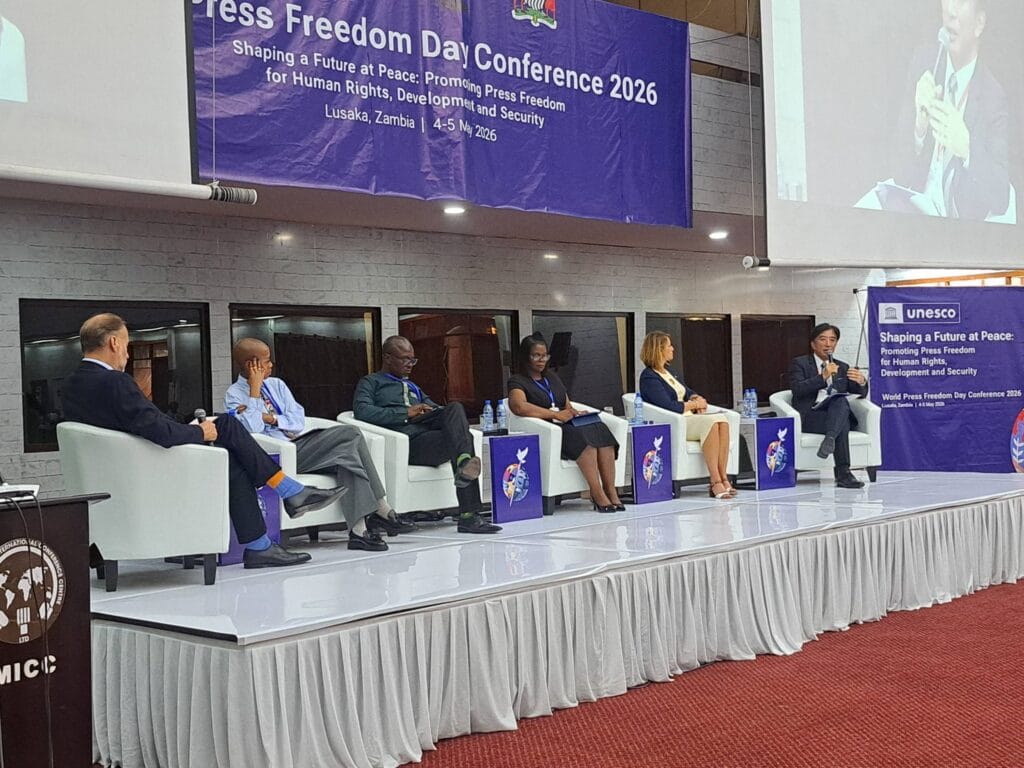
UNESCO has announced a sweeping strategic partnership with the African Union to develop a continental framework on information integrity and media literacy. The announcement was made at the 2026 World Press Freedom Day Conference, currently underway in Lusaka, Zambia, held under the theme “Shaping a Future at Peace: Promoting Press Freedom for Human Rights, Development and Security.”
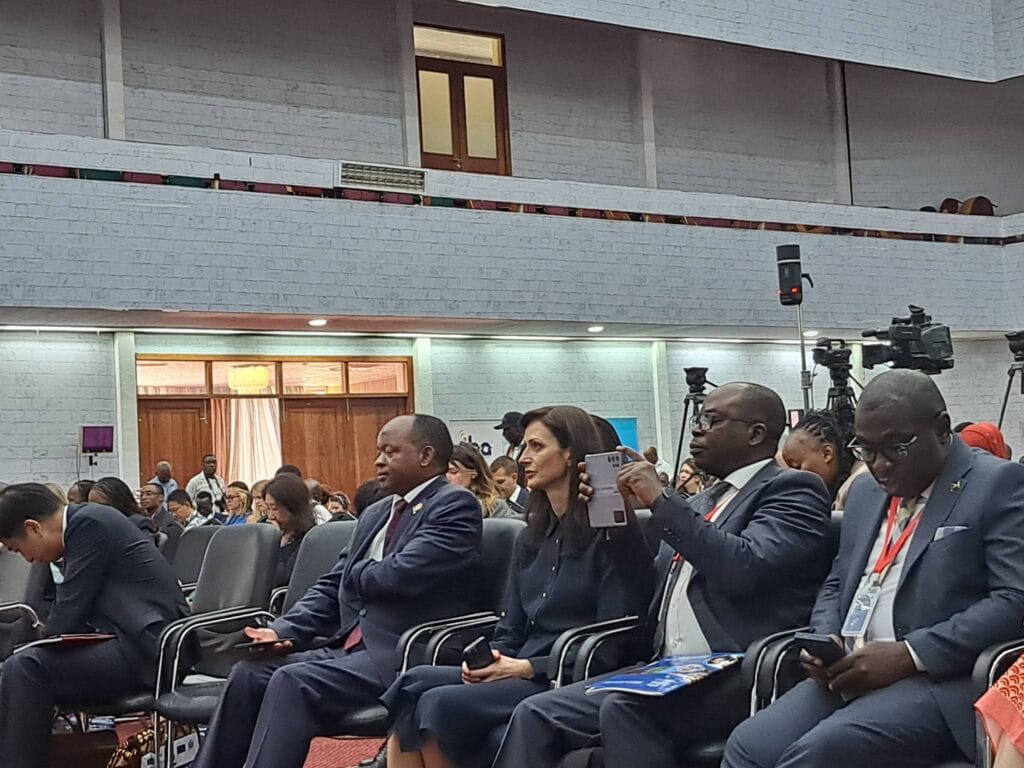
The conference has drawn policymakers, media executives, digital rights advocates, and senior institutional leaders from across the continent and beyond, convening at a moment when the threat of AI-powered disinformation, restrictive press laws, and an increasingly fragile media economy are converging to reshape African journalism.
At the centre of the conference is a UNESCO-funded policy initiative to build the African Union Continental Information Integrity and Digital Media and Information Framework — a guiding instrument that would set common standards for protecting information quality, promoting digital human rights, and expanding inclusive access to information across all 55 AU member states.
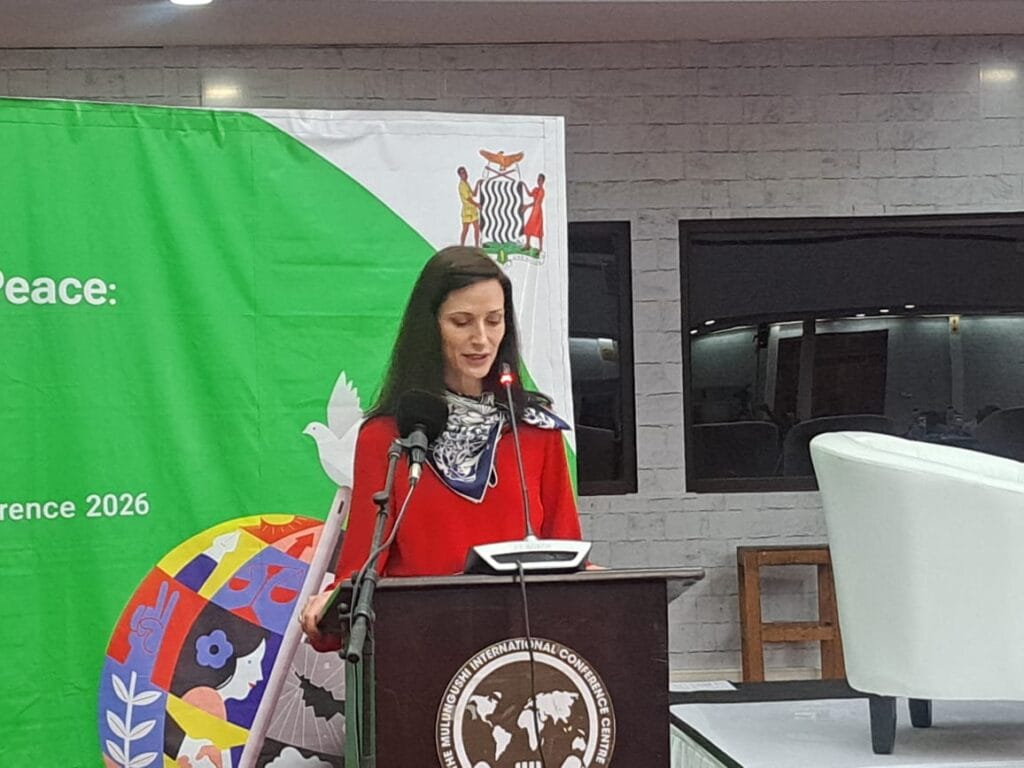
The initiative was formally unveiled by Mariya Gabriel, UNESCO’s Assistant Director-General for Communication and Information, who described it as a shared commitment to guide and strengthen Africa’s information ecosystem at a time when digital platforms are shaping the continent’s narratives in real time.
“This framework is not just a policy document; it is a foundation for protecting the integrity of public discourse across an entire continent,” Gabriel signalled in her remarks.
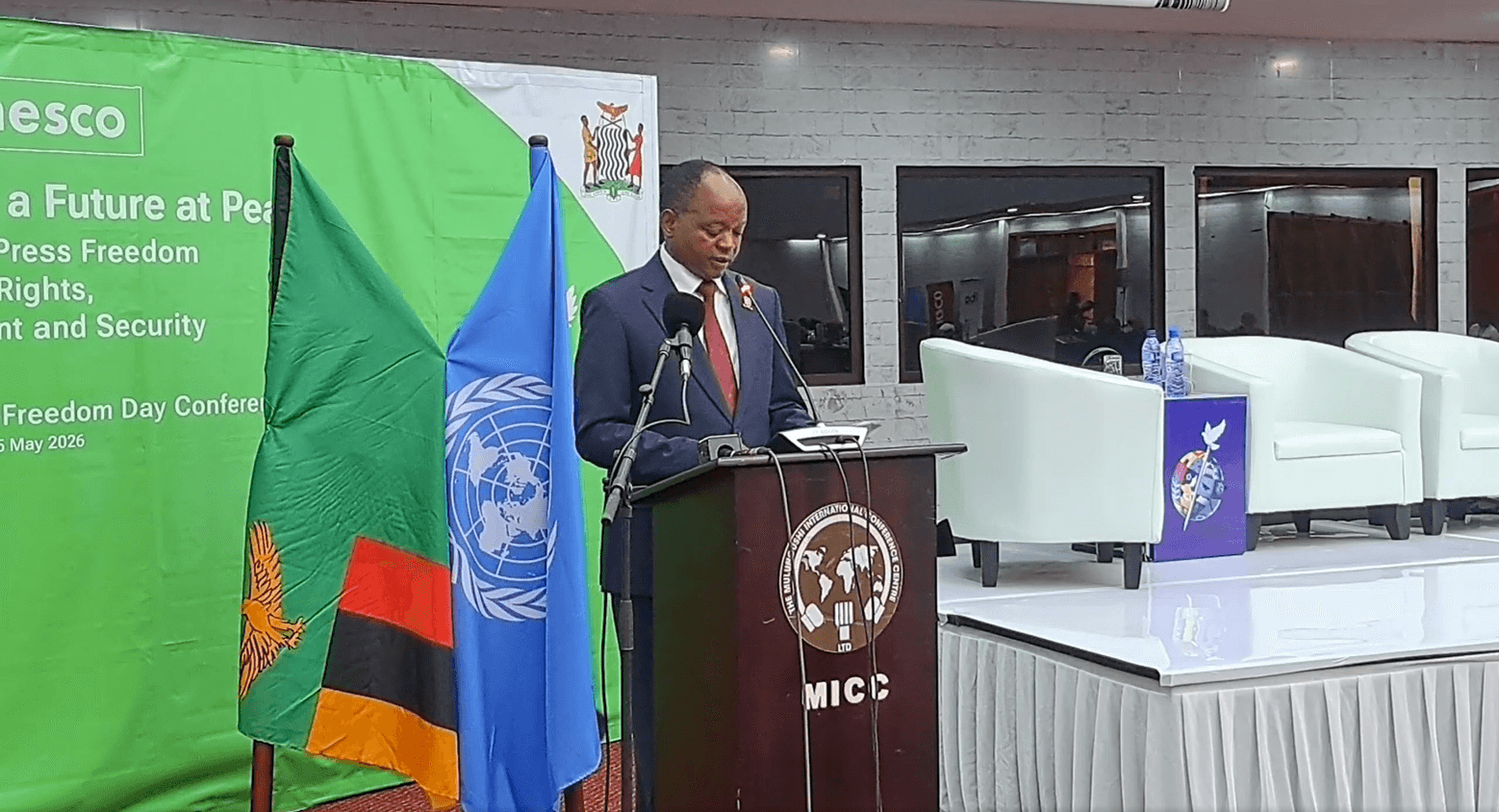
In a keynote address, Hon. Cornelius Mweetwa, MP, Zambia’s Minister of Information and Media, reaffirmed his country’s commitment to the new framework and delivered one of the conference’s most direct warnings about the growing menace of AI-driven disinformation.
Hon. Cornelius Mweetwa, MP, cautioned that algorithmically generated misinformation on digital platforms poses a direct threat to peace and governance efforts across the continent. He called for intensified campaigns to protect digital human rights, stressing that the media’s role in sustaining African democracies is more critical and more endangered than ever.
Zambia’s hosting of the event is itself a statement. The country is positioning itself as a regional anchor for the press freedom and media governance agenda as it expands beyond symbolic annual observance into actionable continental policy.
Phathiswa Magopeni Tshangaba, Executive Director of the Press Council of South Africa and Chairperson of NIMCA, used her platform to spotlight the mounting economic vulnerability of journalists on the continent. Speaking during a panel on Press Freedom, Peace, Security and Economic Development, she revealed that South Africa is working to establish a sustainable fund to support journalists financially, arguing that fighting disinformation requires collective, coordinated investment, not just institutional declarations.
The Africa Media Convention
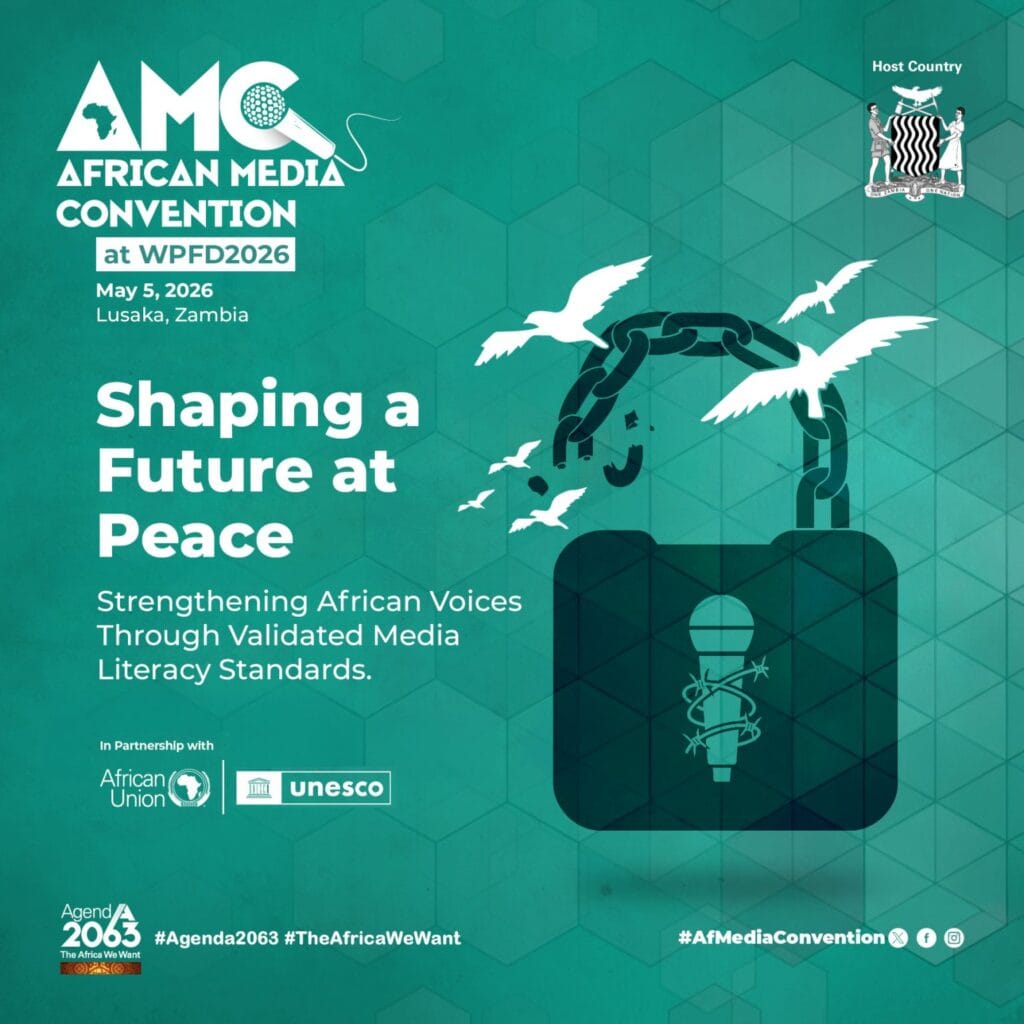
Running as a high-profile side event to the main World Press Freedom Day conference, the Africa Media Convention (AMC), organised in partnership with the African Union, is focused on translating the conference’s broader ambitions into a concrete, long-term roadmap for African media.
The Africa Media Convention brings together the African Union Commission, the African Editors’ Forum, UNESCO, the Network of Independent Media Councils in Africa, M20 and other partners. According to the African Union, the convention is designed as an annual platform for media stakeholders across Africa, with a focus on strengthening press freedom, media sustainability and digital innovation.
For 2026, the AMC is running under the theme, “Strengthening African Voices Through Validated Media Literacy Standards.”
The AMC has set out five foundational priorities:
- Media Sustainability: Developing Africa-led strategies for commercially viable, resilient media models that don’t rely on foreign aid or fragile advertising ecosystems.
- Legal Reform: Tackling the laws that silence journalists, including sedition statutes, criminal defamation provisions, and sweeping “false information” laws that have been used as instruments of suppression rather than protection.
- Digital Innovation: Positioning African journalism for the future through technology adoption, new media business models, and digital transformation of newsrooms.
- Disinformation Response: Strengthening the continent’s coordinated capacity to identify and counter mis-, dis-, and mal-information — including the AI-generated variety.
- Institutional Collaboration: Building a durable operational relationship between the AMC and the African Union for long-term systemic impact.
The Convention also placed democratic accountability squarely on the agenda, with delegates calling for stronger rule-of-law guarantees for journalists, particularly in cases where reporters expose corruption but perpetrators face no consequences.
The African Union’s Vision for Digital Empowerment
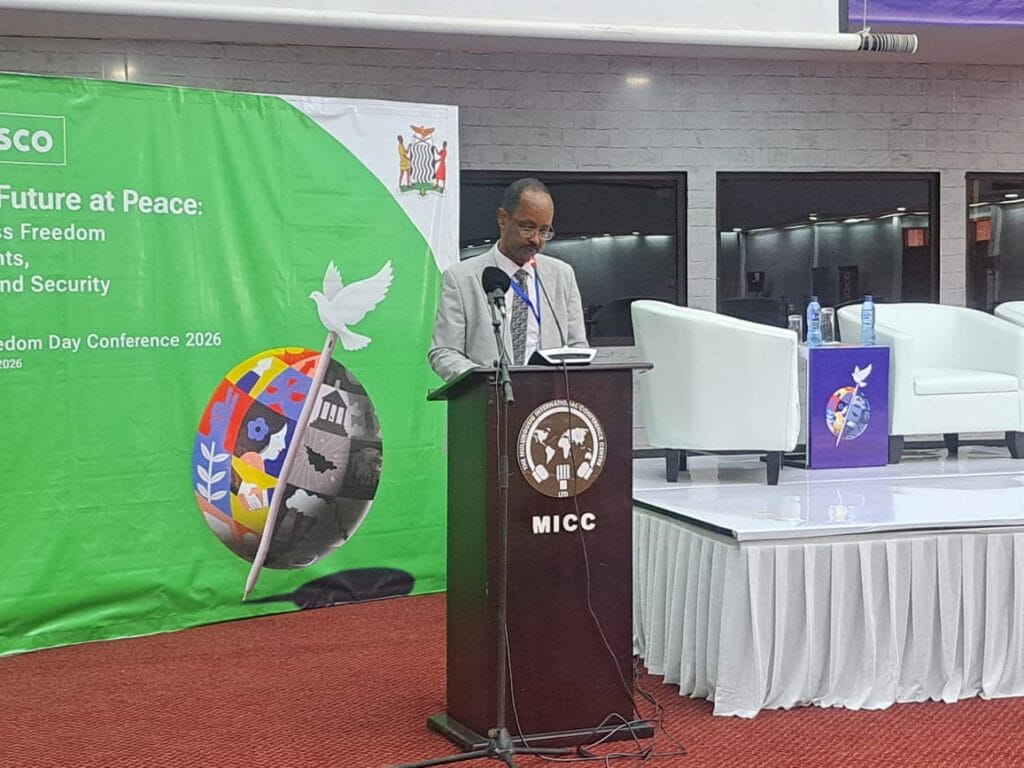
African Union Commission representative Mr Gamal Ahmed Karrar
At the margins of World Press Freedom Day 2026 in Zambia, the AU Information and Communication Directorate, in partnership with the UNESCO liaison office to the AU and UNECA, hosted a high-level stakeholder consultation session to validate the draft Continental Media and Information Literacy (MIL) Framework.
Speaking directly to delegates at the Africa Media Convention, Mr Gamal Ahmed Karrar, Senior Communications Officer at the African Union Commission, offered the clearest articulation yet of how the Media and Information Literacy (MIL) framework fits within Africa’s long-term development vision.
Karrar anchored the framework firmly in Agenda 2063 — The Africa We Want, Africa’s 50-year blueprint for transformative development. He pointed specifically to two of its aspirations as the framework’s ideological bedrock: Aspiration 6, which envisions an Africa whose development is people-driven, harnessing the full potential of its people, especially women and youth, while caring for children; and Aspiration 4, which calls for a peaceful and secure Africa.
By tying media and information literacy directly to peace, security, and people-centred development, Karrar framed the MIL framework not as a technical communications policy, but as a tool of social transformation — one designed to address literacy challenges and strengthen communities through empowerment in digital media literacy.
The framework, he stressed, is built to equip citizens, particularly Africa’s vast and growing youth population, with the critical thinking and digital skills needed to navigate an increasingly complex information environment. In doing so, it becomes both a shield against manipulation and a vehicle for informed civic participation.
Karrar also extended formal acknowledgement to UNESCO for its sustained efforts in advancing the MIL framework, recognising the organisation’s role as a foundational partner in translating the AU’s continental ambitions into workable policy
Africa’s media landscape is at an inflexion point. Digital penetration is expanding rapidly while legacy media is contracting. Social platforms distribute information at scale but without editorial accountability.
Governments in multiple countries have moved to tighten control of information under the banner of combating “fake news.” And journalists, particularly women and freelancers, face mounting physical, legal, and financial threats.
Against this backdrop, the Lusaka conference represents something beyond a commemoration of press freedom. It is an attempt to build the architecture for a healthier, more resilient, and more sovereign African information ecosystem, one in which the rules, the institutions, and the resources are shaped on African terms.
The framework now being developed by UNESCO and the African Union will be watched closely to see if it leads to meaningful policy change, or joins the long list of well-intentioned continental declarations.
The Lusaka conference continues through the week.
Reporting from the Africa Media Convention, World Press Freedom Day 2026, Lusaka, Zambia.
