

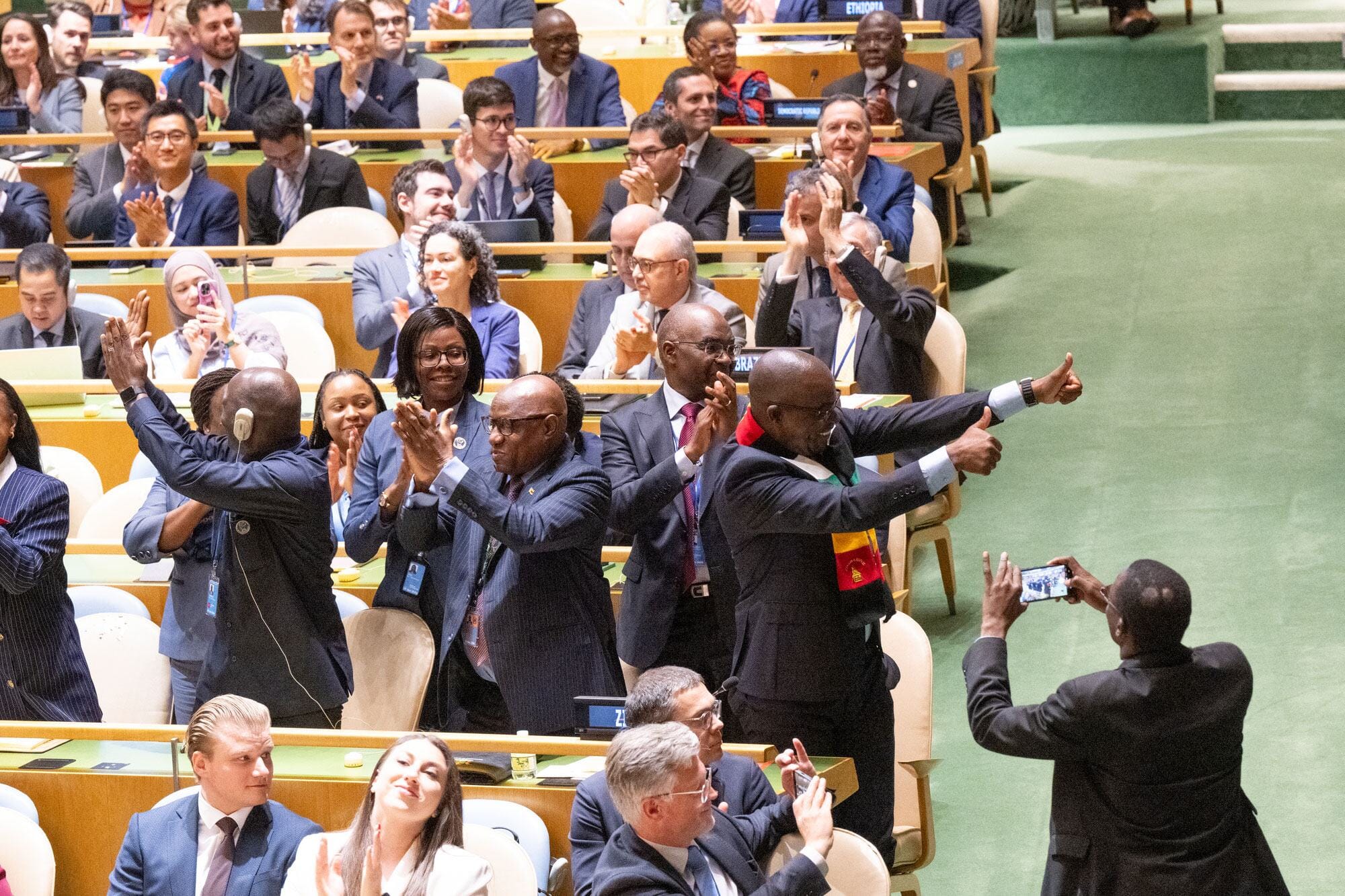
Zimbabwe has been elected to the United Nations Security Council for a two-year term, giving Harare a seat at the world body’s most powerful table and reviving a long-running African grievance over who gets to decide questions of war, peace and intervention.
The country won 182 votes as the sole African Group candidate in elections held by the UN General Assembly on 3 June 2026. Its term begins on 1 January 2027 and runs through 2028. Zimbabwe will replace Somalia, while the Democratic Republic of the Congo and Liberia will remain on the Council until the end of 2027, preserving Africa’s three elected seats on the 15-member body.
Austria, Portugal, Trinidad and Tobago and Kyrgyzstan were also elected. Kyrgyzstan will serve on the Council for the first time after defeating the Philippines in four rounds of voting. Portugal and Austria won the two seats allocated to the Western European and Others Group, beating Germany in one of the most closely watched contests.
The election marks Zimbabwe’s third term on the Council, after earlier stints in 1983–1984 and 1991–1992. Its 2027–2028 seat returns the country to a chamber where it once participated in defining debates over apartheid South Africa, Namibian independence, and post-Cold War intervention.
What is the UN Security Council?
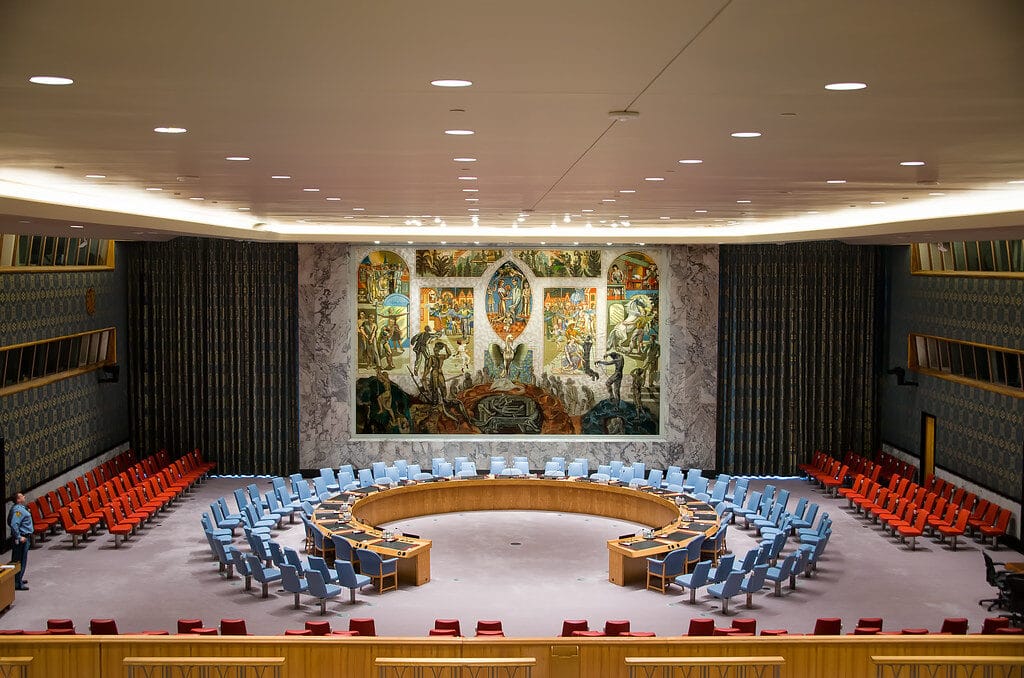
The Security Council has primary responsibility for the maintenance of international peace and security. Its decisions can bind UN member states, and it can impose sanctions or authorise the use of force.
China, France, Russia, the United Kingdom and the United States hold permanent seats and veto power, while 10 other members are elected for two-year terms without a veto.
Veto power is the exclusive right of the five permanent members to unilaterally block any substantive resolution or decision, regardless of how much international support it has.
Over the last decade, Africa has been the subject of 80 per cent of the Council’s resolutions, despite holding no permanent seat. In 2025 alone, 20 of the 44 resolutions passed explicitly addressed an African country or situation, and 18 of those authorised sanctions, peacekeeping, or military action.
That imbalance is why Zimbabwe’s election carries significance for Africa.
Africa’s fight for inclusion
For decades, African governments have argued that the Council still reflects the power structure of 1945 rather than today’s global realities.
Africa’s 54 UN member states form the largest regional bloc in the organisation, accounting for roughly 28% of the total 193 member states. Yet the continent holds no permanent seat on the Council.
The African Union’s common position, known as the Ezulwini Consensus, calls for at least two permanent African seats on the Council. It opposes the veto in principle, but holds that for as long as it exists, it must be available to all permanent members, including any new African ones. Five additional non-permanent seats form the third pillar of the demand.
African elected members try to advance common African positions on peace, security, sanctions, reform and AU-led peace operations.
Mugabe on Reform
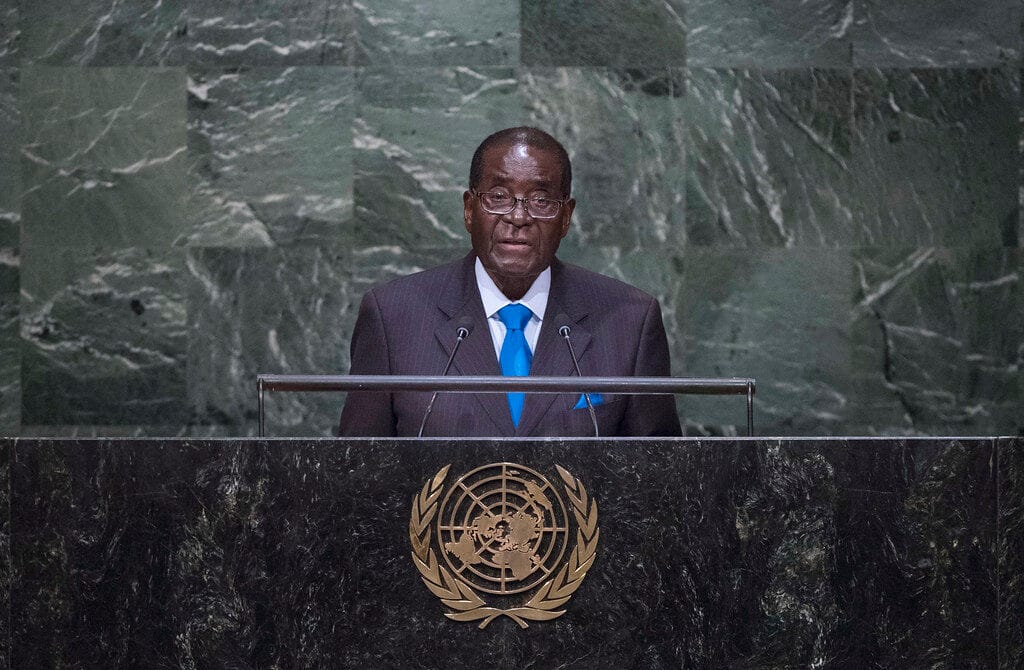
The diplomatic milestone for Zimbabwe brings back the speeches of former President Robert Mugabe, who made Security Council reform one of his recurring international themes.
At the UN General Assembly in 2010, Mugabe argued that Africa should be granted permanent seats with veto powers and additional non-permanent seats, saying the continent’s “plea for justice” could not continue to be ignored. Six years later, addressing the African Union, he described the permanent members as “the bosses of the Security Council” and accused them of denying Africa equal status in the global system.
His criticism sharpened after NATO’s 2011 intervention in Libya. The Security Council had adopted Resolution 1973, authorising all necessary measures to protect civilians and impose a no-fly zone. But Mugabe later accused NATO and the United States of using civilian protection as cover for regime change and the killing of Muammar Gaddafi.
That Libya episode remains central to Africa’s distrust of the Council’s current structure.
For many African states, it showed how a resolution presented as humanitarian protection could be interpreted by powerful military alliances in ways that went far beyond what African mediators had supported.
Although Zimbabwe’s new term will not resolve that structural dispute, non-permanent members can shape negotiations, build coalitions and influence language.
The Council is also entering 2027 amid deep divisions over Ukraine, Gaza and other conflicts, where veto politics have repeatedly limited collective action.
Still, elected members are not powerless. They can chair committees, influence sanctions debates, negotiate mandate language and coordinate regional positions. For Africa, that is where Zimbabwe’s role matters most. With the DRC and Liberia, it will form part of the A3, the African caucus expected to carry AU positions into Council negotiations.
Zimbabwe’s campaign message
Zimbabwe’s campaign messaging has pointed to peace and security, multilateralism, international law, regional cooperation, peaceful coexistence, and the women, youth, peace and security agenda. Its record suggests a foreign policy instinct shaped by sovereignty, anti-colonial politics and suspicion of externally driven intervention.
The election also gives President Emmerson Mnangagwa’s government a foreign-policy success at a politically sensitive time. Zimbabwean state media has framed the result as evidence of Zimbabwe’s engagement and re-engagement strategy. But the seat will also place Zimbabwe under sharper international scrutiny, particularly over governance, rights and constitutional politics at home.
Zimbabwe will sit at the Security Council table from 2027, but it will do so inside a system that Mugabe criticised for years and that the African Union still wants fundamentally changed.
For now, Harare has won a voice in the room, and Africa has preserved its rotating presence, but the larger problem remains unresolved.
Africa is present in the Council, but is still not permanent.
