


An African trader in Addis Ababa seeking to reach a market in Tunis, a journey that geography says should take only a few hours, absurdly finds that no direct flight exists between Ethiopia and Tunisia.
The route instead transits through Turkey, Germany or Rome. A journey that should have taken six hours becomes twelve or even more. As distance and time increase, so does cost, not merely delaying but actively denying the ambitions of many African entrepreneurs at a scale that is paralysing the continent’s entrepreneurial spirit.
This is the quiet absurdity behind Africa’s unfinished open skies agenda. The continent wants to improve cross-border trade and investment, yet many Africans still struggle to move within Africa.
The conversation around aviation has long been reduced to aircraft, airports and airline balance sheets. It is, however, part of the machinery of African integration.
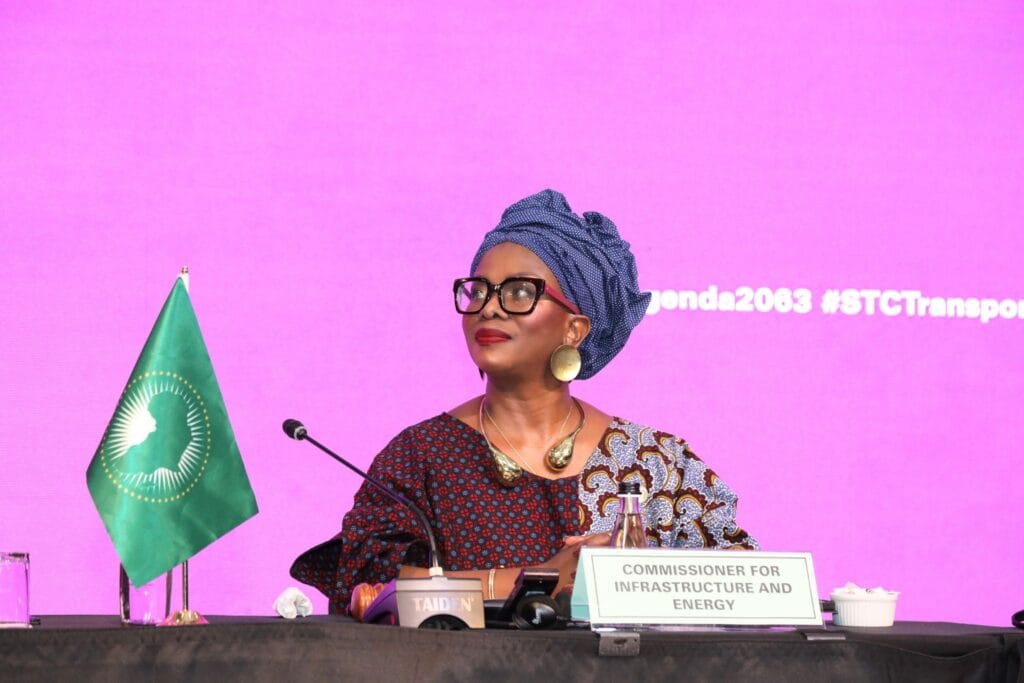
“Infrastructure and energy are no longer simply development sectors,” H.E. Lerato D. Mataboge, the African Union Commission’s Commissioner for Infrastructure and Energy, told ministers gathered in Johannesburg last month at the Fifth Ordinary Session of the Specialised Technical Committee on Transport and Energy.
“They are strategic systems. Systems that determine competitiveness, resilience, and the ability of economies to integrate and grow.”
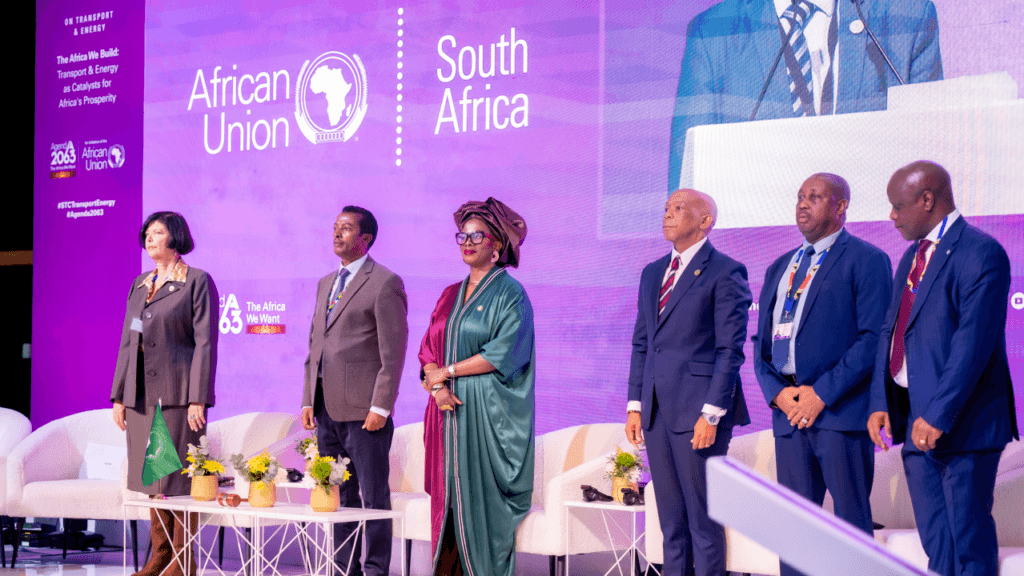
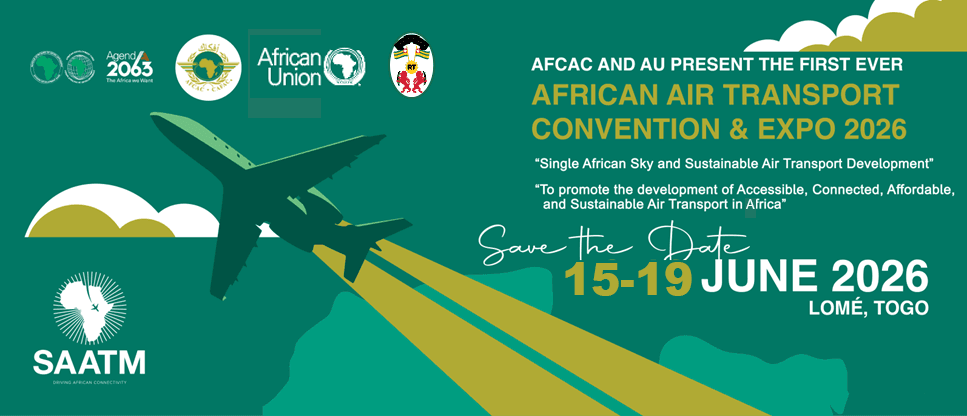
Her sentiments now hang over Lomé, Togo, where the African Civil Aviation Commission and the African Union are convening the continent’s first-ever African Air Transport Convention and Expo from 15 to 19 June.
Hosted under the patronage of the Government of the Republic of Togo, this five-day event, themed “One African Sky: Connectivity and Sustainable Air Transport Development,” is expected to secure high-level commitments to accelerate the implementation of the Single African Air Transport Market (SAATM). The event brings together regulators, airlines, airport operators, and other industry partners.
The test in Lomé will be whether African governments and aviation stakeholders can turn SAATM into direct routes, lower charges, aligned bilateral agreements, easier visas, bankable airport and air-navigation projects, and cheaper movement for the entrepreneurs, traders, students and families who still pay the price of fragmentation
A Dream Africa Has Documented For Decades
The African Union has understood the problem of fragmented skies on paper for decades. Its aviation liberalisation efforts date to October 1988, when 40 ministers of civil aviation met in Yamoussoukro, Côte d’Ivoire, and announced a new air transport policy.
A decade later, in November 1999, they returned to the same venue and adopted the Yamoussoukro Decision, which detailed concrete measures for liberalising access to air transport markets across Africa. That Decision was formally adopted at the Assembly of Heads of State in Lomé, Togo, in July 2000. Eighteen years later, on 28 January 2018, the African Union launched the Single African Air Transport Market at its 30th Ordinary Session in Addis Ababa.
SAATM was meant to deregulate air services, open regional markets and expand connectivity between African cities. But as laudable as the dream of One African Sky is, progress has been sluggish.
“Indecision, protectionism, fragmentation and a lack of follow-through,” is how Adefunke Adeyemi, Secretary General of the African Civil Aviation Commission, diagnoses the slow adoption of the continental policy.

“Governments have kept markets closed to protect national carriers. Inconsistent rule enforcement has fractured what was meant to be a unified framework, and aviation has been taxed to fill national budgets rather than developed as connective infrastructure,” she said.
Commissioner Mataboge, speaking from a broader infrastructure mandate in Johannesburg, arrived at a structurally identical conclusion.
The challenge before the continent, she told ministers, “is not one of strategy. It is one of implementation.”
A Growing Market Inside A Broken System
African aviation is experiencing rapid, record-breaking growth, with air travel demand in Africa outpacing the global average.
According to the AFRAA Air Transport Report for Q4 2025, African airlines recorded strong growth in 2025. Available seat kilometres were up 7.2 per cent and revenue passenger kilometres up 11.3 per cent compared to the same quarter in 2024. Passenger revenue rose 7.9 per cent year-on-year.
At face value, this looks like a healthy, expanding market. But beneath the headline numbers is a tale of structural distortions.
Of the 55 countries on the continent, only seven offered direct flights to more than 20 other African nations in Q4 2025. Ethiopia leads, unsurprisingly, given Ethiopian Airlines’ status as the continent’s largest airline, with direct connections to just over 60 destinations in 38 African countries. Kenya stands second at 35 destinations across 30 African countries.
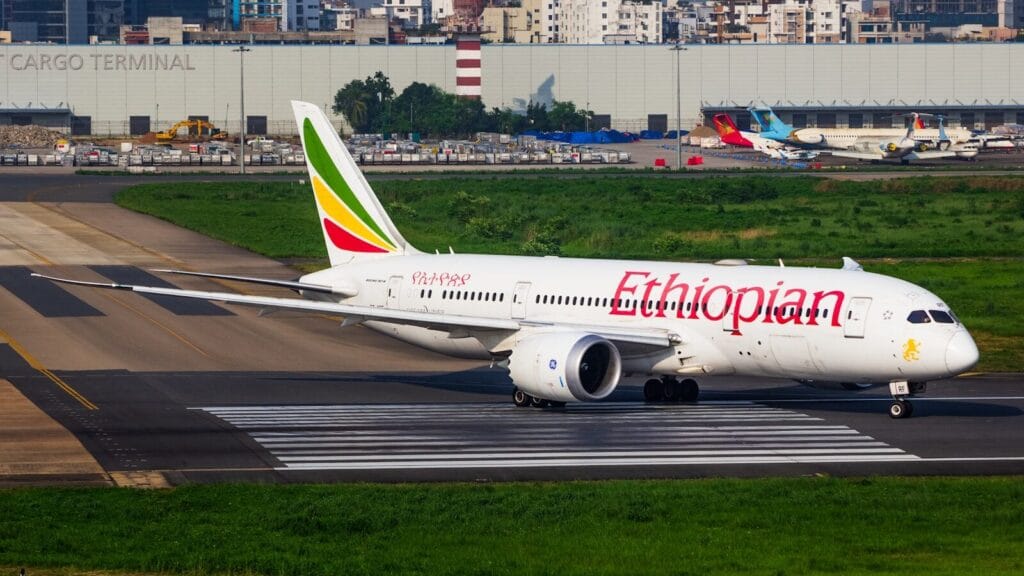
Many African countries still have single-digit direct connections to the continent they call home.
The regional gaps are even more striking. Inter-regional connectivity within Africa remains severely constrained. The highest cross-regional connectivity rate recorded was just 33 per cent between Northern and Western Africa. Connectivity between Southern and Western Africa stands at a mere 2 per cent.
Africa is trying to build the African Continental Free Trade Area on top of a transport system that still makes it difficult for people, goods, services and ideas to move across the continent.
The Cost Of Flying While Fragmented
IATA figures show that African airlines face fuel costs approximately 17 per cent above the global average. Taxes and charges run 12 to 15 per cent higher. Air navigation fees are 10 per cent higher. Maintenance, insurance and capital costs exceed global norms by 6 to 10 per cent.
Commissioner Mataboge noted that costs across Africa remain among the highest globally, in some corridors running 50 to 175 per cent above comparable regions, largely due to inadequate and fragmented infrastructure.
The consequences are visible in airline profitability. African airlines are projected to earn just $200 million in combined profit in 2026, roughly $1.30 per passenger, against a global average of $7.90.
The continent generates significant demand but captures only a thin share of global aviation value. It accounts for a meagre 2 to 3 per cent of global passenger traffic despite housing approximately 18 per cent of the world’s population.
Sovereignty in the skies demands localised production
For African airlines, sovereignty is more than the right to fly. It is also the ability to control the cost base behind flight: fuel, maintenance, finance, insurance, airport charges and route access.
“Why should Africa remain passive while global shocks determine its aviation costs? Why should the continent not develop its own energy supply, first for itself and then for export?” This was a pointed argument made by Adeyemi, as she posited that Africa can not fully develop when overreliant on foreign supply chains.
She pointed to the Dangote refinery in Nigeria, a 650,000-barrel-per-day facility whose fuel exports have begun reaching markets across sub-Saharan Africa, including Côte d’Ivoire, Cameroon, Tanzania, Ghana and Togo. The refinery has not resolved Africa’s aviation fuel challenge, but it has begun changing the conversation.
Commissioner Mataboge placed this challenge in its global context from Johannesburg.
With oil prices volatile and close to $100 a barrel amid the ongoing Middle East conflict, she warned that price and supply impacts are already compounding existing structural weaknesses in Africa’s transport, power and clean cooking sectors.
The continent’s vulnerability to external supply shocks is not incidental; it is, she argued, a function of structural dependence.
Africa holds at least 125 billion barrels of oil reserves, 18 trillion cubic metres of natural gas and, by some estimates, up to 40 per cent of global renewable energy potential. Yet it remains overwhelmingly dependent on imported or externally refined fuel. East Africa currently refines just 5 per cent of its own oil. The African Union’s target is to push that to 48 per cent.
A continent that cannot control its energy and infrastructure costs will struggle to make air travel affordable, competitive and resilient.
What SAATM Has and Has Not Delivered
The Single African Air Transport Market should not be understood simply as a plan to allow more planes to fly between more African cities. At its core, it is about building the legal and commercial trust that allows African states to open their air markets without fearing chaos, unfair competition or the erosion of national sovereignty.
Some measure of progress has been reported.
Commissioner Mataboge reported that 38 Member States, representing more than 90 per cent of air transport traffic, have joined SAATM. She noted that 118 new intra-Africa air traffic routes have been supported since 2023, a tangible expansion in market access.
The AU has also begun developing bankable aviation projects to address infrastructure gaps, promote new routes, improve safety and deploy modern air traffic management systems.
Although tangible steps have been taken, SAATM’s central weakness remains the gap between formal adoption and practical implementation.
Restrictive bilateral air service agreements, high taxes and visa barriers are still slowing the rollout of SAATM. Although SAATM’s dispute mechanism has helped resolve nearly 30 bilateral disputes, some African countries continue to use bilateral agreements to shield national carriers and limit competition from new entrants.
Protectionism is taxing the whole continent. By clinging to restrictive bilaterals, high taxes and closed markets, African countries may be defending national carriers at the expense of a larger continental market that could make those same carriers more viable.
Many governments fear that open skies will weaken national airlines. Yet the existing system has already produced weak national markets, thin routes, expensive tickets and limited competition.
The Absurdity of the Itinerary
The human cost of fragmentation is found in the itinerary.
Despite intra-African travel representing 32 per cent of total African airline traffic, only 19 per cent of intra-African routes are served by direct flights. The rest require connections, often through European hubs, producing quiet absurdities that compound daily.
The rest require connections, often through non-African hubs.
An entrepreneur in Kinshasa trying to reach a partner in Lagos, a distance of 3000 km, should be flying directly instead of transiting via Europe.
Poor connectivity taxes African ambition and isolates marketplaces.
According to AFRAA data, Addis Ababa remains Africa’s most connected hub. Ethiopia’s success has been deliberately built over decades through government commitment, strategic investment and route expansion.
But Ethiopia’s rise also exposes an imbalance in continental progress, which has been concentrated rather than distributed. The gap between Africa’s aviation leaders and its laggards remains wide.
Africat cannot fully integrate through a handful of strong hubs alone.
Why Open Skies?
For Adeyemi, the entry point to this entire conversation begins with a correction of perspective.
Speaking to African Union Media Fellow Michael Dewornu at Biashara Afrika 2026 in Lomé, she refused to frame aviation as a narrow transport issue.
“People do not fly merely to fly,” she said. “They fly for trade, tourism, education, medical care, adventure, even love.” Aviation’s superpower, in her telling, is that it transforms lives by collapsing distance.
If Africa wants more intra-African trade, it needs intra-African mobility. If it wants regional value chains, it needs reliable routes. If it wants tourism growth, it needs affordable access. If it wants its entrepreneurs to think continentally, it cannot make continental movement punishingly expensive.
What Lomé Must Deliver
IATA estimates aviation contributes $75 billion to Africa’s GDP and supports 8.1 million jobs. And that is before the full potential of an integrated continental market is realised.
The opportunity is significant. But potential has become one of the most overused words in the African development discourse.
Africa has potential. The same goes for aviation, SAATM and AfCFTA. This has been said and repeated so often, so widely and at times so disingenuously that it sounds like nothing more than a cliché.
Lomé must produce something more tangible.
It must push countries to remove route restrictions, lower excessive taxes and charges, simplify visa barriers, harmonise regulations without weakening safety standards, support airline cooperation where scale requires it, and treat aviation infrastructure as productive economic infrastructure rather than a prestige sector.
Financiers also have to be part of the answer. Aircraft, airports, maintenance facilities, cargo systems, air navigation technology and route development should be treated as enabling infrastructure for trade and productivity.
Commissioner Mataboge’s call to transport and energy ministers in Johannesburg now applies directly to the aviation leaders gathering in Lomé.
“As your Secretariat, the African Union Commission needs your full support and commitment to accelerate the implementation of continental initiatives for more impactful outcomes on the ground.”
Africa has reached a juncture where the conversation about aviation can no longer be centred on aircraft.
At this pivotal juncture, aviation will be our litmus test. Of whether the borders dissecting the continent into 55 states remain as walls or become doors to African entrepreneurs, students, doctors, traders, artists and families whose dreams have been delayed, deferred and denied by closed skies.
Lomé will not be judged by the elegance of its declarations. It will be judged by what follows: routes launched, costs lowered, corridors opened, projects financed, and African travellers spared the absurdity of leaving the continent to reach another part of the continent.
