

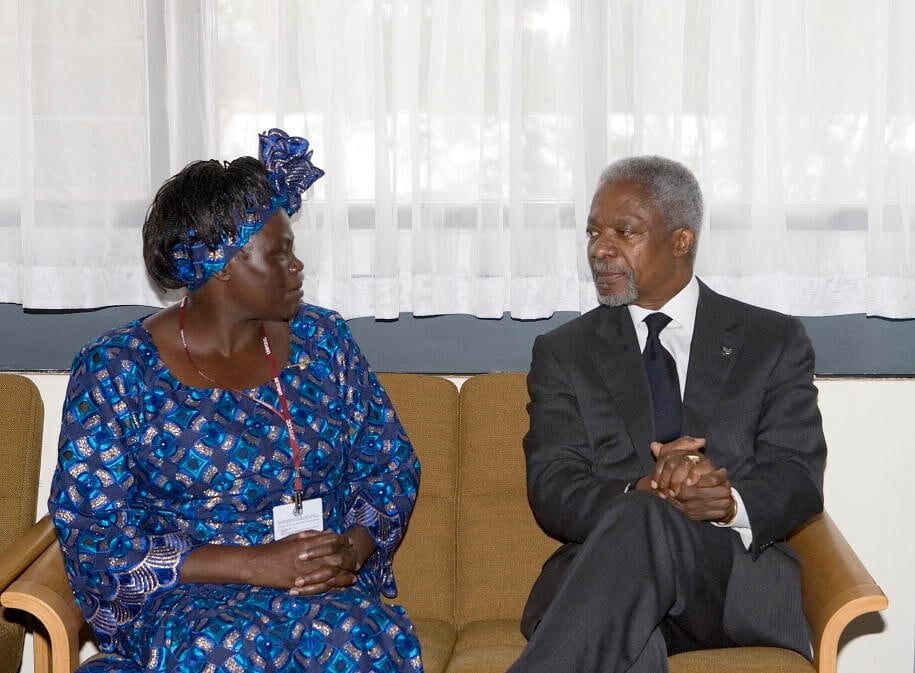
Since the Nobel Prize was first awarded in 1901, it has grown to become one of the world’s most recognised measures of human achievement.
Every year, it honours people and organisations whose work has made a lasting contribution to physics, chemistry, physiology or medicine, literature, peace and, since 1969, economic sciences.
The prize was established through the will of Alfred Nobel, the Swedish chemist, inventor, engineer, entrepreneur and author best known for inventing dynamite. Nobel held 355 patents during his lifetime. In his last will, Nobel specified that the bulk of his fortune be used to reward those who had “conferred the greatest benefit to humankind.”
Between 1901 and 2025, the Nobel Prizes were awarded 633 times to 1,026 people and organisations. Because some laureates have received the prize more than once, the official total stands at 990 individual laureates and 28 organisations.
Africa’s strongest representation has come through Peace and Literature, rather than the laboratory sciences. Under a strict Africa-born count, Peace leads with 12 laureates, followed by Literature with 8. Chemistry and Physiology or Medicine have 3 each, while Physics has 2. No Africa-born laureate has won the Nobel Memorial Prize in Economic Sciences.
By birthplace, South Africa has produced the highest number of African Nobel laureates, with 9, followed by Egypt with 6. Algeria and Liberia have 2 each. The Democratic Republic of the Congo, Ethiopia, Ghana, Kenya, Madagascar, Morocco, Nigeria, Tanzania, Tunisia and Zimbabwe each have 1.
Below is the full list of African Nobel Prize laureates, including their countries, prize categories, award years and the work that made them globally significant.
Max Theiler – South Africa – Physiology or Medicine – 1951
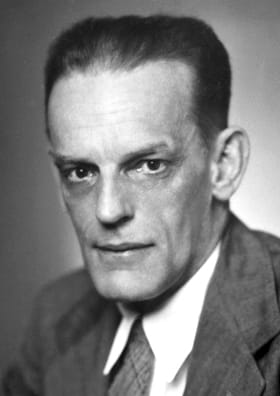
South African-born virologist Max Theiler worked at the Rockefeller Foundation in New York, where he made the discoveries that led to the prize. The Nobel citation honoured him “for his discoveries concerning yellow fever and how to combat it.”
His key breakthrough was showing how the yellow fever virus could be adapted in mice and then attenuated into the 17D vaccine, which became the basis of human immunisation against yellow fever.
Albert Camus – France (born in Algeria) – Literature – 1957
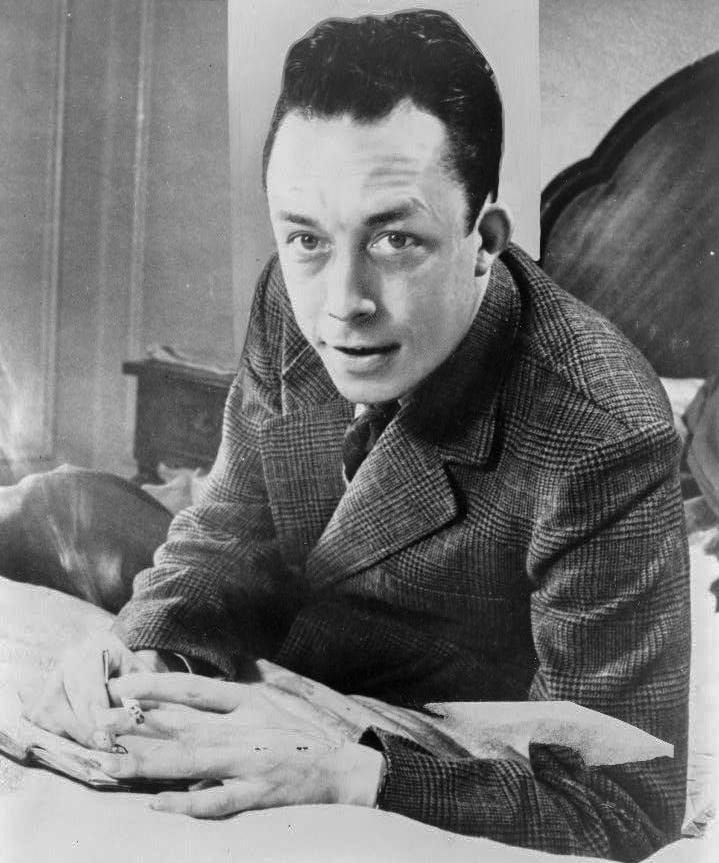
Albert Camus was born in Mondovi, French Algeria, but his literary career and public identity were primarily French. The Swedish Academy honoured him “for his important literary production, which with clear-sighted earnestness illuminates the problems of the human conscience in our times.”
Camus was the recipient of the 1957 Nobel Prize in Literature at the age of 44, the second-youngest recipient in history, and the first laureate in literature born in Africa. His works include The Stranger, The Plague, The Myth of Sisyphus, The Fall and The Rebel.
Albert John Luthuli – South Africa (born in Zimbabwe) – Peace – 1960
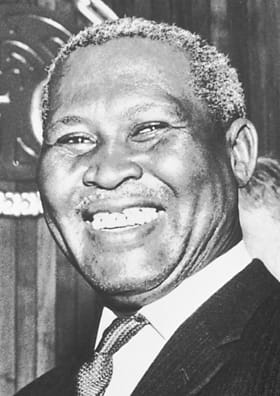
He was born in what is now Zimbabwe but became the leading South African anti-apartheid figure of his generation as President of the ANC from 1952.
The Nobel Committee cited him “for his non-violent struggle against apartheid,” specifically his Gandhian civil-disobedience campaign, protests, and moral leadership under banning orders and persecution.
He was the first African to receive the Nobel Peace Prize.
Mohamed Anwar al-Sadat – Egypt – Peace – 1978
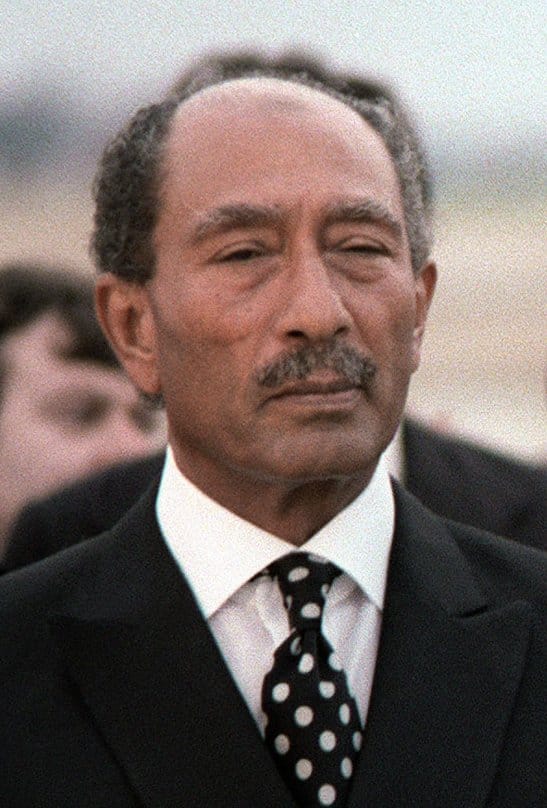
Mohamed Anwar al-Sadat was the President of Egypt and transformed his place in history through diplomacy with Israel. The Nobel Committee honoured him, jointly with Menachem Begin, “for jointly having negotiated peace between Egypt and Israel in 1978.”
Nobel’s account centres on his 1977 visit to Jerusalem and the Camp David Accords, which led to the 1979 Egypt-Israel peace treaty. The award recognised statecraft directed at a formal interstate peace settlement.
Allan MacLeod Cormack – South Africa – Physiology or Medicine – 1979
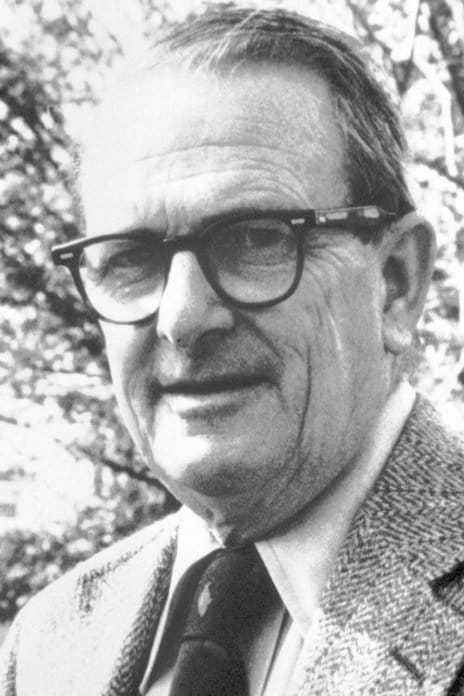
Allan MacLeod Cormack was born in Johannesburg and later worked at Tufts University in the United States. The Nobel citation recognised him “for the development of computer-assisted tomography.”
He won the 1979 Nobel Prize in Physiology or Medicine, along with Godfrey Hounsfield, for his work on X-ray computed tomography (CT), a significant and unusual achievement since Cormack did not hold a doctoral degree in any scientific field.
By about 1957, he had developed the mathematical methods that made CT scanning possible by reconstructing cross-sectional images from X-ray measurements.
Aaron Klug – South Africa – Chemistry – 1982
![By Bogaerts, Rob / Anefo - [1] Dutch National Archives, The Hague, Fotocollectie Algemeen Nederlands Persbureau (ANEFO), 1945-1989 Bestanddeelnummer 930-2390, CC BY-SA 3.0 nl, https://commons.wikimedia.org/w/index.php?curid=20430211](https://panafricanpost.com/wp-content/uploads/2026/06/Aaron_Klug_1979-786x1024.jpg "All African Nobel Prize Winners 6")
Aaron Klug was born in 1926 in Zelvas, Lithuania, and immigrated to South Africa with his parents at the age of two. He studied at the University of the Witwatersrand and the University of Cape Town before moving to Cambridge.
The Nobel citation honoured him “for his development of crystallographic electron microscopy and his structural elucidation of biologically important nucleic acid-protein complexes.”
He is recognised for his work on viruses and chromatin, where he combined X-ray crystallography with electron microscopy to reveal three-dimensional structures.
Desmond Mpilo Tutu – South Africa – Peace – 1984
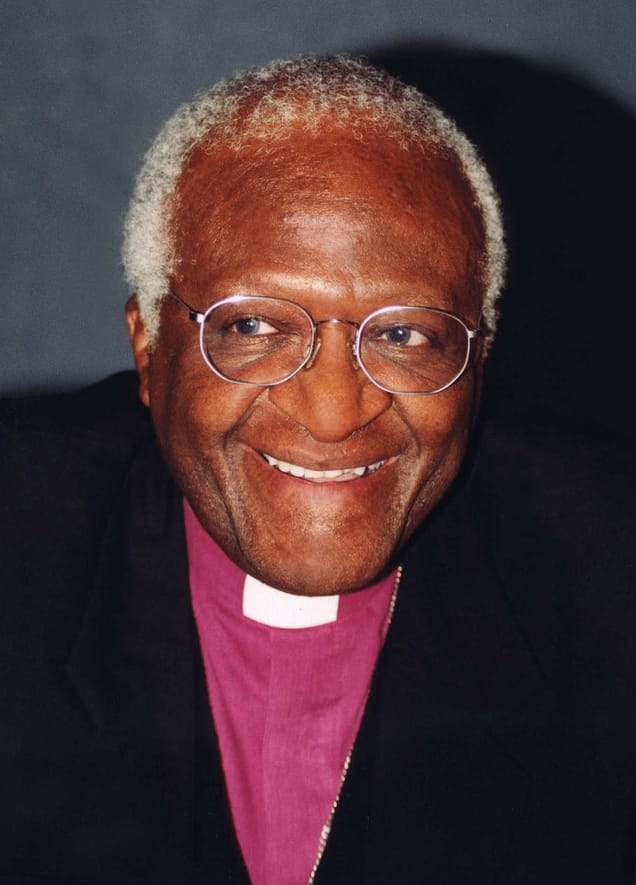
Desmond Mpilo Tutu was an Anglican cleric whose moral authority made him a global symbol of principled resistance to apartheid. The Nobel Committee cited him “for his role as a unifying leader figure in the non-violent campaign to resolve the problem of apartheid in South Africa.”
At the time of the award, he was Bishop of Johannesburg and former Secretary General of the South African Council of Churches. Tutu refused to abandon nonviolence despite repeated massacres and repression.
The Peace Prize significantly elevated his international influence in the sanctions struggle of the 1980s.
Claude Eugène Henri Simon – Madagascar – Literature – 1985
![By Unknown author - [1] Dutch National Archives, The Hague, Fotocollectie Algemeen Nederlands Persbureau (ANEFO), 1945-1989 bekijk toegang 2.24.01.04 Bestanddeelnummer 920-8866, CC BY-SA 3.0 nl, https://commons.wikimedia.org/w/index.php?curid=36967069](https://panafricanpost.com/wp-content/uploads/2026/06/Claude_Simon_1967-715x1024.jpg "All African Nobel Prize Winners 8")
Claude Eugène Henri Simon was born in Antananarivo, Madagascar. He was honoured as a writer “who in his novel combines the poet’s and the painter’s creativeness with a deepened awareness of time in the depiction of the human condition.”
The award was given for his role in the nouveau roman, especially works such as La Route des Flandres, shaped by war, memory, and fractured narrative time.
Wole Soyinka – Nigeria – Literature – 1986
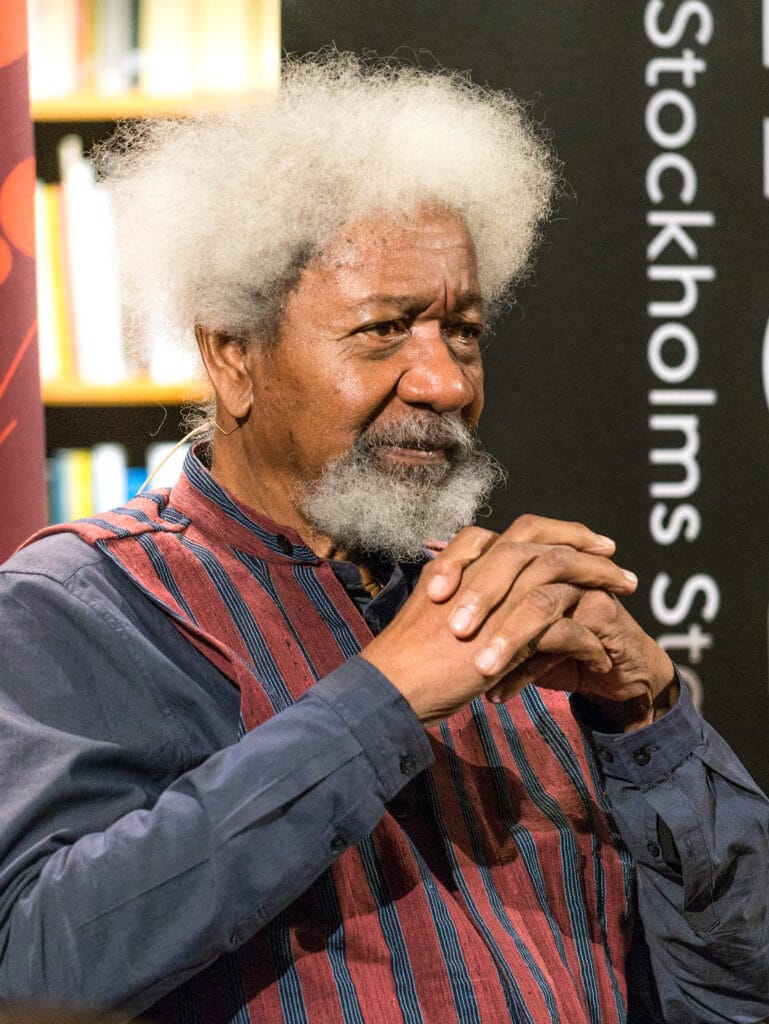
Wole Soyinka became the first Black African Nobel laureate in Literature through a body of writing rooted in Yoruba culture. The Swedish Academy cited him as a writer “who in a wide cultural perspective and with poetic overtones fashions the drama of existence.”
Nobel’s profile emphasises his work as playwright, poet, novelist, essayist, actor, and public intellectual, and notes the political consequences of his sharp criticism of Nigerian regimes.
Naguib Mahfouz – Egypt – Literature – 1988
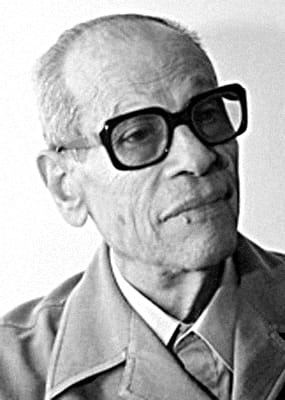
Naguib Mahfouz is the foundational Nobel laureate of modern Arabic fiction. The Nobel citation recognised a writer “who, through works rich in nuance … has formed an Arabian narrative art that applies to all mankind.”
Nobel’s profile stresses his lifelong relationship with Cairo, his long civil-service career, and a body of work of more than 30 novels and 350 short stories, including the Cairo Trilogy, which made him famous across the Arab world.
Nadine Gordimer – South Africa – Literature – 1991
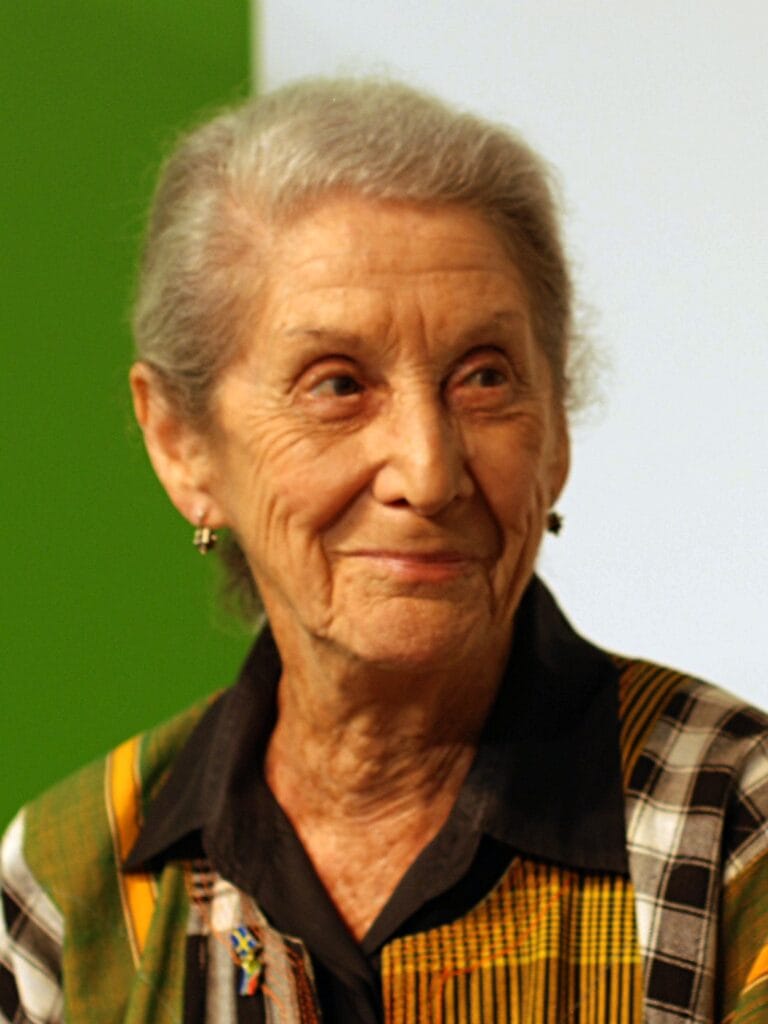
Nadine Gordimer’s fiction made South Africa’s racial order and its moral distortions legible to the world. The Swedish Academy awarded her the prize as a writer “who through her magnificent epic writing has … been of very great benefit to humanity.”
Nobel’s account underscores her anti-apartheid commitment, the banning of some of her books, and the way novels such as The Conservationist and later works track South Africa’s historical development through intimate human stories. She remained deeply rooted in Johannesburg throughout her career.
Nelson Rolihlahla Mandela – South Africa – Peace – 1993
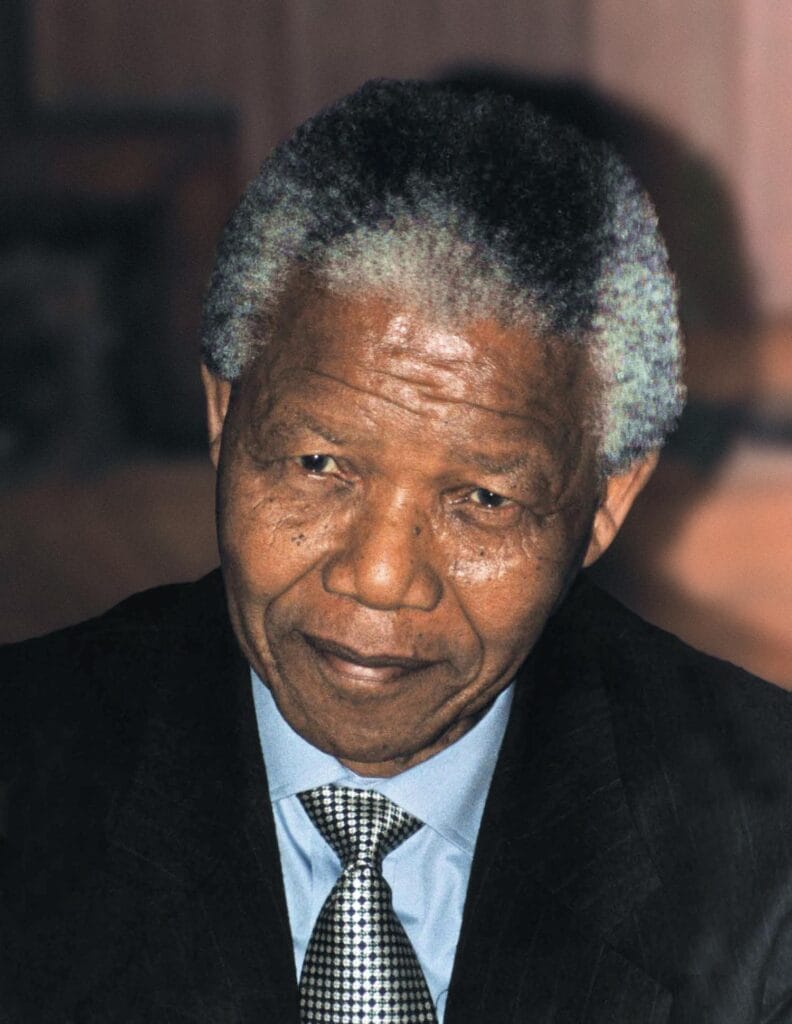
Nelson Rolihlahla Mandela shared the Nobel Peace Prize with F.W. de Klerk for the negotiated end of apartheid. The Nobel citation explicitly honoured them “for their work for the peaceful termination of the apartheid regime, and for laying the foundations for a new democratic South Africa.”
Mandela was a South African anti-apartheid activist, statesman, and revolutionary who was the first president of South Africa from 1994 to 1999. He was the country’s first Black head of state and the first elected in a fully representative democratic election.
Mandela served 27 years in prison at Robben Island. Amid growing domestic and international pressure and fears of racial civil war, President F. W. de Klerk released him in 1990. Mandela and de Klerk led efforts to negotiate an end to apartheid, which resulted in the 1994 multiracial general election in which Mandela became president.
Frederik Willem de Klerk – South Africa – Peace – 1993
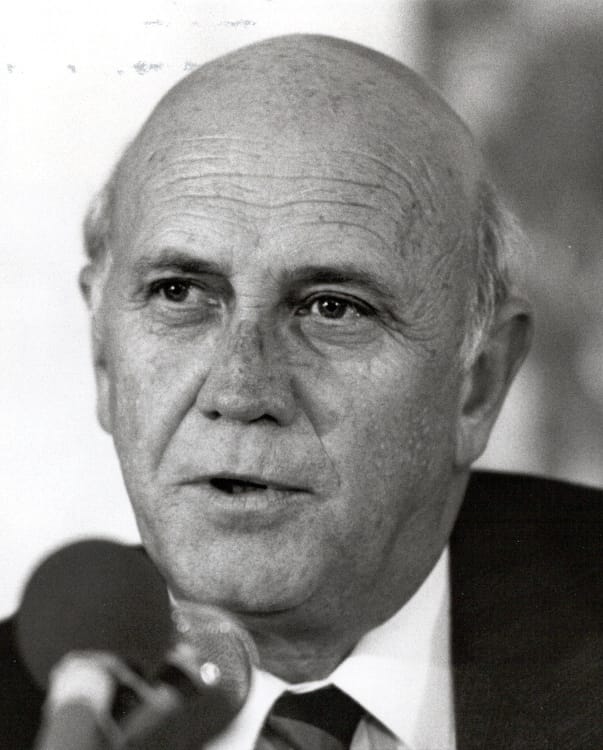
Frederik Willem de Klerk’s prize is inseparable from his political reversal on apartheid. Nobel’s citation was shared with Mandela and honoured both men “for their work for the peaceful termination of the apartheid regime, and for laying the foundations for a new democratic South Africa.”
Nobel’s explanation stresses that, after becoming President in 1989, he released Mandela, unbanned liberation movements, and negotiated a constitutional transition despite having long been part of the apartheid establishment.
His Nobel significance lies in helping make a negotiated rather than a catastrophic transition possible.
Claude Cohen-Tannoudji – Algeria – Physics – 1997
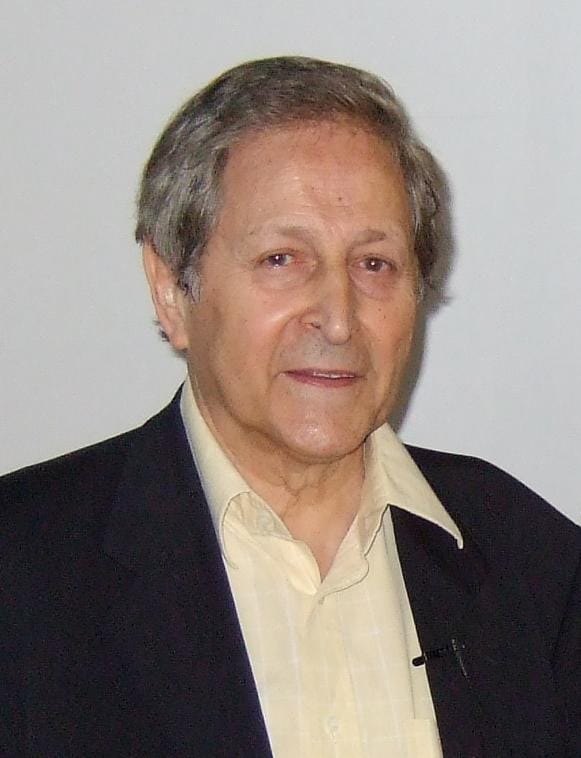
Claude Cohen-Tannoudji was born in Constantine, then French Algeria, and became one of France’s leading physicists. The Nobel citation honoured him, jointly with Steven Chu and William Phillips, “for development of methods to cool and trap atoms with laser light.”
His work in the 1980s helped create ways to decelerate atoms to extremely low temperatures, making precision experimental study possible.
Ahmed Hassan Zewail – Egypt – Chemistry – 1999
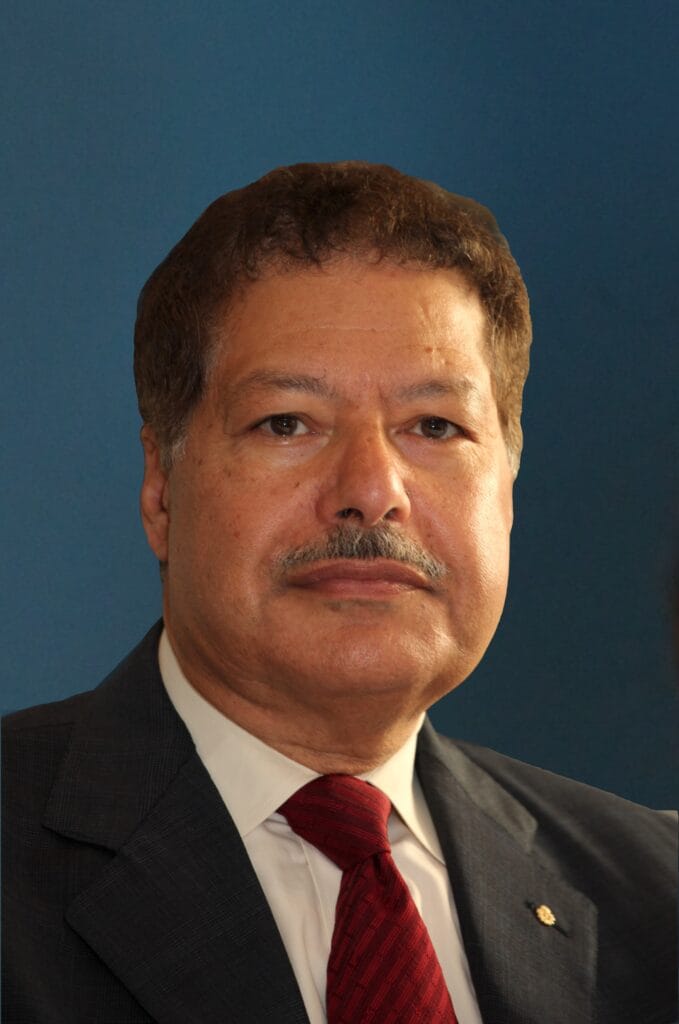
Ahmed Hassan Zewail became the first Arab Nobel laureate in a science category by opening a new observational window on chemistry. The Nobel citation honoured him “for his studies of the transition states of chemical reactions using femtosecond spectroscopy.”
In the late 1980s, Zewail developed ultrafast laser methods that allowed chemists to observe atomic motions during reactions, effectively founding femtochemistry.
Kofi Atta Annan – Ghana – Peace – 2001
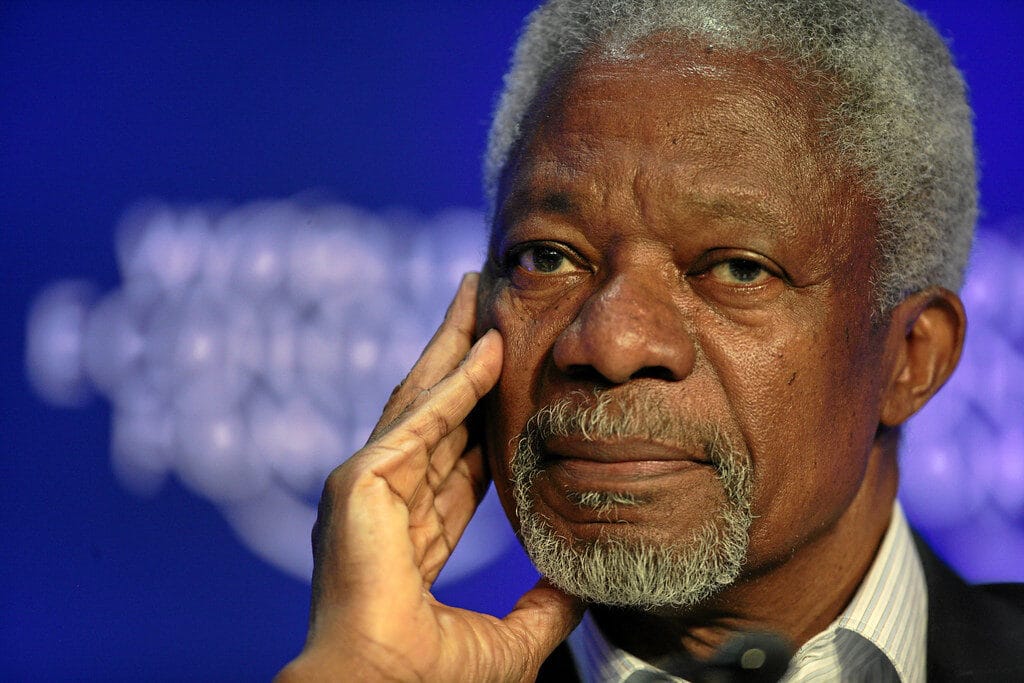
Kofi Atta Annan shared the Peace Prize with the United Nations in the UN’s centennial year. The Nobel citation honoured them “for their work for a better organised and more peaceful world.”
Nobel’s profile specifically credits Annan with revitalising the organisation, prioritising human rights, and pressing the struggle against the spread of HIV in Africa, while also noting his rise through the UN system to become the seventh Secretary-General in 1997.
Sydney Brenner – South Africa – Physiology or Medicine – 2002
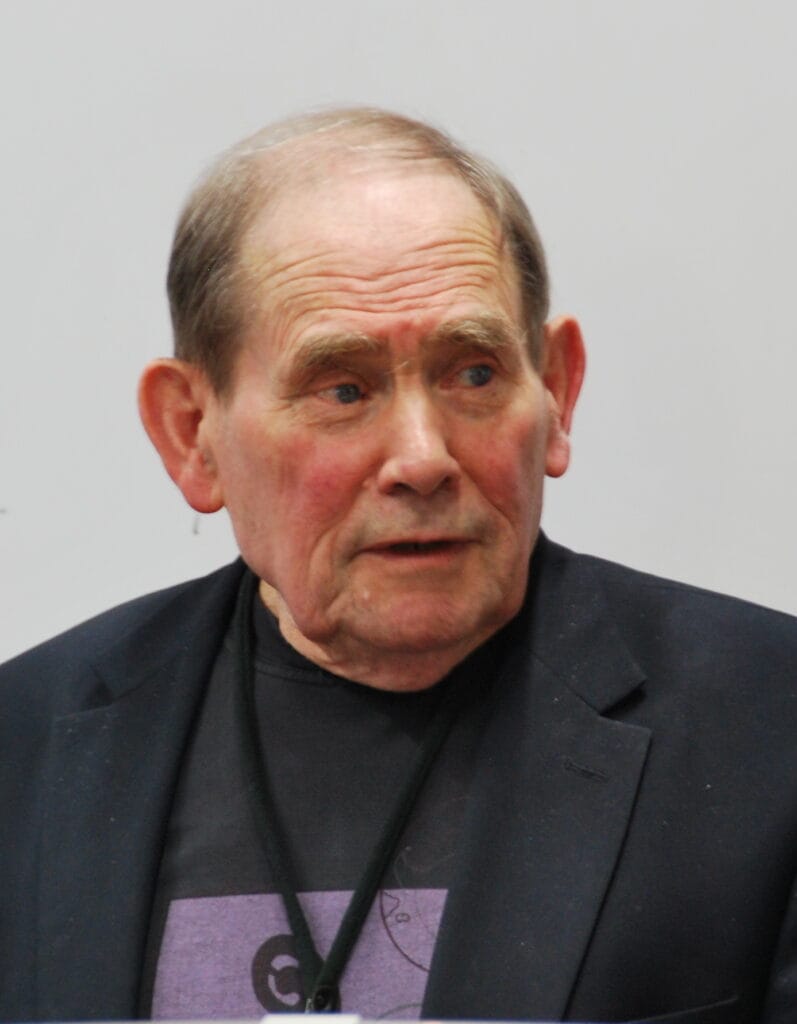
Sydney Brenner was one of the architects of molecular developmental genetics. The Nobel citation, shared with H. Robert Horvitz and John Sulston, honoured them “for their discoveries concerning genetic regulation of organ development and programmed cell death.”
Nobel’s explanation centres on Brenner’s mid-1970s work with Caenorhabditis elegans, which linked genetic analysis to cell lineage, organ formation, and apoptosis.
John Maxwell Coetzee – South Africa – Literature – 2003
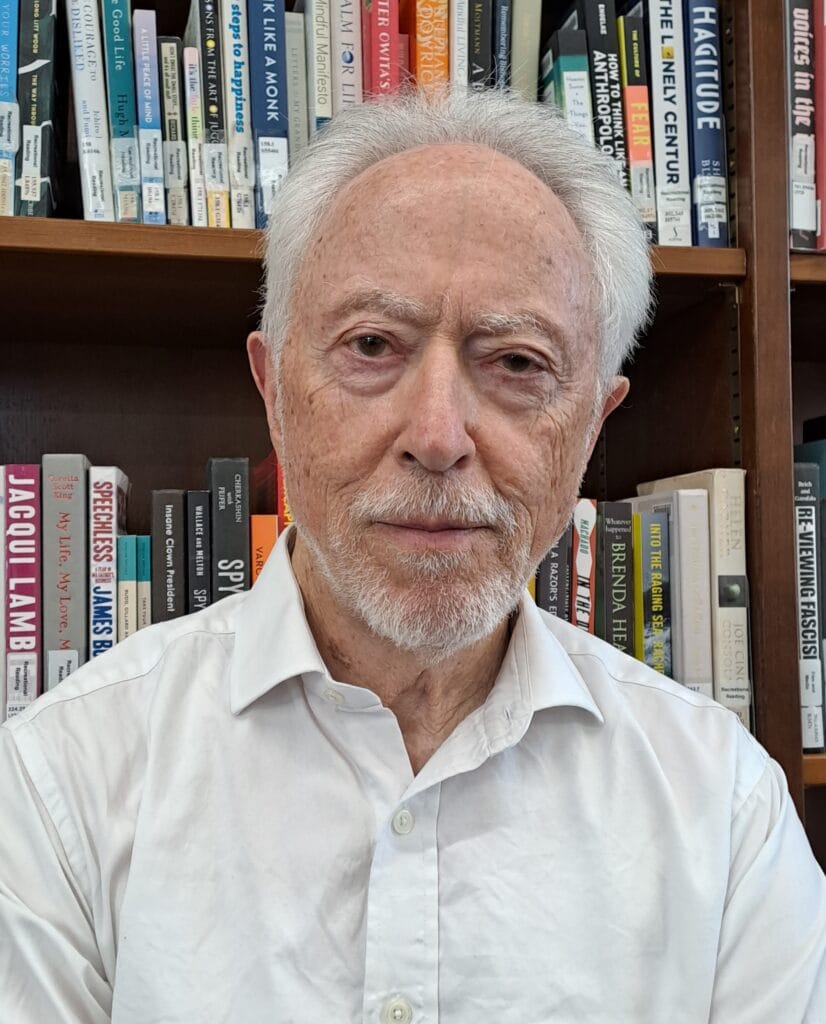
John Maxwell Coetzee’s Nobel recognised a distinctive moral style rather than a narrow single book. He was cited as a writer “who in innumerable guises portrays the surprising involvement of the outsider.”
Nobel’s profile highlights the breakthrough of Waiting for the Barbarians, the later moral and political power of novels such as Disgrace, and his sustained probing of conscience, power, colonialism, and complicity.
Although he later settled in Australia, South Africa is the indispensable primary association of the Nobel-era work.
Wangari Muta Maathai – Kenya – Peace – 2004
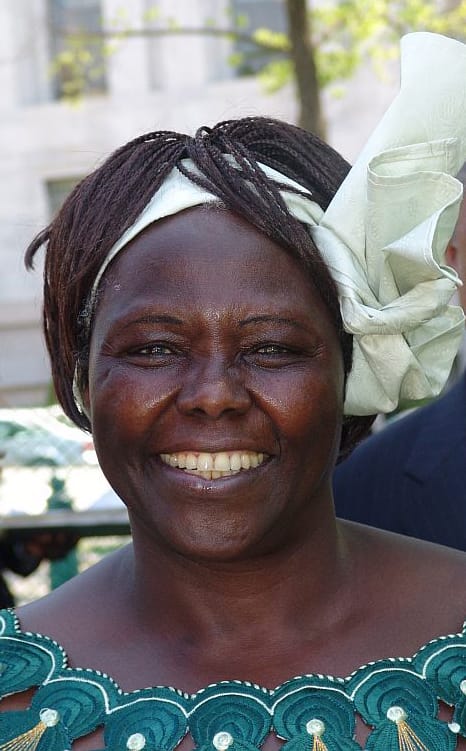
Wangari Muta Maathai linked ecology, democracy, women’s rights, and peace more coherently than any earlier Nobel laureate from Africa. The Nobel Committee cited her “for her contribution to sustainable development, democracy and peace.”
Nobel’s profile highlights the founding of the Green Belt Movement in 1977, her role in mobilising women to plant trees, and her opposition to authoritarian rule in Kenya. The award recognised not only reforestation but also her argument that environmental stewardship, citizen dignity, and democratic accountability are inseparable.
Mohamed ElBaradei – Egypt – Peace – 2005
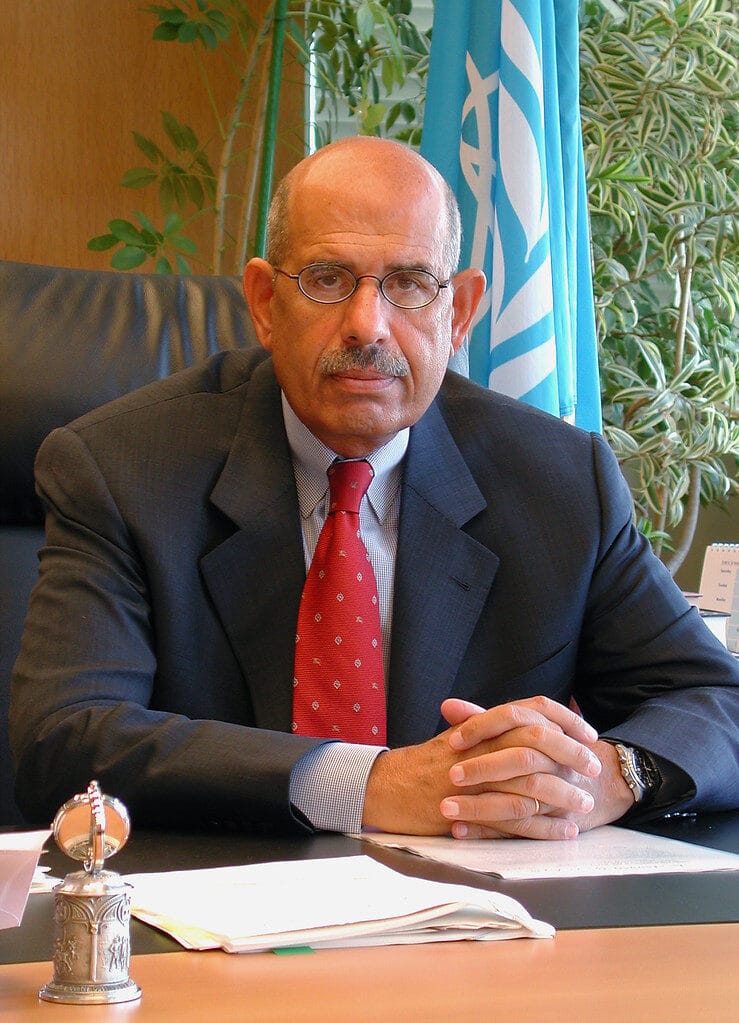
Mohamed ElBaradei shared the Peace Prize with the IAEA as its Director General. The Nobel citation honoured them “for their efforts to prevent nuclear energy from being used for military purposes and to ensure that nuclear energy for peaceful purposes is used in the safest possible way.”
He is credited with strengthening the organisation, expanding support for the non-proliferation regime, and giving credible international oversight to civilian nuclear power.
Doris Lessing – Zimbabwe – Literature – 2007
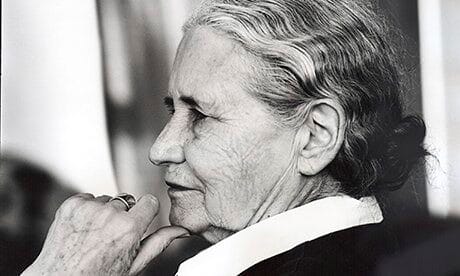
Born in Persia, she moved with her family to Southern Rhodesia in 1925, left formal schooling early, worked in colonial Southern Africa, and only moved to London in 1949.
The Swedish Academy cited her as “that epicist of the female experience, who with scepticism, fire and visionary power has subjected a divided civilisation to scrutiny.”
Nobel’s profile stresses her vast body of fiction on twentieth-century political and social life.
Her inclusion is justified because Rhodesia/Zimbabwe was formative to both her life and literary imagination, even though she remained publicly a British writer.
Ellen Johnson Sirleaf – Liberia – Peace – 2011
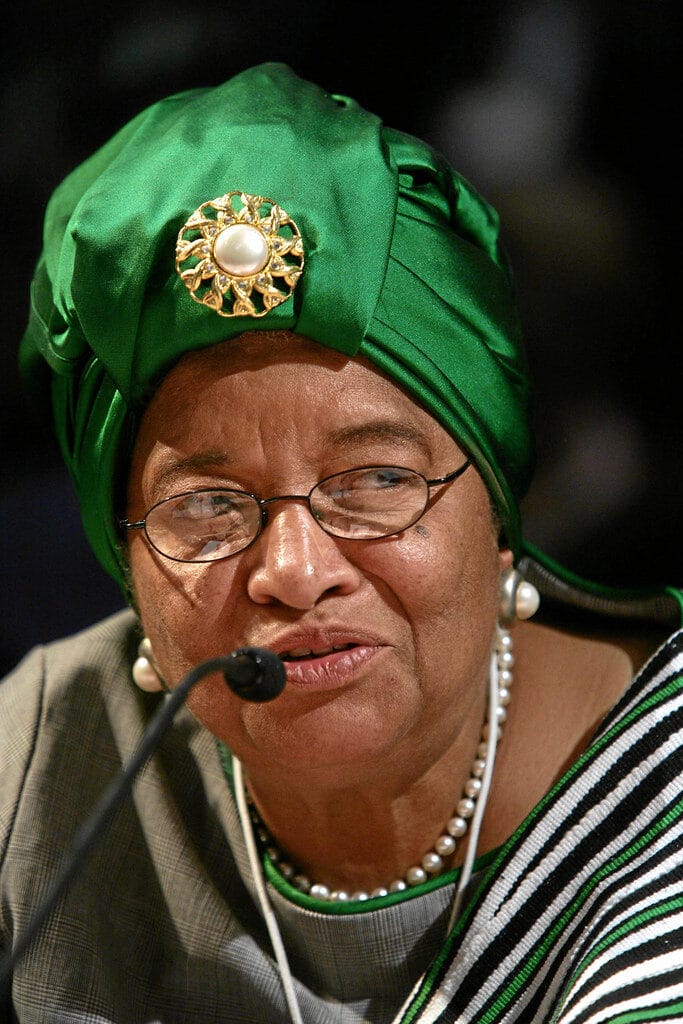
Copyright World Economic Forum
Ellen Johnson Sirleaf shared the 2011 Peace Prize with Leymah Gbowee and Tawakkul Karman. The Nobel citation honoured them “for their non-violent struggle for the safety of women and for women’s rights to full participation in peace-building work.”
Sirleaf is Africa’s first female democratically elected head of state. She is recognised widely for her use of office to strengthen women’s rights, peace, and free expression after war and exile.
The prize recognised a combination of activism, democratic leadership, and reconstruction.
Leymah Gbowee – Liberia – Peace – 2011
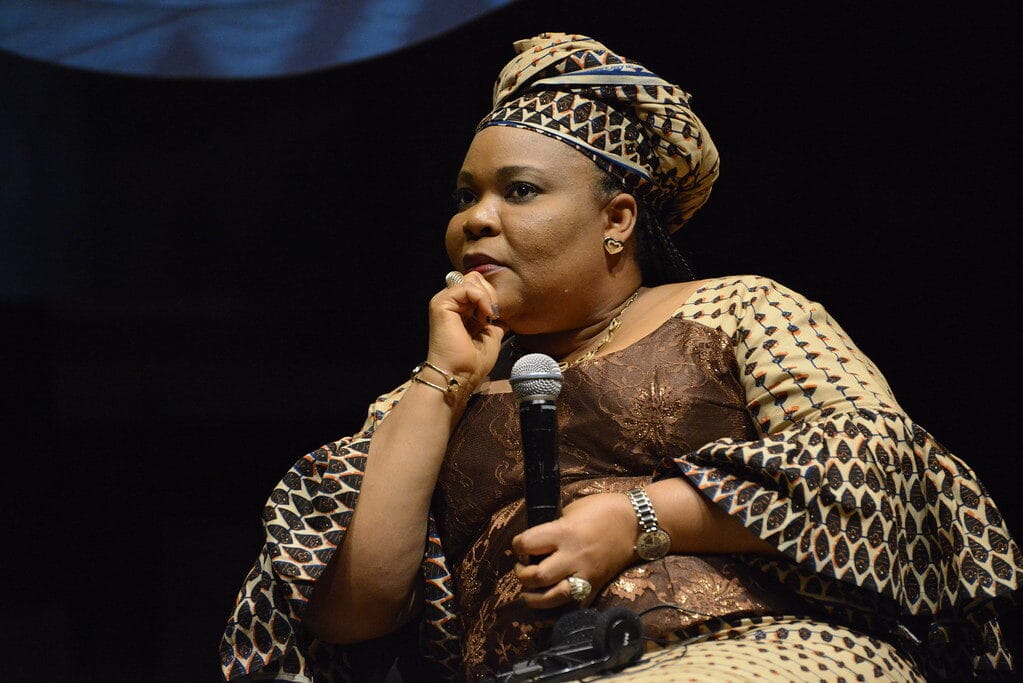
Leymah Gbowee’s Nobel story is rooted in grassroots mobilisation during Liberia’s civil wars. The Nobel citation, shared with Sirleaf and Karman, honoured a “non-violent struggle for the safety of women and for women’s rights to full participation in peace-building work.”
Nobel’s profile emphasises her trauma-therapy work with former child soldiers, the Women of Liberia Mass Action for Peace campaign in 2002, and the role of Christian-Muslim women’s mobilisation in pushing Charles Taylor towards a peace agreement in 2003.
Serge Haroche – Morocco – Physics – 2012
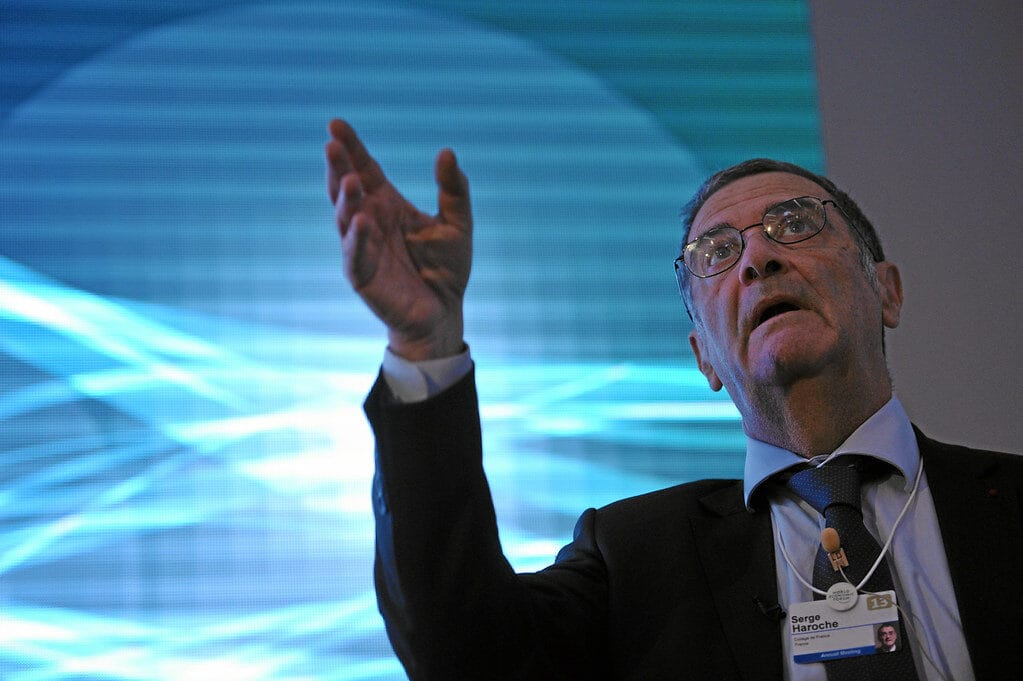
Copyright by World Economic Forum. swiss-image.ch/Photo Urs Jaudas
Serge Haroche was born in Casablanca and moved to France at age twelve. The Nobel citation, shared with David Wineland, honoured “ground-breaking experimental methods that enable measuring and manipulation of individual quantum systems.”
Nobel’s explanation centres on his ability to trap photons between mirrors and study fragile quantum states without destroying them, a major advance in quantum optics.
The institutional setting of the prize-winning work was entirely French, but the birthplace criterion brings him into an African inventory.
Michael Levitt – South Africa – Chemistry – 2013
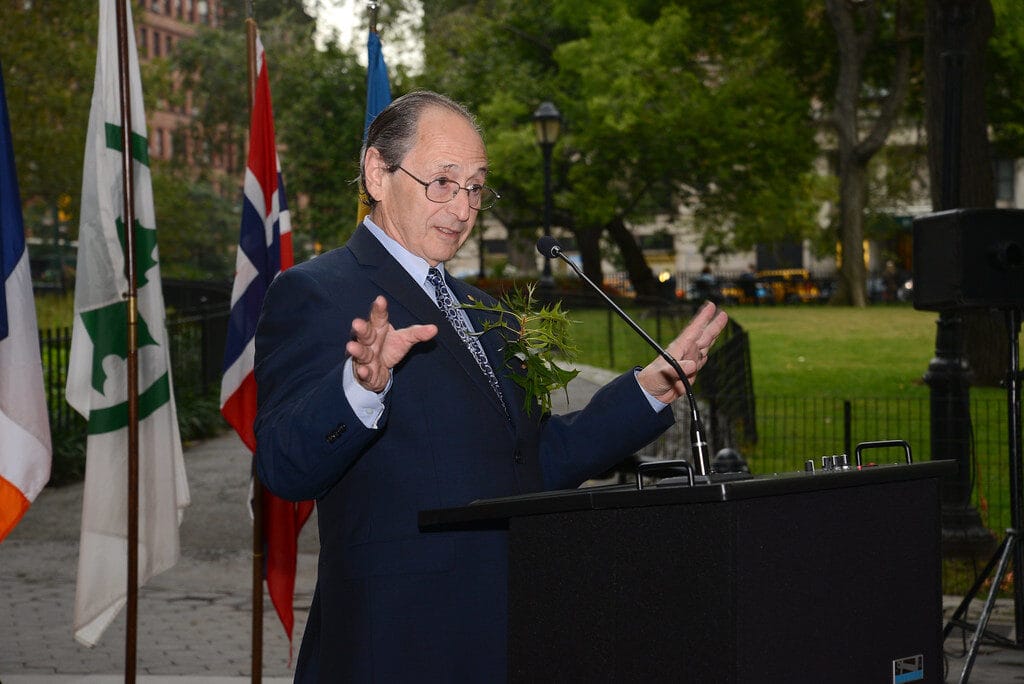
Michael Levitt shared the 2013 Chemistry prize for work that made molecular modelling vastly more realistic and useful. The Nobel citation honoured him, jointly with Martin Karplus and Arieh Warshel, “for the development of multiscale models for complex chemical systems.”
In the 1970s, the trio found ways to combine quantum mechanics at reaction sites with classical mechanics for the rest of the system, making computational chemistry genuinely practical.
Tunisian National Dialogue Quartet – Tunisia – Peace – 2015
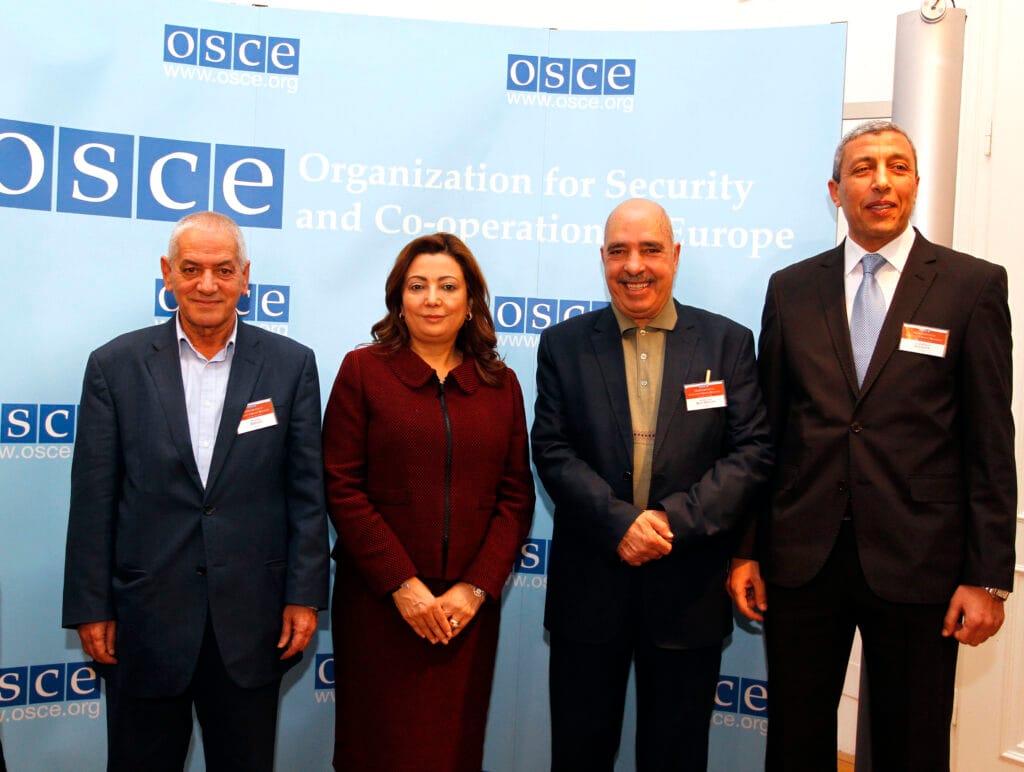
The Tunisian National Dialogue Quartet is a group of four civil society organisations that were central mediators in the effort to consolidate democratic gains and form a lasting constitutional settlement in Tunisia following the unrest and historic regime change of the 2011 Jasmine Revolution.
On 9 October 2015, the quartet was awarded the 2015 Nobel Peace Prize “for its decisive contribution to the building of a pluralistic democracy in Tunisia in the wake of the Jasmine Revolution of 2011”
Kaci Kullmann Five, chairwoman of the Nobel Committee, remarked of the Quartet: “It established an alternative peaceful political process at a time when the country was on the brink of civil war.” The Nobel Committee indicated its hope that Tunisia will serve as an example for other countries experiencing moments of political transition
Denis Mukwege – Democratic Republic of the Congo – Peace – 2018
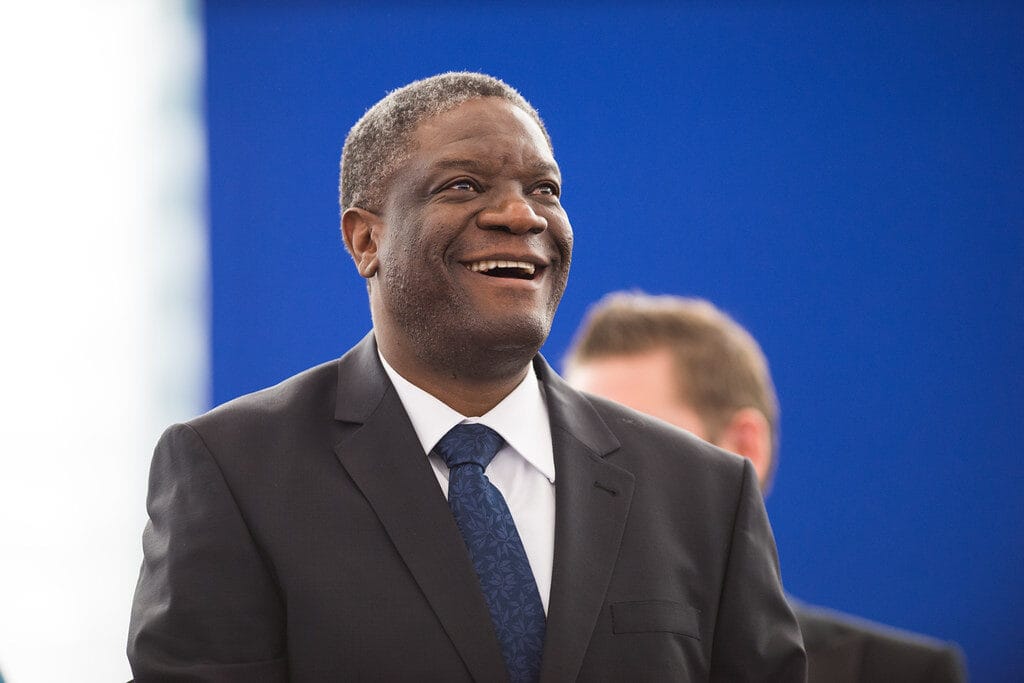
Denis Mukwege is a Congolese humanitarian, gynaecologist and Pentecostal pastor. He founded and works in Panzi Hospital in Bukavu, where he specialises in the treatment of women who have been raped.
The Nobel citation, shared with Nadia Murad, honoured them “for their efforts to end the use of sexual violence as a weapon of war and armed conflict.”
Nobel’s profile focuses on his work as a gynaecologist in Bukavu, his leadership at Panzi Hospital, and the treatment of thousands of survivors of wartime sexual violence, carried out under severe personal danger, including an assassination attempt in 2012.
Abiy Ahmed Ali – Ethiopia – Peace – 2019
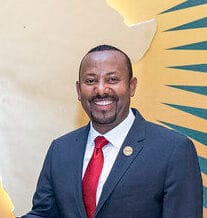
Abiy Ahmed Ali is an Ethiopian politician who has been the current Prime Minister of Ethiopia since 2018. The Nobel citation honoured him “for his efforts to achieve peace and international cooperation, and in particular for his decisive initiative to resolve the border conflict with neighbouring Eritrea.”
Nobel’s account centres on his appointment as Prime Minister in April 2018, his acceptance of the long-stalled border ruling, and the September 2018 peace agreement with Eritrea, while also noting domestic reforms including prisoner amnesties, ending press censorship, and promoting women in government.
Abdulrazak Gurnah – Tanzania – Literature – 2021
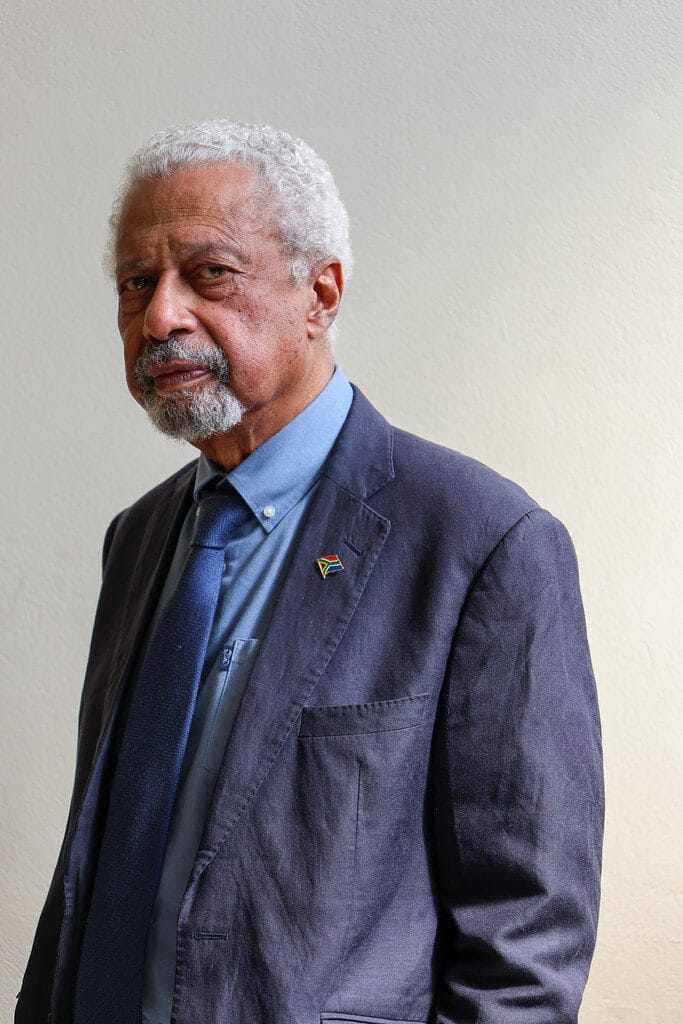
Abdulrazak Gurnah is a Tanzanian-born British novelist whose Nobel recognition restored East African and refugee histories to the centre of world literature.
The Nobel citation honoured him “for his uncompromising and compassionate penetration of the effects of colonialism and the fate of the refugee in the gulf between cultures and continents.”
Gurnah grew up on Zanzibar, left amid persecution in the 1960s, settled in England, and repeatedly returned in fiction to a culturally diverse East Africa marked by empire, exile, and displacement.
