

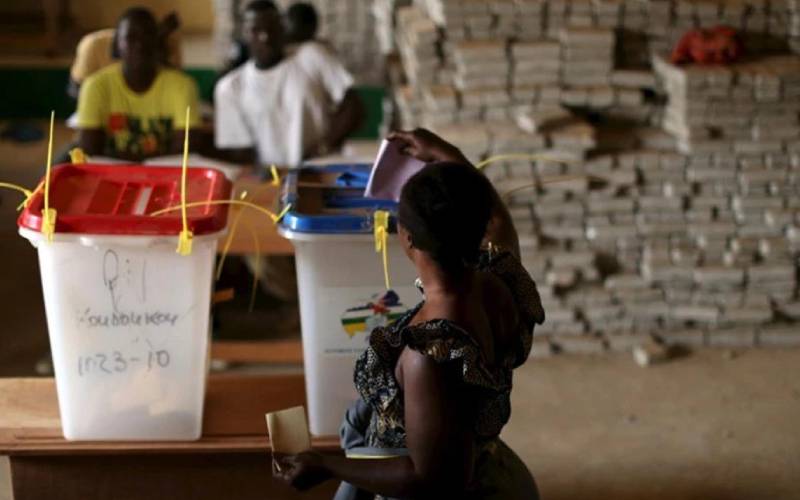
The streets of Juba, Malakal and Wau, the capitals of South Sudan’s three regions, are still quiet except for the echoes of the 15th anniversary of independence celebrations. No visible campaigns, with less than five months for the world’s youngest nation to hold its first general elections. Only flags and red T-shirts of the ruling party “SPLM” can be seen through camera lenses while the opposition challenging the regime is passive.
South Sudan’s National Elections Commission (NEC) has announced December 22, 2026, for the country to go to the polls, a month before the end of the transitional period slated for January 22, 2027. The announcement came barely after the National Legislative Assembly stripped the revitalised agreement on the resolution of the conflict in South Sudan of its most vital elections prerequisites, including census and permanent constitution-making process.
South Sudanese voted 99% in favour of secession from Sudan in July 2011; however, several years of conflict have worried citizens due to the visible magnitude of instability. Fifteen years since secession, South Sudan has yet to organise its own democratic elections, except the 2010 elections held under the united Sudan. The citizens are unable to gauge what is cooking in the crucible of power. Their quest for a democratic process is growing, irrespective of the underlying circumstances.
“We fought our way out of decades of subjugation, only to watch that sovereignty get hollowed out from the inside,” said Michael Ghai Tong Aroffe during the 15th Anniversary of South Sudan Independence on 9th July, 2026.
“Hope isn’t going to come out of a party manifesto. The SPLM, the SPLM-IO, OPP, SSOA or any other group, the parties keep changing shape, but the habits stay the same: internal wrangling, rent-seeking, and defectors who bring their old instincts with them wherever they land next.”
Bol Teal James, another South Sudanese national, advises South Sudanese to elect a God-fearing leader come December 22 this year.
“If elections are ever conducted, please vote wisely. A true leader should be God-chosen in character and service. One who stops hatred, promotes unity, respects the rights of citizens and upholds peace,” says James.
Obstacles and grey areas
One of the numerous setbacks to elections is failure to conduct a population census. NEC expects the country to use the 2010 census regardless of natality and mortality rates within the time bracket of 2010 and 2026, 16 years down the line. The permanent constitution is anticipated to be made after the elections.
Edmund Yakani, the Executive Director of Community Empowerment for Progress Organisation (CEPO), a civil society organisation, cites uncertainty in the conduct of elections.
“Based on our pre-election domestic observation exercise where we assessed the country’s preparation for elections, the findings of our pre-election domestic observations show that the country’s possibility to hold elections in December 2026 is very narrow,” he explained in an exclusive interview.
The world’s newest nation recently ranked as the fifth African nation with vast oil resources according to Business Insider Africa, yet civil servants go for more than two years without salaries. The same pattern is dragging election preparedness.
Yakani says budget constraints have struck the NEC to fund the electoral process. He states that the commission falls short of US$230, causing stagnation in the prior preparations for the first-ever elections.
“We have less than five months to go, and the National Elections Commission is still demanding 230 Dollars to accomplish actions that will contribute to creating an enabling environment for the conduct of the elections to meet the standard of being free, fair, credible and non-violent or peaceful elections,” says Yakani.
On 8th July, 2026, the Chairperson of the National Elections Commission (NEC), Abednego Akok Kachuol, briefed President Salva Kiir Mayardit that outstanding impasses regarding Abyei and Twic, Ruweng Administrative Area and Mayom County in Unity State and Kafia Kingi were some of the grey areas.
Kachuol presented a proposal that Abyei should be granted its own constituency separate from Twic, while Abiemnom in Ruweng should also stand alone from Mayom Constituency. Abyei was supposed to hold its separate referendum as stipulated in the Comprehensive Peace Agreement (CPA) signed in Naivasha, Kenya, ending the 21-year-bloodshed.
Salva Kiir’s government did not follow suit immediately after the death of Dr John Garang de Mabior. In 2010, Abyei then conducted its independently organised referendum, voting 99% to separate from Sudan and join South Sudan.
The Miseriya Arabs who claim grazing rights for their animals in Abyei protested Abyei’s referendum, as did the international community. While South Sudan now blows the trumpet of elections, Sudan has surpassed objecting Abyei’s participation in South Sudan elections.
“These issues require urgent political decisions before the conduct of elections. The only way forward is to provide each of these areas with a solution that best addresses their respective political interests,” Akok said as quoted by the presidential press unit.
NEC has further resolved to use the 2010 geographical constituencies, which had 204 members of parliament, while the current members of parliament are 332. Yakani urges legal clarity on this beforehand.
International pressure
On 8th July, 2026, the African Union C5 committee discussed the prospects for elections with President Salva Kiir Mayardit in Juba. Ronald Lamola, the Chairperson of the African Union C5 Committee, echoed his sentiments on upcoming elections.
“The African Union stands in solidarity with the people of South Sudan. We are here to support the implementation of the peace agreement through the AU and all the necessary technical processes that will facilitate inclusive dialogue and preparations for the national general elections,” Lamola affirmed.
Yakani recommends that the government of South Sudan and the African Union C5 Committee should develop an electoral roadmap for credible, peaceful and fair elections.
Years of violence and political differences have eroded trust among all the armed opposition groups, including SSOA and SPLM-IO and a few political parties. There have been numerous rebellions and failures to reach consensus on pertinent matters aimed at steering the country towards sustainable development.
The WFP reports more than 2.3 million internally displaced persons and about 2.4 million refugees fled to the neighbouring countries as a result of ongoing violence. An estimated 7.8 million people, accounting for approximately 56% of the population, face poor living conditions. The violence of 2013 and 2016 previously blocked elections in 2016. The currently growing violence is another obstacle political analysts have warned may lead to sham elections.
The international community and regional bodies such as the African Union have urged the release of the suspended first vice president Riek Machar, who is undergoing trials for charges of Murder, treason, and crimes against humanity related to the March 2025 Nasir incident.
However, the government views it through the lens of the justice system. Machar’s SPLA-IO forces and its allied militia group, the “white army”, have been carrying out a military campaign in most parts of the country, including northern Jonglei, Upper Nile, Eastern Equatoria, and Unity State, for the release of their leader, but critics argue that the peace agreement is more substantial than military means.
Yakani states that the trial of the first vice president, Riek Machar Teny, is an obstacle to elections, as his party, a signatory to the current peace agreement, must have a say on elections and the ending of the transitional period.
“The chairperson is undergoing trial as a first vice president who is suspended while he is a key player in the political transitional process in deciding the ending of the transitional period,” he argued.
In his message to the African Union C5 July 8, 2026, President Kiir pledged effective peace, stability and a transparent process for Machar’s case. He has often pledged in his speeches that he would not return the country to war.
On July 7, 2026, the Embassy Group of Friends, including Troika, Japan, Canada and the European Union, expressed concerns over the SPLM’s unilateral amendments to some prerequisites to elections enshrined in R-ARCSS.
The statement came after the National Legislative Assembly approved amendments to the revitalised peace agreement on July 1, 2026. The requirement for a population census and permanent constitution as prerequisites to elections was removed, turning a deaf ear to the opposition MPs.
“Any changes must be made through authentic dialogue involving all parties to the agreement. We further call on all parties to commit to an immediate cessation of hostilities,” reads part of the statement from the Embassy Group of Friends.
Salva versus Kiir
SPLM started its political campaigns in May 2022. President Salva Kiir Mayardit was endorsed as the party’s flagbearer in Central Equatoria State and the Bahr-El-Ghazal region, a few months before the election was extended for two more years until 2024. SPLM-IO reported stoppage during its political mobilisation, for instance in Lakes and Upper Nile States. In 2025, the security agents raided SPLM-IO offices in Lakes State and shut down the office.
As the election date draws closer, the main opposition groups such as the SPLM-IO and SSOA have no significant presence in states. They have also already suffered internal rifts. SSOA is divided but still within the current government. The SPLM-IO is utterly divided, with a faction within the government while Machar’s supporters are out of Juba, fighting across the country, including the northern part of Jonglei State.
On 30th June, 2026, the minister of peacebuilding, Stephen Par Kuol’s SPLM-IO faction registered as an IO party for the 2026 general elections. This is the faction which claimed to have ousted Machar to continue the peace agreement with the government, claiming that Machar and his SPLM-IO were irrelevant.
The IO party reportedly joined the National Democratic Movement (NDM) led by Dr Lam Akol, the People’s Liberal Party led by Peter Mayen Majongdit, the South Sudan National Movement for Change (SSNMC) led by Moro Isaac Jenesio and the Revive South Sudan Party led by Peter Biar Ajak, making a total of five officially registered political parties ready for elections.
The resurgence of violence across the country is now feared to block the elections as it happened in 2013 and 2016. The elections have been extended more than three times since independence. While the main opposition groups, signatories to the agreement, are silent, the political parties’ council has maintained its quest for parties which can advance the democratic agenda.
“We are looking for political parties that will be able to usher in and go to fair, inclusive, and credible elections so that the people of South Sudan will elect the leaders that they want,” Lona James, Deputy Chairperson of PPC, said during the United South Sudan Party’s workshop.
United South Sudan Party, a political party yet to gain popularity, is hopeful to win elections, according to its chairperson.
“We are ready to take power. For us to take power, we believe that we should not kill a single South Sudanese because every single South Sudanese matters,” says Paulino Lokudu, the chairperson of the United South Sudan Party (USSP).
Critics believe that elections may not occur. Should there be one, they claim it would be a sham, and the result would be predetermined before election results are declared. They claim that President Salva Kiir Mayardit is only vying unopposed or with toothless opposition parties.
