

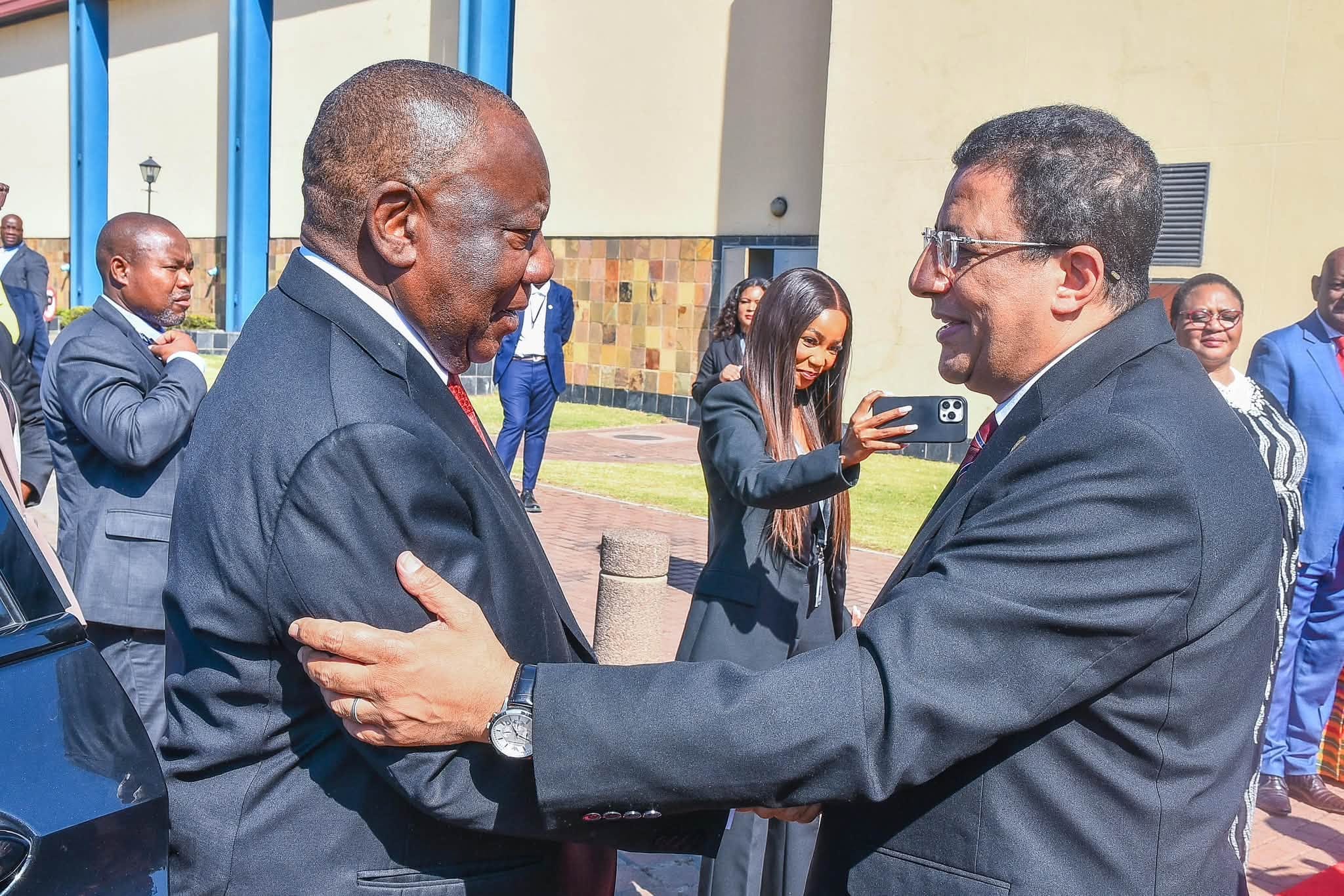
MIDRAND, South Africa — President Cyril Ramaphosa on Monday urged African lawmakers to address the conditions driving migration across the continent, arguing that Africa must create a future in which people cross borders by choice rather than necessity.
Addressing the opening of the seventh legislature of the Pan-African Parliament in Midrand, Ramaphosa acknowledged the growing tensions surrounding migration in South Africa, where foreign nationals have faced intimidation, harassment and violence.
He said those tensions had been fuelled partly by misinformation and prejudice, but also reflected concerns among some South Africans about illegal migration and pressure on public services.
The government, he said, would continue enforcing immigration laws while opposing vigilantism and protecting the rights of everyone within the country’s borders.
“We must not conflate lawful migrants, refugees and asylum seekers with people who enter or remain in countries in violation of immigration laws,” Mr Ramaphosa said. “Nor should migrants be made scapegoats for unemployment, crime or shortcomings in the delivery of public services.”
His remarks sought to balance two politically charged positions: the demand for stronger border and immigration controls and the obligation to protect migrants from collective blame and violence.
President Ramaphosa said immigration management had to be “firm, fair and effective,” but warned that enforcement alone would not resolve the issue. African governments, he said, needed to confront the conflicts, instability, poverty, governance failures and lack of economic opportunity that compel people to leave their countries.
“We must work for a future where Africans migrate out of choice and not necessity,” he said.
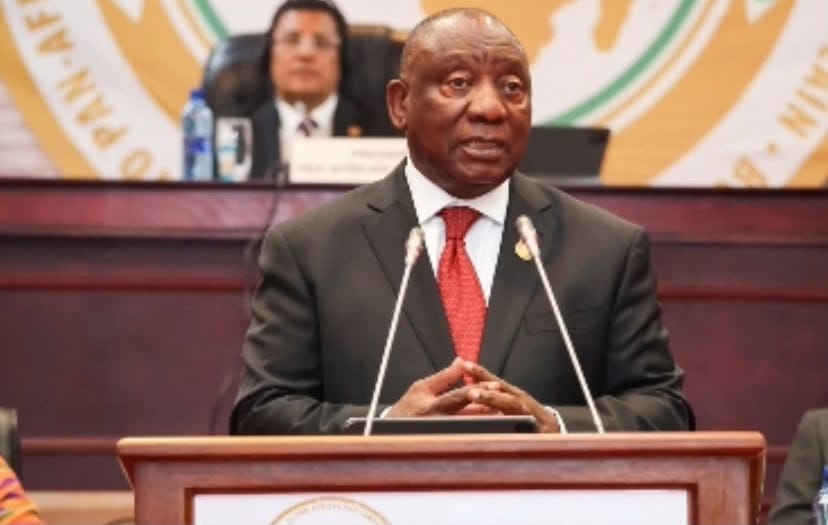
He called on the Pan-African Parliament, which brings together legislators from African Union member states, to help develop sustainable continental responses to migration.
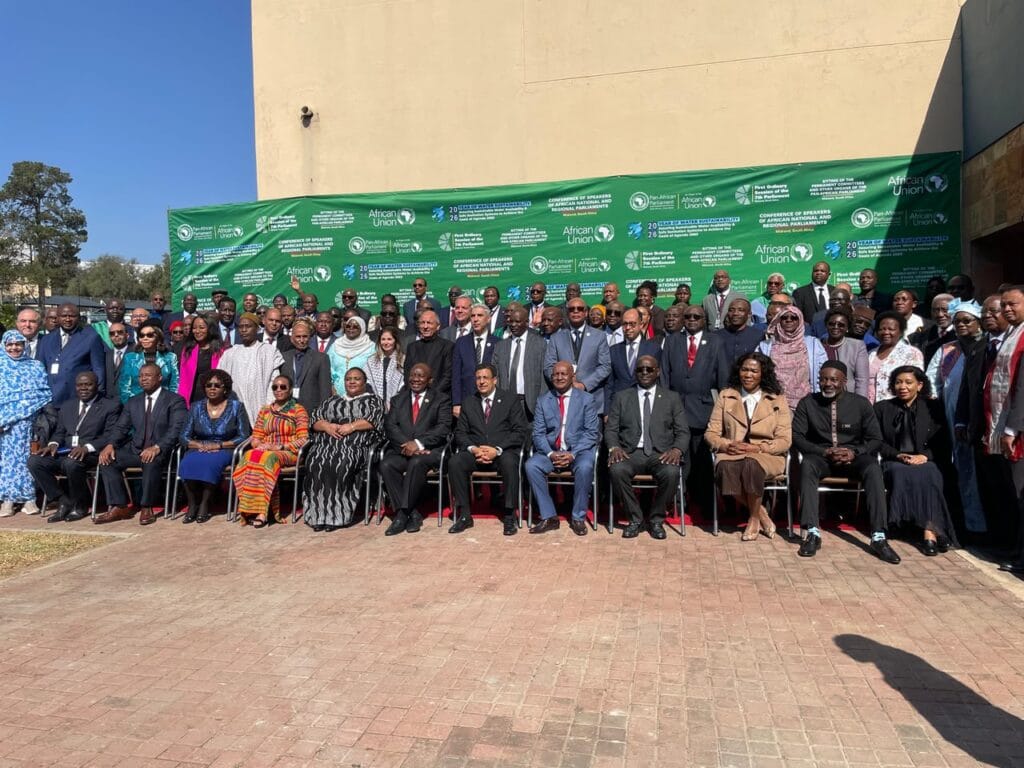
The institution, led by its newly elected president, Dr Fateh Boutbig of Algeria, began its First Ordinary Session of the seventh legislature as Africa confronts economic turbulence, climate pressures, armed conflict and growing geopolitical uncertainty.
Ramaphosa described the Parliament as a central part of Africa’s democratic architecture, but said its influence would depend on its integrity and on whether it could convert African Union commitments into measurable improvements in people’s lives.
He urged the Parliament to speak against military takeovers, unconstitutional extensions of presidential terms, the weakening of democratic institutions and the misuse of public resources.
“This Parliament must itself exemplify the democratic values it seeks to advance across the continent,” he said, calling for greater integrity, transparency and accountability within the institution.
AfCFTA Must Move Beyond Agreements
President Ramaphosa also presented the African Continental Free Trade Area, known as the AfCFTA, as one of the continent’s most important instruments for economic integration and industrial development.
The trade agreement aims to create a single African market by reducing barriers to the movement of goods and services between participating countries. But implementation has been slowed by regulatory differences, inadequate transport links, inefficient customs systems and other non-tariff barriers.
“Agreements alone will not create a continental market,” Ramaphosa said.
He called for modernised customs systems, improved transport and logistics networks, harmonised regulations and payment infrastructure that would make cross-border trade faster and less expensive.
The Pan-African Parliament, he said, should work with national and regional legislatures to incorporate AfCFTA obligations into domestic law and hold governments accountable for implementation.
Ramaphosa argued that a functioning continental market would allow African countries to process more of their minerals, agricultural products and energy resources locally instead of exporting raw materials and importing higher-value finished goods.
Africa’s development, he said, required new factories, mines, farms and data centres, as well as better access to capital and skills for young people and women.
“Rather than exporting our raw wealth, we must process our minerals, our agricultural produce and our energy ourselves,” he said.
Parliament Asked to Act on Water and Sanitation
The session is taking place under the African Union’s 2026 theme, which focuses on sustainable water availability and safe sanitation as part of the continent’s Agenda 2063 development programme.
Ramaphosa said access to clean water and sanitation remained essential to public health, education, food security, industrial development and human dignity. Millions of Africans, he said, still lacked reliable drinking water and adequate sanitation.
Women and girls frequently carried the greatest burden, travelling long distances to collect water and losing time that could otherwise be spent in school, employment or community life.
Climate change, ageing infrastructure, pollution, weak governance and insufficient investment were increasing pressure on the continent’s water resources, he said.
Because many rivers, lakes and groundwater systems cross national boundaries, Ramaphosa argued that water security required cooperation among African states.
He called on national parliaments and the Pan-African Parliament to harmonise legislation, scrutinise public expenditure and ensure that continental commitments were reflected in national development programmes and municipal budgets.
A Call for a Stronger African Voice
Ramaphosa also urged African countries to adopt common positions on reforming the United Nations Security Council, the global financial system and international rules governing trade, climate and technology.
African unity, he said, had to move beyond declarations and summit agreements.
“Too many of our continental commitments remain aspirations on paper,” he said.
He called for greater investment in education, health, skills, roads, railways, ports, energy systems and digital infrastructure, alongside stronger African Union institutions with the authority and resources to act.
The success of the new parliamentary legislature, he added, would not be judged by the number of debates or resolutions it produced, but by the laws it helped shape and the commitments it helped governments implement.
“History will judge us not by the speeches we deliver, but by the Africa we build,” Ramaphosa said.
