

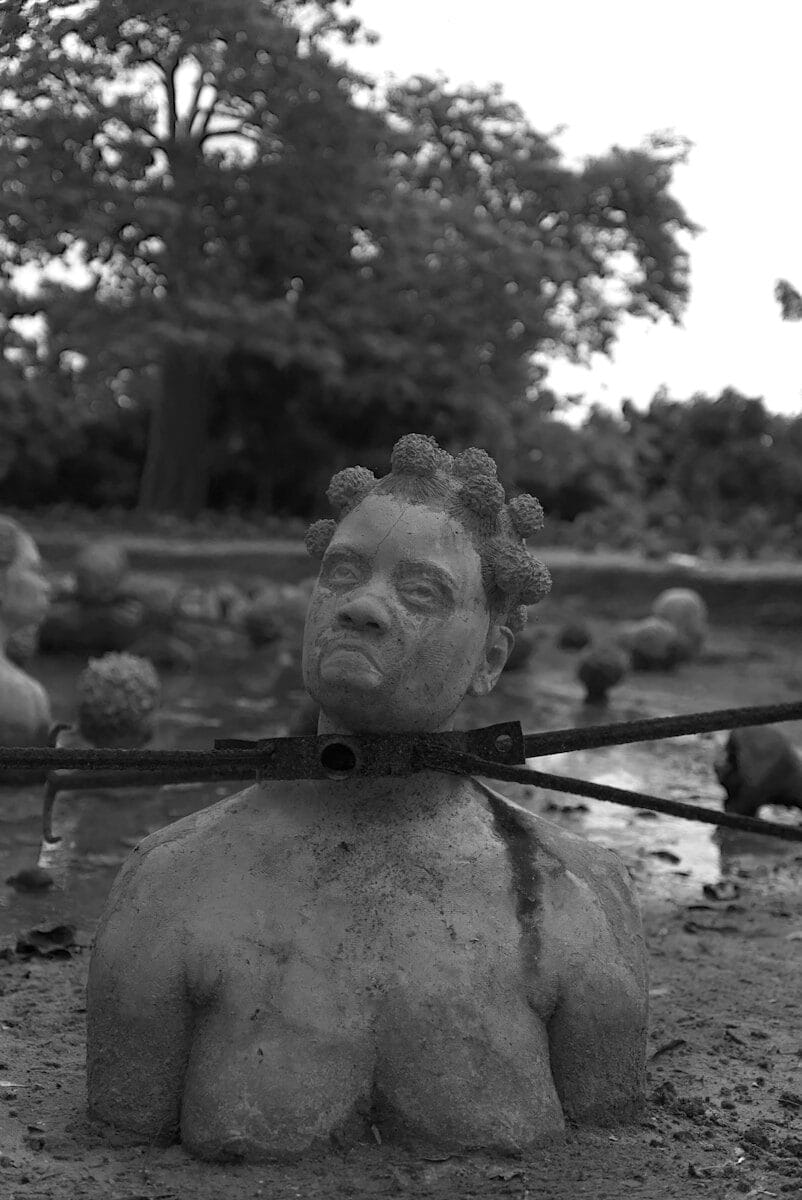
Now and then, Hollywood, ever so graciously, feeds us a slavery movie. And as the years have gone by, many people have started to resent these films.
I remember watching Roots and thinking that everything had to be sensationalised; there was no way one human being could be so cruel to another. From Roots, my catalogue and awareness began to grow. Django Unchained, though a fictional account, introduced me to the concept of house negroes through a brilliant portrayal by Samuel L. Jackson.
In quick succession after Django came 12 Years a Slave. By then, in subtle nuances and hushed tones, you could hear the internet complain, “Hey, not another slavery movie.”
By the time we got to Harriet and Emancipation, the voices were bolder and louder.
Here we go again. Another one of those films with needless, endless depictions of the hardships of an era many conveniently want to forget. And I get it. Some want to move beyond the atrocities, scars, and wounds to build a future that is united and inclusive.
There is a Shona proverb that says, “Chinokanganwa idemo, kwete muti wakatemwa.” The axe forgets, but the tree stump never does. A person who causes harm, the axe, often forgets their actions, while the victim, the tree, bears the scar and remembers the injury permanently.
This is the story of Africa. For centuries, the dominant global narrative presented the transatlantic slave trade as a regrettable but essentially legal chapter of mercantile history, an unfortunate footnote in the rise of modern capitalism.
On 25 March 2026, the United Nations General Assembly tore that story apart.
With 123 nations voting in favour, the UNGA adopted Resolution A/80/L.48, tabled and championed by the Republic of Ghana, formally declaring the trafficking and racialised chattel enslavement of Africans to be the gravest crime against humanity ever committed. The vote was not even close. Only three countries voted against it. Fifty-two, including the entire European Union, chose the diplomatic cowardice of abstention.
“Today, we come together in solemn solidarity to affirm truth and pursue a route to healing and reparative justice.”
H.E President John Dramani Mahama of Ghana, speaking ahead of the vote on behalf of the African Group. The Africa Group at the United Nations is made up of the 54 African Union Member States at the United Nations.
The resolution’s full title, Declaration of the Trafficking of Enslaved Africans and Racialised Chattel Enslavement of Africans as the Gravest Crime Against Humanity, leaves no room for ambiguity. For the first time in the institution’s history, the UN’s highest political body has named the slave trade not as a tragic era, but as a deliberate, industrial-scale crime, one whose consequences still ripple violently through African societies today.
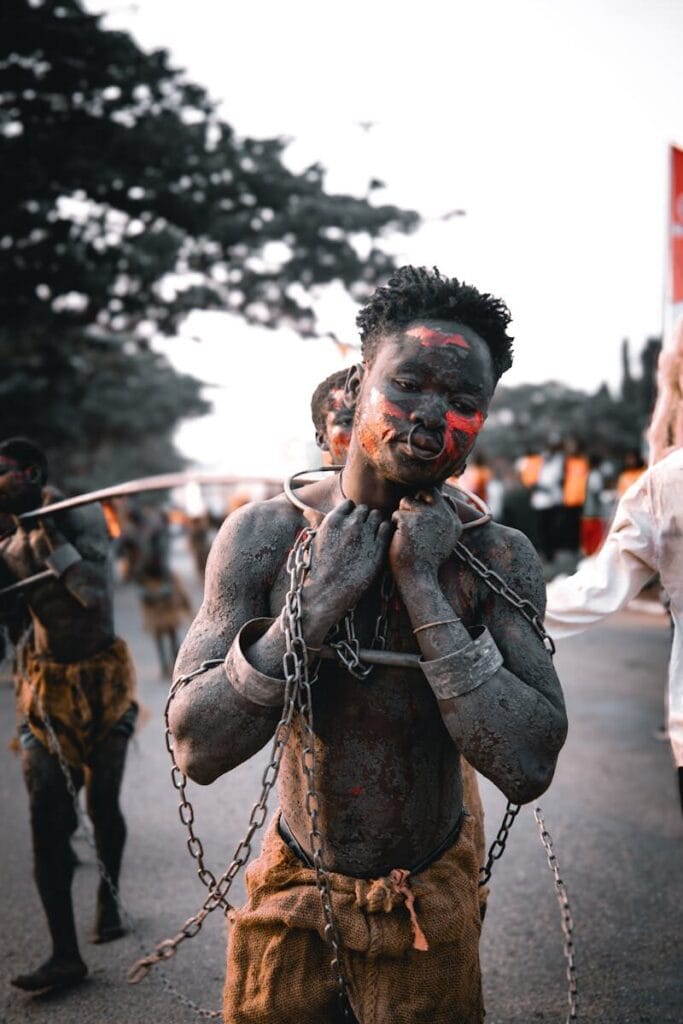
Reclaiming the Story
Narrative is power.
The framing of the slave trade, who gets to define it, name it, and judge it, has always been a battleground. For too long, that battle was lost by default. Western capitals controlled the dominant institutions, the textbooks, and the international legal definitions.
Ghana’s resolution changes the terms. It recognises the trade’s unprecedented scale and duration, its systemic brutality, and its violation of jus cogens — the peremptory norms that sit above all other international law. It names the demographic devastation, the cultural erasure, the intergenerational trauma. It refuses the sanitised language of historical complexity and replaces it with calling a spade a spade. Slavery was a crime.
Ghana’s Foreign Minister Samuel Okudzeto Ablakwa, alongside the African Union Commission Chairperson, framed this as a matter of healing and of guarding against historical amnesia. This is Africa telling its own story, at the world’s most visible table, and winning the vote.
Legitimising Reparations
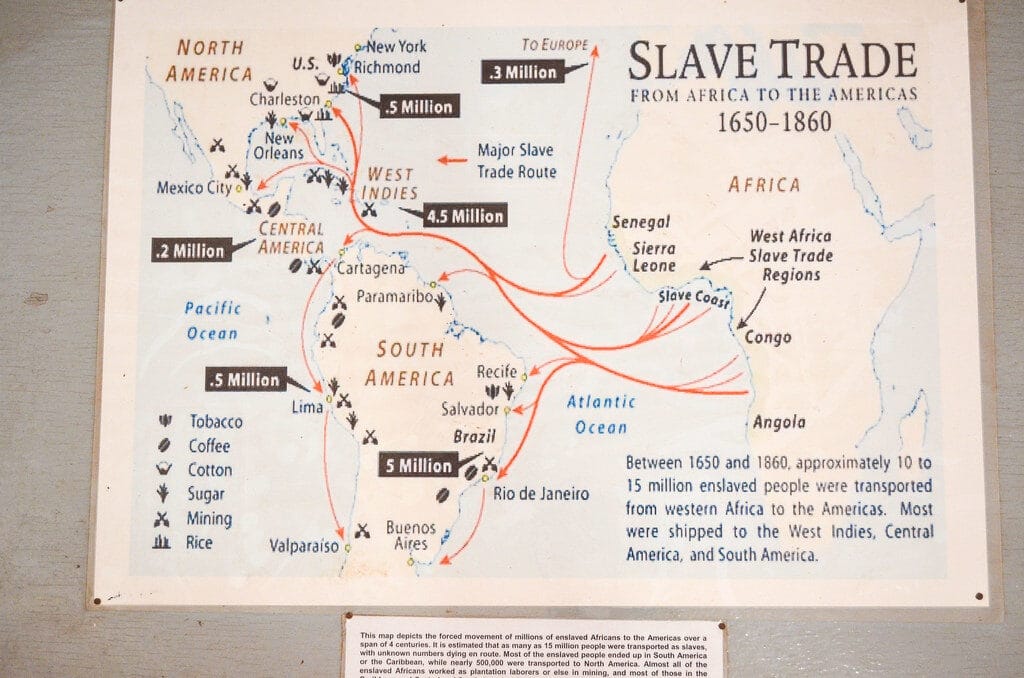
When we look at Africa’s development deficits, while we eagerly name our shortcomings, it is also important to acknowledge that they did not emerge in a vacuum. Economists and historians have long traced how the slave trade, followed by colonial extraction, created structural disadvantages that persist to this day. A continent that suffered depopulation, the loss of skilled labour, fractured institutions, and economies engineered for extraction rather than growth, has wounds that run deep.
“The slave trade and slavery stand among the gravest violations of human rights in human history – an affront to the very principles enshrined in the Charter of our United Nations and the Universal Declaration of Human Rights, themselves born, in part, from these injustices of the past.”
Annalena Charlotte Alma Baerbock, President of the United Nations General Assembly.
Reparatory justice, once dismissed as a fringe demand or an impossible legal exercise, is now a legitimate policy conversation at the highest multilateral level. The resolution calls on member states to pursue inclusive, good-faith dialogue covering formal apologies, restitution, compensation, rehabilitation, and guarantees of non-repetition.
The very fact that guarantees of non-repetition are a valid clause speaks volumes of the cruelty, visible and perceived, in the current world. Especially now, as Western capitals lecture endlessly on the rules-based international order while resisting accountability for the historical rules they themselves wrote.
Although no dollar figures are prescribed and no hard timelines are set, the resolution normalises the conversation of the usually unspoken atrocities against Africans during the slave trade era. It hands African states and CARICOM partners a moral and legal landmark to anchor future negotiations. In a continent grappling with youth unemployment, unsustainable debt, and rigged global trade rules, that leverage is strategic.
For African youth, already the most demographically dynamic population on earth, this moment is significant. When a global institution of 193 member states affirms, by overwhelming majority, that your ancestors’ suffering constitutes humanity’s greatest crime, it changes the terms on which you understand yourself, and on which the world understands you.
No Rose-Tinted Glasses
Candour requires acknowledging what this resolution is not. It is non-binding.
The three NO votes, coming from Argentina, USA and Israel, and the loud EU abstentions reveal entrenched opposition that will not dissolve because of a UN declaration.
Legal doctrines of non-retroactivity will be weaponised. Financial exposure will be minimised. History will be contested at every step.
And Africa itself must resist performative politics. Domestic governance, anti-corruption, and deeper intra-African economic integration remain prerequisites for any reparations dividend to translate into real, generational transformation. A landmark resolution cannot substitute for the hard work of institution-building from within.
Yet the arc of history bends, however slowly, toward those who name the truth loudly enough, for long enough, before enough witnesses. Resolution A/80/L.48 refuses to let the past be erased.
For a continent rising on demographic dynamism and abundant resources, this is both a moral vindication and a strategic asset. Ghana has written a new page in the long book of African agency. The question now, for policymakers, thinkers, and citizens alike, is whether we have the discipline and the will to make sure the ink does not fade.
The path to reparatory justice is long. But as we wait and continue to demand justice, at least we no longer have to rely on the next slavery film to force these uncomfortable conversations. Today, Africa stands taller because of this resolution.
