

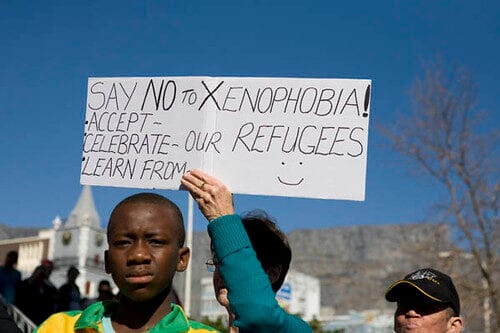
Violence against African migrants in South Africa first appeared publicly in 2008 when a Mozambican man was burnt to death in a gruesome scene turned into an entertainment spectacle by the perpetrators and bystanders. This was the harbinger of things to come. Violence against African migrants, even those legally in South Africa, has become banal. The recent escalation is the natural consequence of a problem left to fester for close to two decades.
South Africa has the right to enforce its immigration laws like every other country, the caveat here being that this should be through state institutions mandated to do so. On their part, African countries should address the needs of their own citizens because externalising domestic challenges through migration to South Africa is unsustainable. Both have failed.
The problem is not that South Africans are angry about the poor enforcement of the country’s immigration laws. Rather, it is citizens taking the law into their own hands and engaging in actions that are nowhere near legal, going by the images of violence against and harassment of African migrants that have circulated on social media and the ensuing humanitarian crisis. These images have sullied the country that touts itself on global platforms as the champion of human rights and non-discrimination. South Africa can deport undocumented African migrants without degrading them by doing so in accordance with its laws. While some Africans are angry at what they see as South Africans’ historical amnesia, specifically ingratitude for Africa’s support during the anti-apartheid struggle, a more troubling issue is the violence’s paradoxical legitimisation of anti-black racism. There is no justification for violence in the name of enforcing immigration law. Violence makes Black South Africans complicit in perpetuating racist tropes that weave violence and lawlessness into “blackness”. The targeting of African migrants similarly reinforces the association of “blackness” with illegality. Black South Africans cannot degrade black migrants without degrading themselves. Nor can Africans condemn black South Africans without partaking in the same disgrace experienced by black South Africans who condemned the violence.
South Africa is not the first African country to target a particular racial or national group for degrading treatment and expulsion. From the expulsion of Ghanaians from Nigeria and vice versa to Uganda’s expulsion of South Asians and Zimbabwe’s targeting of white commercial farmers, governments have repeatedly presented the removal of a particular group as the solution to economic challenges. As this history repeats itself in South Africa, will the expulsion of African migrants, undocumented or otherwise, yield economic prosperity for black South Africans? What prosperity can be extracted from expelling people who struggled to pay the bus fare back to their countries?
South Africa is plagued by the same structural economic problems black South Africans demand that African migrants go back and fix in their countries. Expelling whoever is identified as the problem or soft target will not alleviate inequality, youth unemployment, poverty, and economic marginalisation. Economic opportunities in the informal sector require resourcefulness whether one is a citizen or not; they are not “stolen” from anyone. Likewise, highly-skilled migrants get jobs because organisations do not thrive on loyalty to citizens but on recruiting competitive human capital best suited to the job. A lesson from the other African countries that have resorted to expulsions is that people who are expelled leave with their entrepreneurship and expertise.
Disproportionate migration to the few relatively prosperous African countries is not sustainable. Free movement in Africa holds little appeal to countries that are overburdened by migrants they see as coming to “steal” their jobs and commit crime. South Africa needs to decisively and humanely enforce its immigration law and pursue a robust and frank foreign policy in Southern Africa, which accounts for the majority of the African migrants that it hosts. South Africa cannot resolve the migration challenge on its own. There is a need for regional engagement, especially with the countries of origin in search of a feasible solution to balance South Africa’s national interest with the SADC Free Movement Protocol.
