

When Burkina Faso’s military leader Ibrahim Traoré said people should “forget about democracy” and added that “democracy kills,” he was not just making a provocative statement. He was naming a frustration that has been building across much of Africa. What is the point of democracy if elections come and go, but insecurity, poverty and elite capture remain?
Traoré made the remarks days after renewed scrutiny of his junta’s rule and only months after his government dissolved all political parties. He first took power in a 2022 coup, delayed elections originally scheduled for 2024, and now governs under a transition extended through July 2029.
Traoré’s comments will resonate with more people than many liberals would like to admit. Across Africa, democracy is sold in its thinnest form. Citizens are told they are free because they can cast a ballot, even when the state cannot protect them, the economy cannot absorb them, and public institutions cannot answer to them. In that climate, democracy feels less like popular power and more like choreography.
As much as we hate to admit it, the anti-democracy argument does not arrive empty-handed. Its defenders point to places where development happened without liberal democracy as conventionally defined.
Singapore became one of the richest and most efficient states in the world, with a GDP per capita of about $90,674 in 2024, yet it is widely classified as only partly free. The United Arab Emirates built world-class infrastructure, aviation, finance and logistics and had a GDP per capita of about $50,273 in 2024, while described by some democracy advocates as not free. China became the world’s second-largest economy, had a GDP per capita of about $13,303 in 2024, and the World Bank says it lifted close to 800 million people out of poverty over four decades, all this while also being labelled as not free. Before its collapse into prolonged conflict, Libya also stood out for comparatively high oil-funded living standards and ranked among Africa’s top countries on the Human Development Index.
That is the part defenders of democracy too often skip past. Development can happen under systems that are not fully democratic. States can build roads, ports, airlines, cities and sovereign wealth without competitive politics. If democrats cannot acknowledge this reality, they will keep losing the argument to strongmen who promise delivery without debate.
The bigger issue is not whether non-democratic systems can produce development. Some clearly can. It is what citizens lose when power becomes difficult to question, restrain or remove.
What is democracy?
If it means only periodic elections, then many citizens are right to be unimpressed. The United Nations ties democracy to human rights, development, peace and security. The Office of the High Commissioner for Human Rights describes democracy as a universal benchmark for protecting rights. V-Dem, one of the world’s leading democracy measurement projects, defines electoral democracy around free and fair elections, broad suffrage, and freedoms of expression and association.
In plain language, democracy is more than the right for people to vote. It is supposed to mean that power answers to the people, that criticism is not criminalised, and that rulers can be changed without bloodshed.
When the Western institutional templates for democracy fail universally, it then begs the question of what kind of political order gives ordinary people dignity, voice, security and recourse. Elections without accountability are hollow. And development without consent is dangerous too.
Democracy or Continuity: Conundrum for Zimbabwe
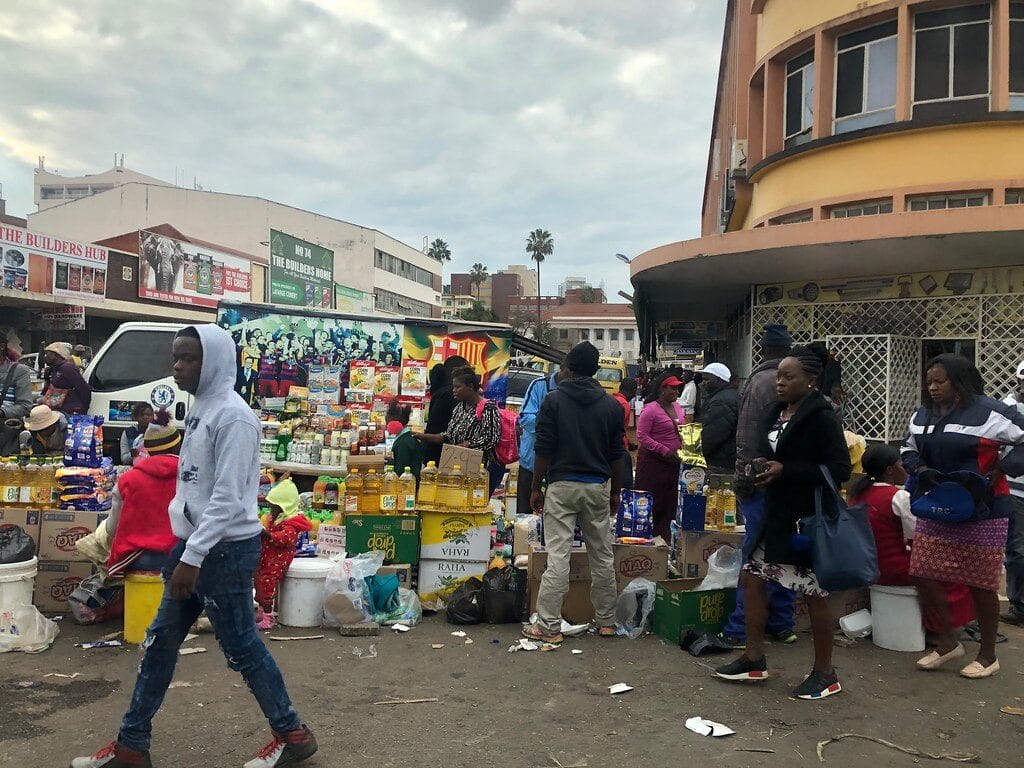
Zimbabwe now shows how this debate can move from theory to warning. There, democracy is not being rejected with the blunt language of a coup leader. It is being quietly redesigned from within the constitutional order. In February 2026, Zimbabwe’s cabinet backed Constitution Amendment Bill No. 3, which would extend presidential and parliamentary terms from five years to seven years, potentially allowing President Emmerson Mnangagwa to remain in office until 2030 instead of stepping down in 2028. The bill would also replace direct presidential elections with elections by a joint sitting of Parliament.
The proposals do not stop there.
According to legal analyses of the bill, it would also transfer responsibility for voter registration and the voters’ roll away from the Zimbabwe Electoral Commission to the Registrar-General, create a new Electoral Delimitation Commission, enlarge the Senate by allowing the president to appoint 10 additional senators, and repeal the Zimbabwe Gender Commission and the National Peace and Reconciliation Commission. Critics say this would weaken democratic guardrails and concentrate even more power around the executive.
Opponents, including liberation war veterans, have gone to court arguing that the changes are unconstitutional because they are designed to prolong the incumbent’s time in office and bypass the referendum safeguards in section 328 of the 2013 Constitution. ConstitutionNet’s analysis argues that the government is trying to rebrand a tenure extension as a mere change in election cycles, while still preserving the incumbent in office.
Public hearings that began in late March have already been marred by intimidation and violence. AP reported that critics were heckled, silenced or denied the chance to speak, while prominent rights lawyer Doug Coltart was assaulted during one of the hearings in Harare.
Zimbabwe sharpens the point that Traoré’s remarks force us to confront. Democracy does not only die when a soldier says, forget it. It can also be hollowed out by legal drafting, parliamentary arithmetic and the slow rewiring of constitutional rules. A country can keep the language of constitutionalism while draining away the substance of public consent. That may be even more dangerous because it looks lawful while steadily reducing the people’s ability to choose, restrain and remove power.
Burkina Faso, meanwhile, reveals the more naked version of the same drift. Since Traoré seized power in 2022, his junta has postponed elections, dissolved political parties and tightened its grip over public life. And yet the central promise used to justify military rule, security, remains deeply contested. Reuters reported this week that Human Rights Watch found Burkina Faso’s military and its allies had killed more than twice as many civilians as Islamist militants since 2023. The point is not that elected governments in the Sahel were succeeding before the coups. Many were failing badly. The point is that military rule has not magically solved the crisis either.
This is where the democracy debate usually goes wrong. Too many defenders of democracy act as though elections are sufficient. Too many opponents of democracy act as though growth or military command are sufficient. Both are dodging the harder standard. A political system must be judged by whether it protects life, restrains power, allows correction, and gives citizens more than ceremonial participation.
Traoré has reopened a serious question. Does democracy work universally? Not if by democracy we mean only imported forms, empty rituals or elite-managed voting. But if democracy means accountable power, public consent, civil freedom and peaceful political correction, then Africans deserve these very tools that allow citizens elsewhere to challenge failure without fear.
And that may be the most important answer to Traoré. Democracy may indeed fail. It may be manipulated. It may be underbuilt. It may be betrayed by those who speak in its name. But the alternative is rarely neutral. More often, it is power asking not to be questioned. And that is usually when citizens should question it most.
