

We discuss Africa in the language of promise. To some, it is a continent of the future. Others interpret it in statistical terms and allude to it as having the youngest population. Those see it as the next frontier.
The vocabulary at every turn is of anticipation, rich in adjectives but poorly anchored in the present. What is rarer and more useful are narratives from Africa that go beyond serving as symbols of possibility and actively demonstrate it.
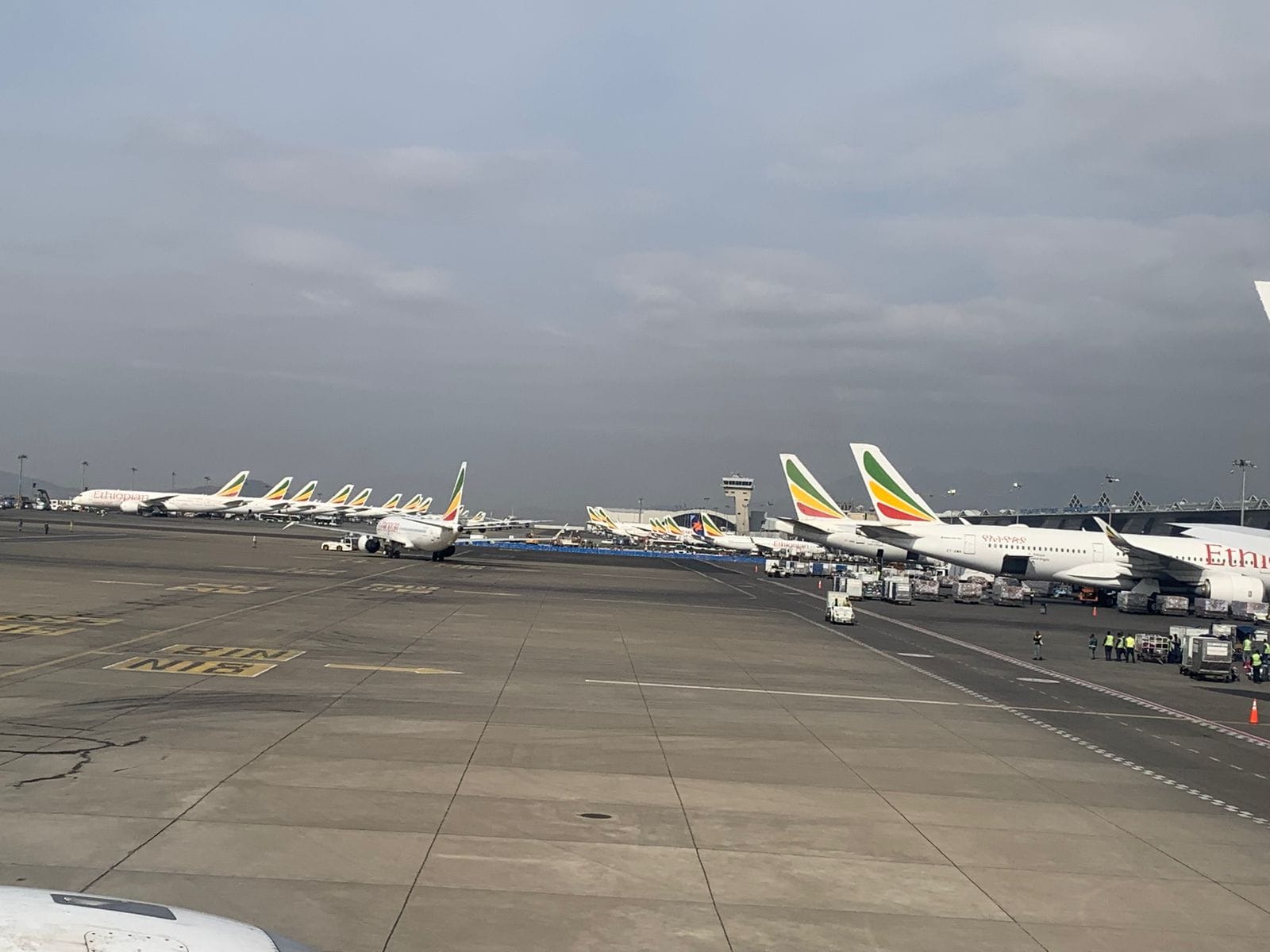
This was the thought that came to me as I sat by the window, looking out over the wing of an Airbus A350, watching its Rolls-Royce engine roar to life. As the aircraft moved along the tarmac at Bole Airport in Addis Ababa toward the runway, I found myself mesmerised by a sea of tailfins striped in green, yellow and red. I had never seen so many working aircraft from the same carrier parked, taking off and landing at a single airport in such commanding succession.
It dawned on me then that beyond the language of anticipation, there are institutions already living out the African dream we so often keep postponing to the future.
Ethiopian Airlines is one of them.
Its story did not begin with glamour. On April 8, 1946, Ethiopia’s first scheduled flight left Addis Ababa for Cairo via Asmara aboard a Douglas C-47 Skytrain. The airline had been established only months earlier in partnership with Trans World Airlines, and it started with five surplus C-47 aircraft acquired from the U.S. government.
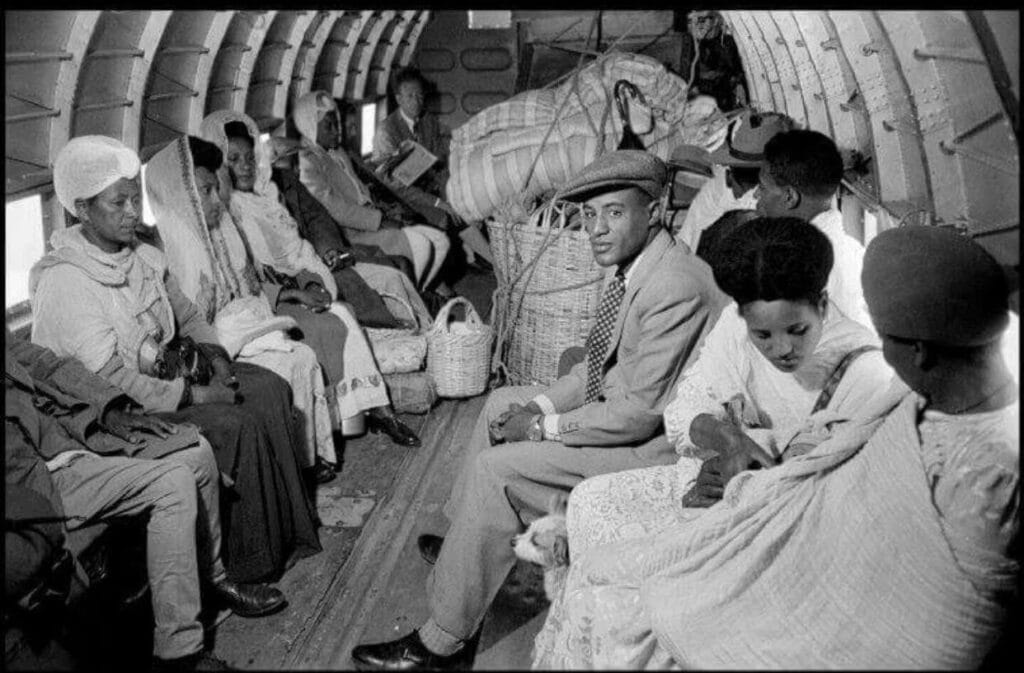
Demand came quickly. By the end of that same year, four more C-47s had to be purchased. These were not luxurious aircraft dressed up for prestige. They were ex-military workhorses with folding canvas bench seats running along the fuselage walls, and a central aisle left clear so cargo could be lashed to the floor.
Ethiopian Airlines was born as a practical answer to a practical need, to move people and goods across long African distances with speed, efficiency and regularity.
That origin story explains something about the airline’s character. From its inception, Ethiopian was never a simple flag carrier. It was in the business of building capacity. Nearly eight decades later, that capacity is visible in irrefutable numbers. In the fiscal year 2024/25, the airline reported $7.6 billion in revenue, carried 19.03 million passengers and 785,321 tonnes of cargo, employed 20,598 people, and graduated 1,951 trainees through its aviation training pipeline. By January 2026, its operating fleet stood at 168 aircraft, with an average age of less than seven years.
Many organisations achieve a modicum of success and somehow get complacent. What makes Ethiopian consequential is where and how it has chosen to expand. The airline says it now connects Addis Ababa to more than 145 international passenger and cargo destinations, including 65 African cities, and serves more destinations within Africa than any other airline. In a continent where getting from one African capital to another still too often requires a detour through Europe or the Gulf, this is very significant.
Agility being a key part of our competencies, we have recalibrated our cargo operations and networks in light of the current demand in air cargo business. We are carrying medical supplies in both scheduled and charter flights using the cabin and belly hold of our passenger aircraft besides our cargo fleet. Despite the grim situation the world is grappling with, we feel heartened by the small contribution we are making to curb further loss of lives by carrying critical medical supplies where they are needed the most. (Addis Ababa, 2020)
Tewolde GebreMariam, Ethiopian Group CEO (2011-2022)
The real test of an institution, though, is not how it performs in favourable weather. It is what happens in the storm. During the pandemic, Ethiopian lost more than $1 billion in revenue and faced a roughly 90 per cent collapse in international passenger traffic. It responded by repurposing 45 passenger jets for cargo operations. According to reporting at the time and the airline’s own statements, it avoided a government bailout, did not lay off full-time staff, did not seek deferrals on debt payments, and still managed to post a profit in the first half of 2020. `
This is the part of the story that should make policymakers across Africa uncomfortable in a productive way. Ethiopian Airlines is 100 per cent owned by the state. So its success cannot be dismissed with the familiar excuse that African public institutions fail because public ownership itself is inherently fatal.
The more difficult lesson is that ownership and interference are not the same thing. Analysts and researchers have repeatedly pointed to Ethiopian’s commercially driven management model, limited day-to-day political interference and professional governance as central to its success. It has been treated less like a patronage reservoir and more like an enterprise expected to perform.
This wisdom should be carried far and wide, across the breadth of Africa. By entrepreneurs, policy makers, and in the lofty halls of continental bodies, such as the African Union. The latter has proposed a Single African Air Transport Market, a flagship project of its Agenda 2063, explicitly intended to create a unified air transport market and deepen intra-African connectivity as part of the continent’s wider integration agenda. That is the policy architecture upon which an interconnected Africa can be constructed.
Ethiopian Airlines offers something even more valuable, beyond policy architecture. An operational example of what such integration can look like when an African institution has the discipline to execute.
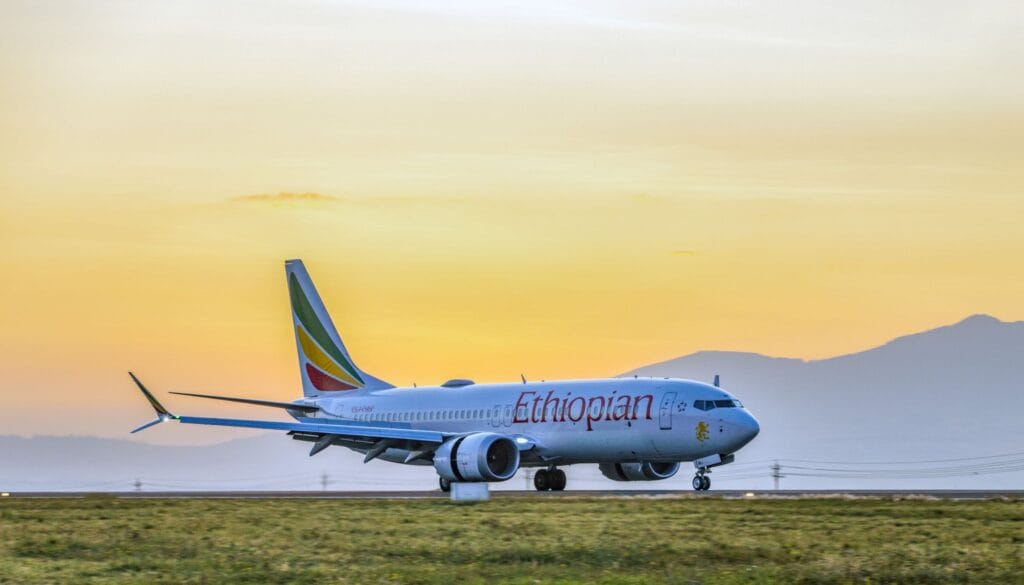
And there is no sign that the story is over. In the first half of fiscal year 2025/26, Ethiopian reported $4.4 billion in revenue, up 14 per cent from the same period a year earlier, helped by new destinations, increased flight frequencies and seven additional aircraft. At a moment when many airlines around the world are still pleading special circumstances, Ethiopian is still talking in the language of expansion.
There is a tendency, especially outside Africa, to treat African excellence as either a surprise or an exception. Ethiopian Airlines deserves to be viewed differently. It is not impressive because it emerged from Africa against the odds, as though competence on the continent were somehow improbable. It is impressive because it did the hard, unromantic work that strong institutions anywhere must do: train people, modernise assets, protect standards, think in decades, and resist the temptation to sacrifice tomorrow for the sake of today.
From five surplus planes to 168 aircraft. From a flight to Cairo via Asmara to a network stretching across Africa and the wider world. That arc, at face value, is a corporate success story. Beyond that, it is an argument that says Africa is capable. It has the ambition, drive and talent to succeed.
Ethiopian Airlines is what compounding looks like when an African organisation is allowed to grow unhindered.
