

Africa has been dreaming of its regional integration, and the vision of the United States of Africa. One may wonder what this imaginary yet out of reach nation will be called, whether the United States of Africa (USA) or African Union or another vibrant name that emeralds the diversity and prosperity Africa holds for its people.
My second visit to Addis Ababa, the Ethiopian capital and the seat of the African Union, was conceived with the utmost hope that Africa may not be the same in several years to come. The convergence of Africa’s top media minds felt significant because the stories we tell can help reshape how Africa is seen, unlock belief in its potential, and challenge the barriers and burdens that have long held this prosperous continent back.
Addis Ababa, commonly termed as the New Flower and Ethiopia, called the Land of origins, were mirrored at every corner of Addis Ababa, therefore painting the green environment and the cultural diversity Africa holds. The African nation that stood against colonialism and defeated the Italian at the Battle of Adwa has its rich heritage intact and not tainted. It is mirrored in the streets and national museums.
Echoes of ancient civilisation still ring across this beautiful city, and the love and solidarity the Ethiopian people have for every African who visits the city tells of the love every African must embrace.
On my arrival at the airport, the first impression I received was an extended warm welcome. Extended because I was considered an Ethiopian and paid only $60 for a Visa On Arrival, unlike my fellows, who paid $200. It is just the same thing I experienced in several African countries, being considered part of every African country. This demonstrates the diversity we have, which echoes oneness.
As I arrived at the hotel where I was accommodated, I was lonely for an hour before the other AU Media Fellows came in. The first four I met were Tawanda from Zimbabwe, Michael from Ghana, Bongekile and Zodidi from South Africa. Then, a few minutes later, we were joined by Jacky from Egypt and Lordes from Kenya. We had hearty chats about our struggles trying to enter Addis Ababa with the issue of visa on arrival, and questioning why Africa should not have a free visa.
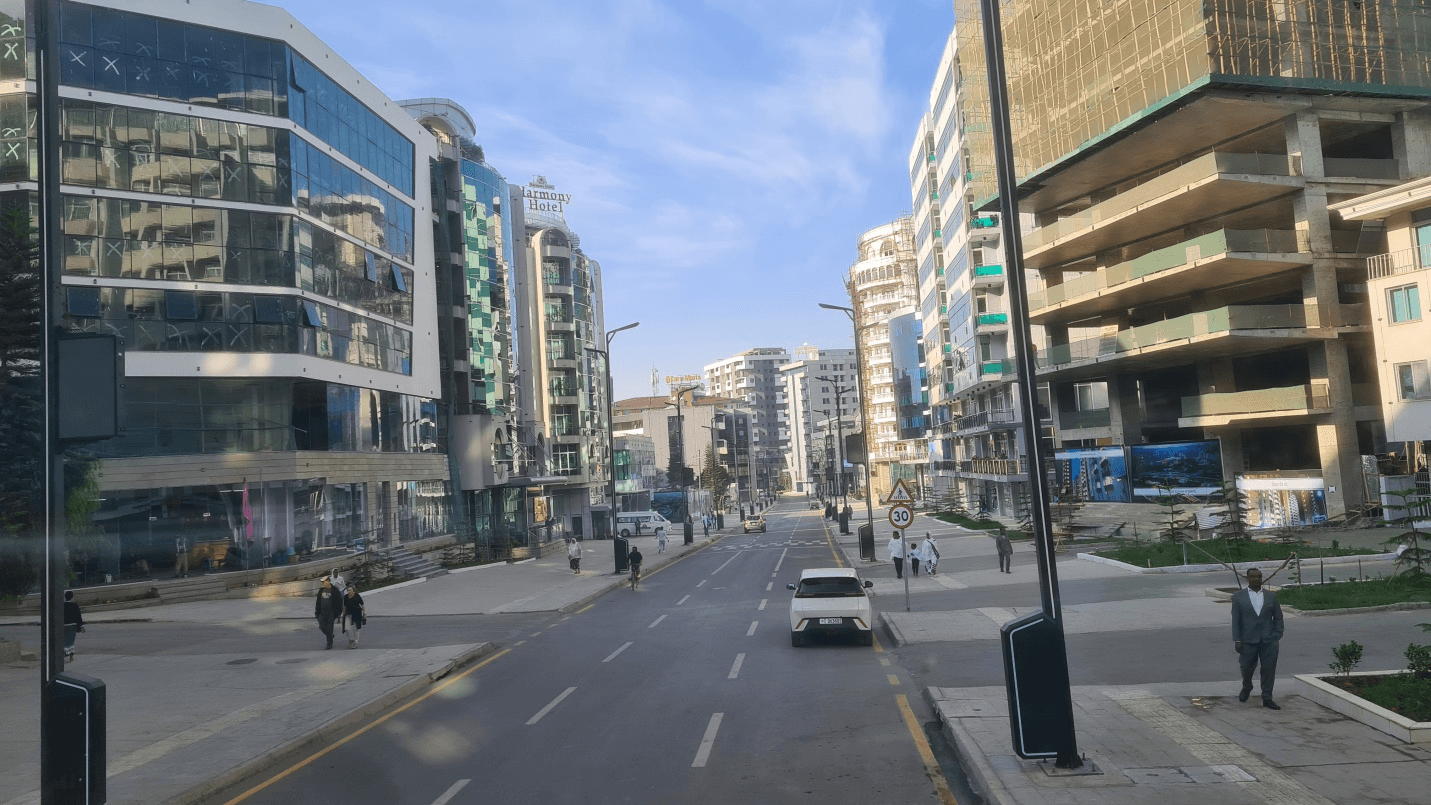
That evening, we took our time on the streets to buy some food. The air was fresh. There were no Rickshaws or Motorcycles on the streets. There were spaces left for bicycles, spaces for the disabled people and spaces for everyone else to tread, leaving the busy street only for vehicles. The police took it personally when we crossed to the bicycle section. They were strict once you walked on the wrong path. This demonstrated the importance of implementing rules, and rules build nations. There were green spaces throughout the City, echoing the Ethiopian Prime Minister’s Green Legacy Campaign. Along the busy streets, we felt connected to nature. Lots of green trees were seen all over the hills and valleys of Addis Ababa, some still sprouting. And the breezy atmosphere that held breaths for microseconds.
While the sun was setting, we had a variety of traditional foods. I had the privilege to taste Enjera and encouraged colleagues to try it. This indigenous food would later become their favourite dish. As we returned to the hotel, the night had already fallen, yet all the buildings seemed to have uniform lights. It was all painted like a constellation in the middle of the night.
Even in the night, people were moving freely, without any fear of crime. However, we would later hear that there were a few crimes sometimes. Street kids could call upon us, but not necessarily begging. They beckoned, asking to shine our shoes.
The African Union
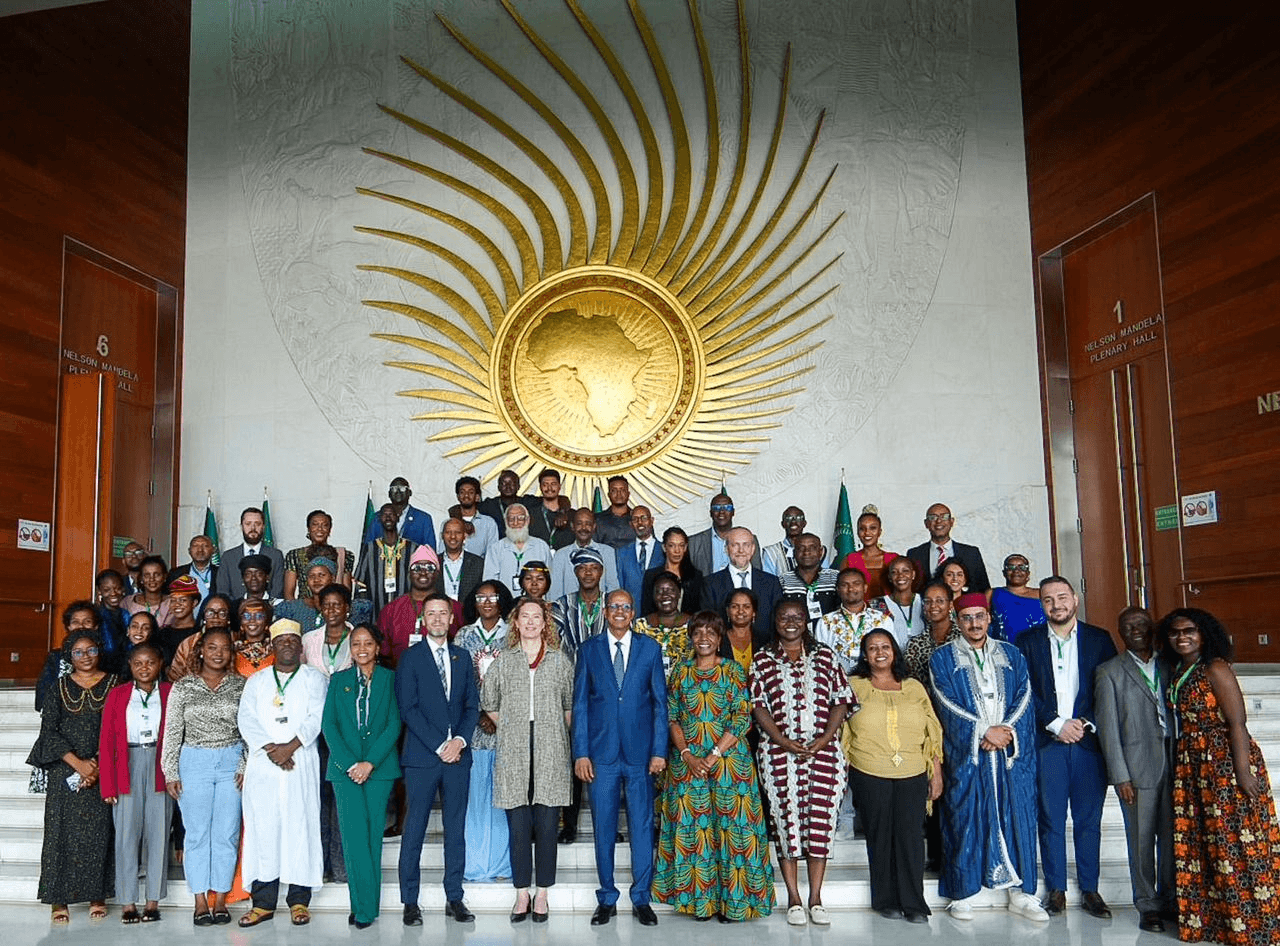
The following morning, all twenty-two AU Media Fellows and their three mentors headed for the AU Headquarters. As seen by equal gender representation among the fellows, there was also gender representation at the AU Headquarters and the display of diversity. I personally felt at home being with colleagues from other African nations.
We shared a lot of experiences and the goings on in our home countries. We were taken through different conference halls and portraits of Africa’s founding fathers; the AU Heroes, and the AU Chairpersons. There were statues of African leaders who echoed the union of the African nations, including Mwalimu Julius Nyerere of Tanzania.
One of the AU Employees told me that it was unfortunate that Dr John Garang de Mabior did not sign the AU Treaty for joining the African Union, adding that it was not healthy for our country. But yes, destiny decided that for South Sudan, and we cannot do anything about it.
Most of us were curious of the work of the African Union, which we thought in our home countries was not holding our leaders accountable as they should. However, we learned of the policies it makes and the independence of member states, which keeps policies dormant in our home countries. Meetings are the order of the day, mainly about various policies of the African Union. However, we learned that the AU only gives recommendations, but each member state will decide whether to implement them or not.
These include the fact that the zero hunger policy of the African Union has been sat on by all the African Union member states. The AU Commissioner for Agriculture, Rural Development, Blue Economy and Sustainable Environment, Moses Vilakati, said in a press statement that no African country had met the zero hunger targets by 2025. It was true that our member states were playing the wrong cards as the union echoes the policies of its Vision 2063.
Collective City Projects
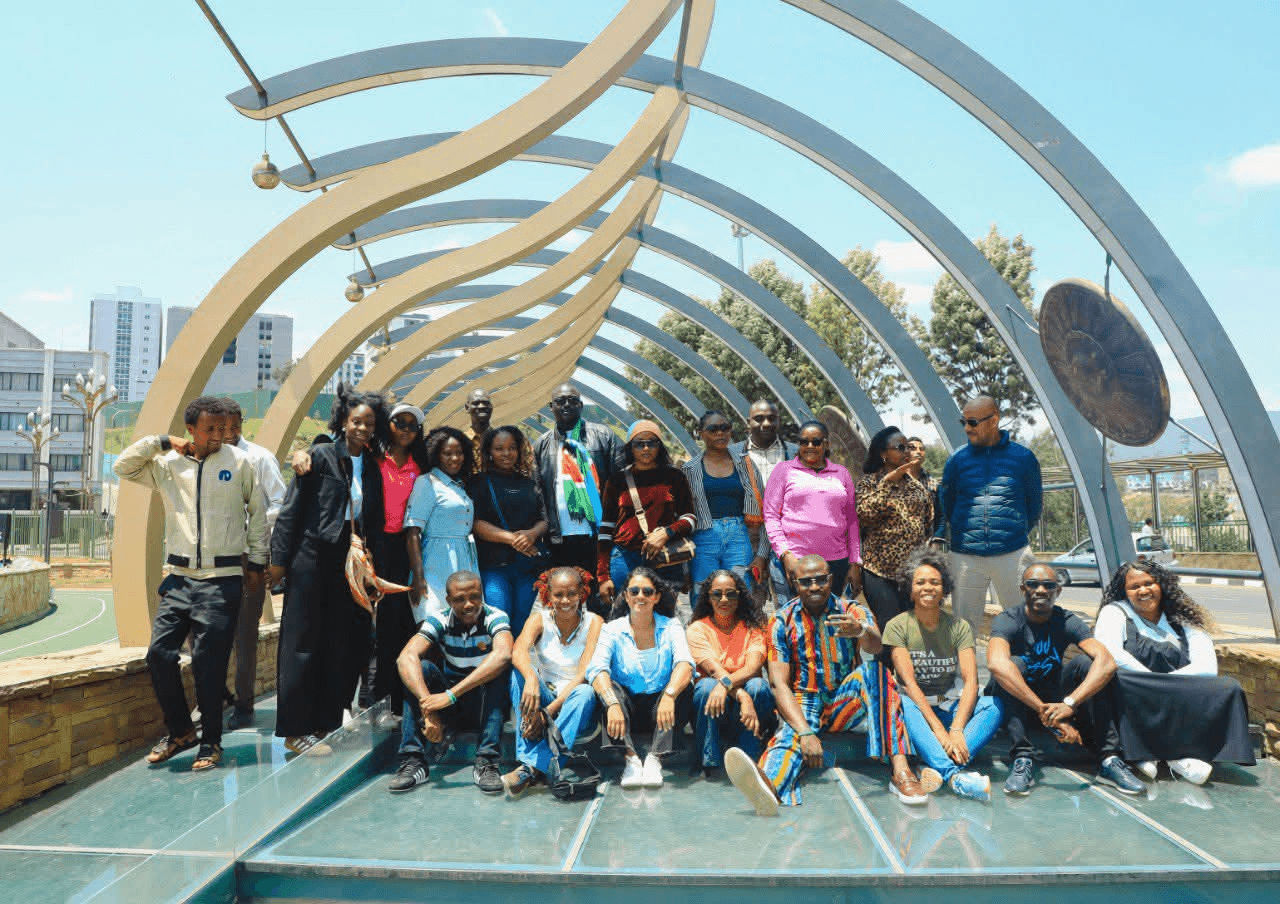
Towards our last days, we toured the city under the auspices of the Addis Ababa city Mayor. We thought cleanliness was concentrated at Bole; however, it was spread across the entire city. We were told that the city was cleaned daily. Another notable thing was the sports spaces along the streets and kids’ spaces, said to be the vision of the Mayor to ensure every child had access to education.
The beauty of the city, with its cleanliness and green environment, was uniform everywhere we went. We were shown world-class conference halls at the Addis Ababa International Conference Centre. Then we visited the government empowerment project where women were empowered to cook Enjera, sell it and share income to sustain their families.
After this, we visited the Addis Ababa riverside project. This project was at the seasonal river, which had been used as a dumping site over the years, but is now transformed into a tourist attraction. We visited a transparent bridge and headed towards the Adwa Victory Memorial Museum. We were shown another project of transforming a site which was called a dark site for its crimes, including raping into beautiful residences and shops.
Then at the Adwa Victory Memorial Museum, several Generals who fought the Italian at the battle of Adwa had their statues in line. There was also a statue of a female Empress. We were shown a gun used during the Battle of Adwa and the first Ethiopian Airplane. That demonstrated how culture was preserved in the nation, which defied colonialism and was not colonised, the very reason the Organisation of African Unity later changed to African Union, which placed its Headquarters in Addis Ababa. One thing about Ethiopians was that they had placed their national unity and development as a public duty. Some corners had either excavation or construction work ongoing. Every citizen was as busy as worker bees.
As we came out of the Museum, we were served with fireworks and solemn water sprinkled into the sky that later sprinkled on us, to bless us before we departed. We danced and sang happily, and that was a special recognition for us from the Mayor. As every city has its challenges, there were a few adult beggars, some carrying children on their backs, and that kungfu man who crossed the busy street, trying to kick vehicles, shouting “yeah, yeah!”, while demonstrating his kungfu skills. They might have been the disadvantaged ones in Addis Ababa.
We all carried a lot of messages for our nations to learn from: unity, investing in development as public responsibility, a clean environment and above all, unity, peace and development of vulnerable citizens. These examples from Addis Ababa are all that Africa wants to become a self-sufficient continent by 2063.
