Calls for stronger African Union action are not only understandable; they are overdue.
In Sudan, the AU kept calling for a ceasefire and dialogue, yet the war had forcibly displaced nearly 13 million people. Just to the south of Sudan, in the eastern DRC, the Institute for Security Studies says African responses were poorly coordinated and that the East African Community and SADC missions withdrew without collaborating or securing meaningful gains. In the Sahel, the AU and regional bodies have struggled to enforce transition roadmaps after successive coups. Directly, south of the Sahel, in Cameroon, one of the continent’s most damaging conflicts remained conspicuously absent from the AU Peace and Security Council’s agenda for long stretches despite its urgency.
That repeated pattern has created a familiar impression: the AU speaks, condemns, suspends, urges restraint, and calls for dialogue, but the violence often outlives the language. By contrast, the European Union appears more muscular. It can deploy sanctions, move large budgets, activate courts, and translate political decisions into enforceable legal obligations. That contrast has led many Africans to ask why can the AU not act more like the EU?
The first answer is a corrective.
The AU is not a nongovernmental body.
It is an intergovernmental union. Its Assembly of Heads of State and Government is the AU’s supreme policy and decision-making organ, while the African Union Commission is the Union’s secretariat and handles day-to-day activities under the authority of member states. That means ultimate power remains concentrated in national capitals, not in Addis Ababa.
The AU’s founding documents are more ambitious than many of its critics acknowledge. The Constitutive Act gives the Union the right to intervene in a member state in grave circumstances such as war crimes, genocide and crimes against humanity. It also condemns unconstitutional changes of government and allows the Assembly to impose sanctions on member states that fail to comply with Union decisions and policies. On paper, then, the AU has doctrine, principles and sanctioning language.
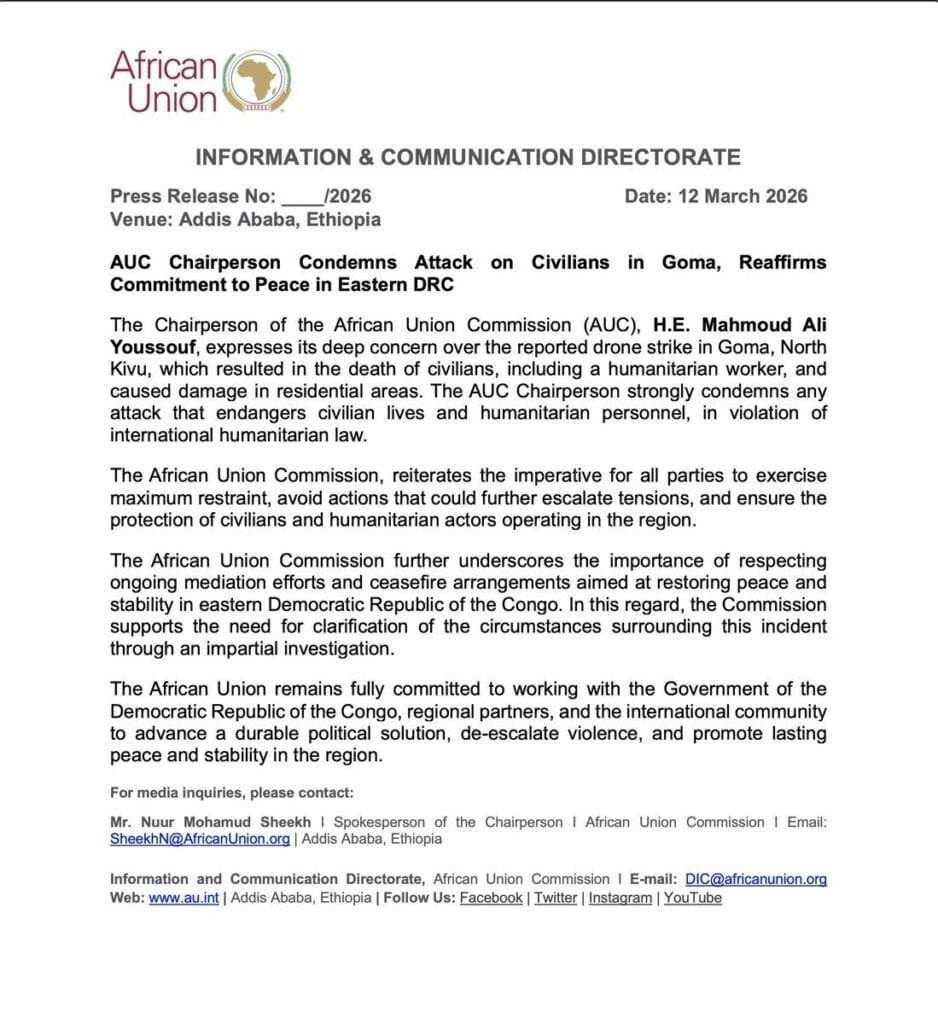
But norms are not the same thing as automatic power. The same institutional design that gives the AU continental legitimacy also limits its coercive reach. Assembly decisions are political decisions taken by states. The Pan-African Parliament, unlike the European Parliament, still has consultative, advisory and budgetary oversight powers rather than full legislative authority. So even where the AU has legal and moral grounds to act, it often lacks a built-in mechanism to convert those grounds into binding, self-executing enforcement.
This explains the AU’s uneven record in real crises. ISS has argued that national sovereignty and subsidiarity continue to restrict the AU’s ability to intervene and that the Union’s intergovernmental nature, with member states heading all decision-making organs, helps explain the gap between legal ambition and practical response. In other words, the AU is often expected to deliver continental outcomes using authority that member states have only partially pooled.
Eastern DRC is a good example. ISS says the crisis exposed the pitfalls of weak cohesion across overlapping regional and continental structures. The EAC force deployed from 2022 to 2023, followed by a SADC mission from 2023 to 2025. Both withdrew without collaborating or achieving security gains. Another ISS assessment notes that regional deployments withdrew amid political divisions, limited resources and impossible mandates.
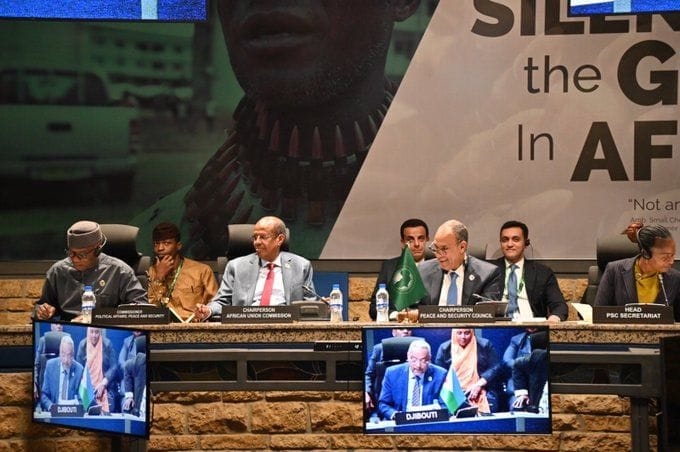
The Sahel tells a similar story from the angle of political compliance. The AU and regional economic communities have frameworks for handling unconstitutional changes of government, and they do suspend offending states. But ISS notes that they have struggled to enforce transition roadmaps in Mali, Burkina Faso, Guinea and Niger. Suspension, in other words, is easier than reversal. The AU can stigmatise a coup. It is far less able to compel a return to constitutional order when the regimes involved are willing to absorb diplomatic isolation.
Cameroon shows another limit: agenda-setting itself is political. ISS has described the Anglophone conflict as a persistent yet forgotten crisis and has also pointed out that it remained absent from the Peace and Security Council’s agenda despite its urgency. That reveals a quieter weakness of intergovernmental systems: they do not only struggle to enforce decisions; they can also struggle to consistently table uncomfortable crises in the first place.
The EU is built on a different logic.
The European Commission proposes legislation. The European Parliament acts as co-legislator with the Council, and the Court of Justice of the European Union ensures that EU law is interpreted and applied uniformly across member states. Once adopted, EU law is published in the Official Journal and becomes law within the Union’s legal order. That is what supranationalism looks like in practice: not just coordination among governments, but pooled authority backed by institutions that can legislate, adjudicate and enforce.
The fiscal contrast is just as revealing. The EU’s 2026 budget amounts to €192.8 billion in commitments and €190.1 billion in payments($200-210 billin). The AU says its operational costs have averaged around US$110 million annually over the last five years, financed exclusively by member states. These are not perfectly like-for-like budget lines, but the scale difference is still telling. One union operates with the financial weight of a major political bloc. The other is expected to stabilise a continent while running on a comparatively modest institutional base.
The sanctions architecture also shows the gap. The EU describes sanctions as a tool to prevent conflict or respond to crises, and new rules that entered into force in 2024 require that violations of EU restrictive measures can be criminally investigated and prosecuted in all member states. That does not mean the EU is frictionless or omnipotent. In foreign and security policy, unanimity still applies in sensitive areas, which means member states retain veto power. But even with that limitation, the EU still combines more law, more money and more routine enforcement capacity than the AU does.
That last point is important because it prevents a lazy binary. The EU is not all-powerful, and the AU is not useless. The EU’s foreign policy still carries intergovernmental features, while the AU has real normative achievements: anti-coup principles, continental peace and security structures, and a legal doctrine of non-indifference that goes further than the old OAU doctrine of non-interference. But the EU has gone much further in institutionalising pooled sovereignty. The AU is still negotiating that bargain.
So the real difference between the AU and the EU is that one has built stronger machinery for collective action. The EU can more often turn political agreement into binding law, funded programmes and enforceable obligations. The AU still depends far more heavily on member-state consent, regional politics and variable political will at each stage of response.
That is why demands for stronger AU action, however justified, should be aimed not only at the AU Commission or the Peace and Security Council, but at African states themselves. If African governments want an AU that can move from declarations to outcomes, they will have to give it more than speeches and summit communiqués. They will have to give it deeper financial autonomy, more automatic enforcement, stronger legislative authority, and a genuine willingness to subordinate parts of sovereignty to continental discipline. That last step is the hardest one. It is also the one Europe took much further than Africa has so far been willing to go.
The AU’s problem, then, is that its authority still ends where state interests begin. And until that changes, Africa will keep demanding continental solutions from an institution that member states have not fully empowered to deliver.